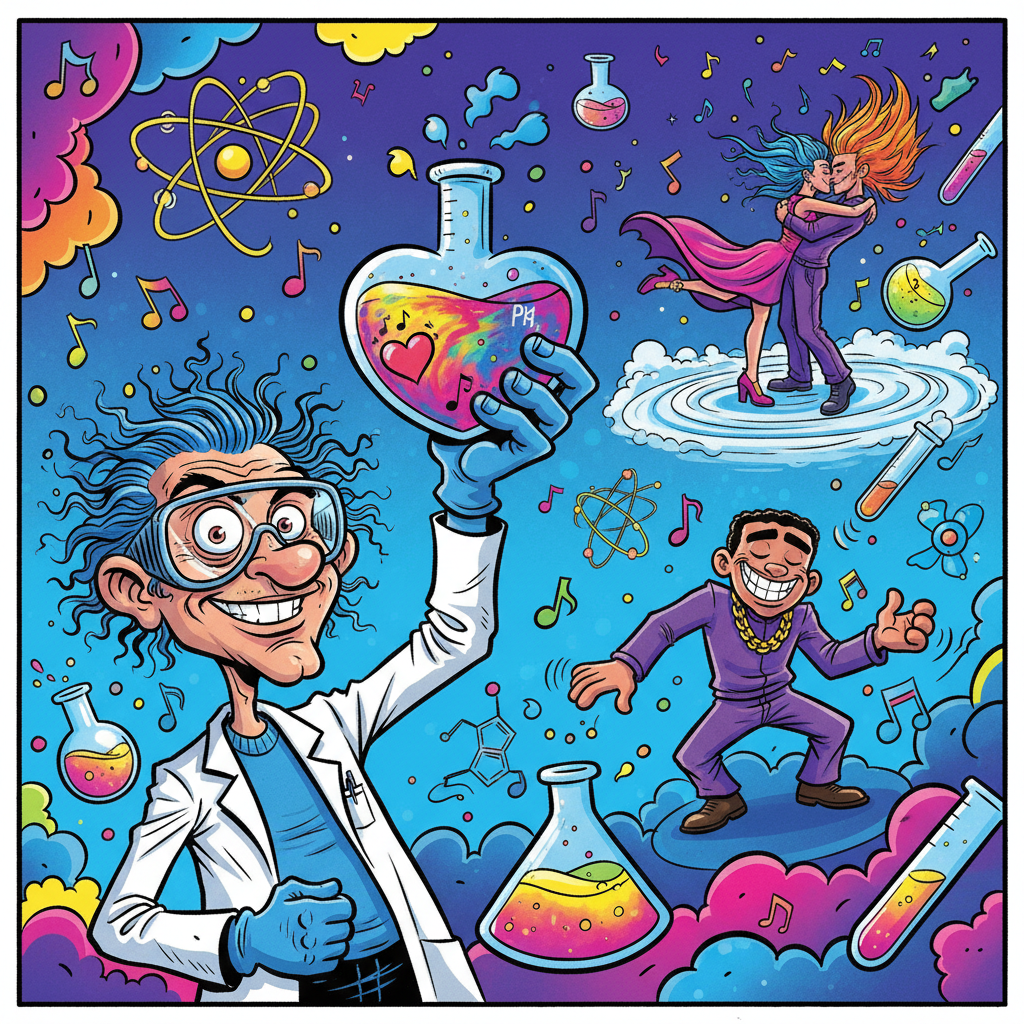
CAMBRIDGE, MA – After decades of subjective, anecdotal evidence, scientists at MIT have finally isolated the specific chemical compound in the human brain responsible for the elusive 'perfect first kiss' sensation. The discovery, published today in the journal *Neuro-Romance*, promises to revolutionize how we understand both adolescent infatuation and the enduring appeal of 90s R&B.
Lead researcher Dr. Eleanor Vance explained that the compound, temporarily dubbed 'Serotonin-Dopamine-Oxytocin-R&B-Complex-1' (SDORBC-1), is released in varying quantities during moments of intense, often awkward, human connection. “We found that while a real-life first kiss can trigger SDORBC-1, certain harmonic progressions and vocal runs in R&B music reliably produce an identical neurological response,” Dr. Vance stated in a press conference. “It’s why ‘Weak’ by SWV hits different than, say, a tax audit.”
The study involved hundreds of participants who were exposed to a variety of stimuli, including actual first kisses (some pre-arranged, some spontaneous), instrumental classical music, and a curated playlist of R&B hits. Functional MRI scans revealed identical brain activity patterns when subjects experienced either a 'perfect' first kiss or listened to specific tracks like Jodeci’s 'Freek’n You.'
“Essentially, your brain can’t tell the difference,” confirmed Dr. Vance. “Whether it’s a nervous teen fumbling for lip-to-lip contact or Brian McKnight hitting a high note, the neurochemical payoff is the same. This explains why so many people feel like they’ve had a perfect first kiss, even if their actual first kiss involved braces and a lot of drool.”
Researchers are now exploring whether SDORBC-1 can be synthesized to provide the 'perfect first kiss' experience on demand, potentially rendering actual human interaction obsolete for romantic milestones.