
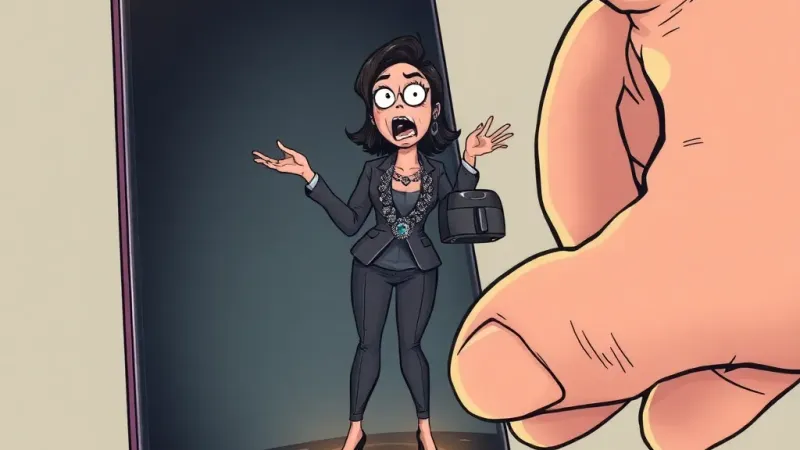
NEW YORK, NY – The QVC Group, once a titan of televised retail, formally filed for Chapter 11 bankruptcy this week, citing an unforeseen “tectonic shift” in consumer behavior from passive viewing to active digital engagement. Executives reportedly concluded that the average human's willingness to sit through a 7-minute demonstration of a stain remover, then locate a landline to place an order, had “mysteriously evaporated” sometime between 2008 and the invention of TikTok.
“We essentially industrialized the couch potato, perfecting the art of impulse buying from the comfort of one's own living room,” stated Dr. Agnes Albright, a leading retail futurist from the Institute for Predictive Consumer Atrophy. “Our mistake, it seems, was in not anticipating that the couch potato would evolve into the phone-clutching thumb-swiper, a creature far more efficient at acquiring unneeded items without the cumbersome interruption of a scheduled broadcast or human interaction.” She added that QVC’s groundbreaking model of broadcasting low-stakes panic over limited-time offers has since been “brutally optimized” by every influencer with a coupon code and a sponsored post.
Company filings revealed a series of increasingly desperate attempts to stay relevant, including a 2017 initiative to train QVC hosts in “dynamic finger-swiping choreography” for an ill-fated mobile app that reportedly crashed during every live demonstration. “Our fundamental error was assuming that the inherent friction of waiting for a product demonstration and then dialing a 1-800 number was a cherished feature, not a significant barrier,” explained former QVC Head of Content, Barnaby Stenson, from a dimly lit office where he was still trying to sell a new line of air fryers to a single remaining viewer. “Turns out, people really prefer not having to remember what a 'phone number' is, or even what a 'commercial break' is.” Stenson admitted that their efforts to integrate 3-D rendering of kitchen gadgets directly into Instagram filters were scuttled when focus groups unanimously agreed that “watching someone pretend to hold a blender is less compelling than watching someone *actually* hold a blender while subtly endorsing a competing brand.”
The bankruptcy comes despite QVC's nearly half-century legacy of moving unparalleled volumes of everything from cubic zirconia rings to exercise equipment directly into American homes, often during late-night hours when consumer defenses were at their lowest. “We invested heavily in enhancing our 24/7 drone footage of diamond simulants rotating gently on velvet pedestals, convinced that pure hypnotic spectacle would override all other considerations,” said former QVC Chief Engagement Officer, Clarissa Thorne. “But market analysis revealed that fewer than 0.003% of the target demographic still owns a television remote with a working 'channel up' button, let alone a functioning coaxial cable.” Thorne added that efforts to stream directly to viewers' smartwatches were “met with unexpected resistance from wrist tendons, which apparently prefer scrolling endlessly through TikTok over purchasing a bulk pack of micro-fiber towels.”
The company's remaining assets, including several warehouses filled with unsold novelty grills and a lifetime supply of celebrity-endorsed anti-aging creams, are expected to be liquidated via a series of short-form, unskippable ads that will mysteriously appear on every streaming platform simultaneously, ensuring no consumer will ever truly escape the QVC shopping experience—just its original delivery method.