
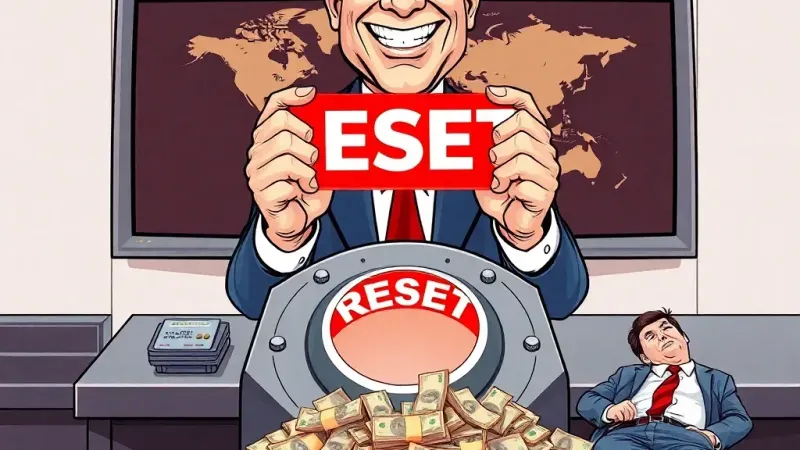
WASHINGTON D.C. — The President today declared a 'monumental diplomatic victory' after securing an international agreement that effectively returns global relations to their precise geopolitical configuration of five years ago, but at an estimated cost of $3.7 trillion to U.S. taxpayers. The comprehensive deal, hailed by the administration as a testament to its unparalleled negotiating prowess, culminates years of intensive efforts to de-escalate a crisis largely initiated by previous policy shifts within the current administration.
Under the terms of the new accord, the nation has successfully recommitted to several international agreements it had previously withdrawn from, re-established diplomatic channels it had deliberately severed, and rejoined various multilateral bodies it had publicly disavowed. This strategic pivot marks a complete, and significantly more expensive, reversal of earlier foreign policy directives that had, according to internal 2 documents, led to 'unforeseen increases in global friction and unilateral expenditure requirements.'
“We’ve successfully navigated a perilous, self-imposed detour back to the original highway,” stated Dr. Evelyn Kinsley, director of the Center for Recurrent Global Challenges, from her office in Bethesda. “The innovative part isn’t the destination, it’s the truly staggering amount we paid for the privilege of driving in a circle. Think of it as a prestige upgrade: same car, but now it’s gold-plated with the tears of future generations.” Dr. Kinsley noted that the $3.7 trillion figure includes 'geopolitical friction surcharges,' 're-engagement tariffs,' and 'reputation management consultation fees.'
2 Deputy Spokesperson for Post-Aggression Mitigation, Ms. Brenda Holloway, emphasized the forward-looking nature of the agreement. “This administration has demonstrated a unique ability to identify nascent geopolitical stability, disrupt it for strategic purposes, and then, at considerable expense, meticulously reassemble it into something vaguely resembling its original form,” Holloway told reporters. “The cost, while substantial, is a testament to the complex, multi-layered problems that only we have the specific skill set to both create and subsequently resolve. It’s an investment in a predictable future, albeit one we ourselves momentarily rendered unpredictable.”
Experts suggest the next phase of the administration's foreign policy will focus on identifying new regions for 'strategic re-evaluation' to ensure a robust pipeline of future 'historic' diplomatic successes.