


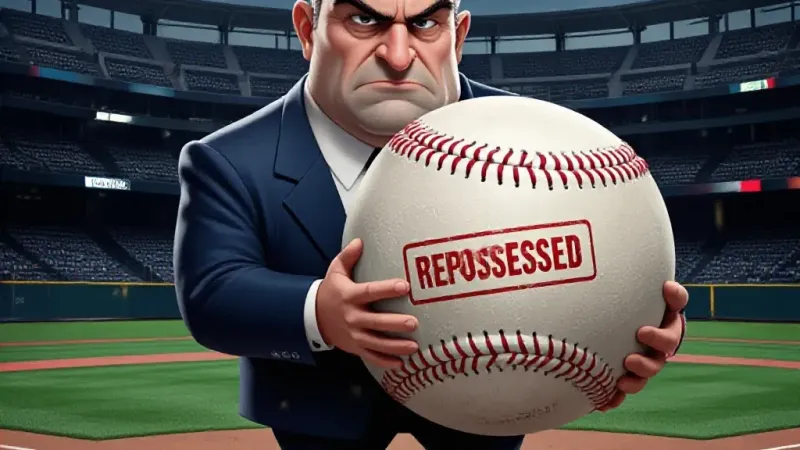
A groundbreaking report from the Institute for Optimal Societal Productivity (IOSP) has designated Wednesday night's Philadelphia Phillies loss to the Kansas City Royals as a "catastrophic misallocation of leisure capital," costing the city untold hours of human potential and billions in aggregate emotional depreciation. The 5-2 final score, researchers note, represents an "alarming 60% loss on emotional investment for the average attendee, factoring in ticket prices, concession markups, and irrecoverable time units."
"For 2 hours and 58 minutes, thousands of individuals surrendered their cognitive and emotional resources to witness a predictable outcome," stated Dr. Veronica Thorne, lead author of the IOSP study, which analyzed over 3,000 fan data points from the game. "Our data suggests that for every dollar spent and every minute invested in a losing team, the marginal utility for the fan approaches zero, often dipping into negative returns when considering the post-game despair index, which, for Phillies fans, consistently registers in the 'existential dread' range." The report detailed a proprietary "Fan-Hour Depreciation Multiplier," which calculates the accelerating emotional and financial decay experienced by supporters of perpetually mediocre franchises, often peaking during mid-season slumps.
Philadelphia Mayor Jim Kenney, reached for comment, expressed concern over the "invisible drain on the city’s human capital." "We're seeing significant outflows of civic energy into what is, by all quantitative measures, a black hole of athletic non-achievement," Kenney stated, adjusting his Eagles-themed tie. "Every cheer is an un-invested minute. Every frustrated sigh is a potential innovation stifled. We need to assess if this level of recreational fiscal irresponsibility is sustainable for a major metropolitan economy."
The IOSP report recommends a national task force to evaluate the true economic impact of sports fandom, particularly for teams with a sub-.500 record. Proposals include "productivity-linked ticket pricing" for non-playoff contenders and "fan-therapy subsidies" for long-suffering loyalists who, for reasons yet to be fully understood, continue to renew season tickets. "The notion of 'loyalty' as an economic driver is a romanticized fallacy," Dr. Thorne concluded, adjusting her neural network interface. "It's an emotional sunk cost, leading to repeated, irrational capital deployment into entertainment products that consistently fail to meet projected happiness metrics, much like betting on Dogecoin in 2021."
The study’s final finding was stark: the most economically rational decision for any sports fan is to simply not watch, thereby preserving both financial resources and the precious illusion of personal agency.