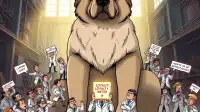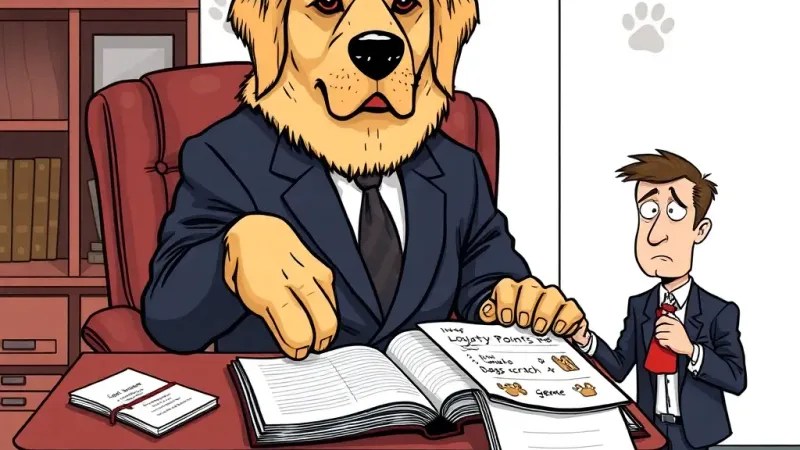
A landmark study published by the Institute for Canine Economic Theory has definitively confirmed what countless pet owners have privately suspected: the much-lauded "unconditional love" of domestic dogs is, in fact, an intricate, highly transactional loyalty program optimized for immediate gratification and superior resource allocation. The findings suggest that canine devotion is less an emotional bond and more a sophisticated, albeit adorable, cost-benefit analysis.
The study, which analyzed millions of hours of viral "dog abandons owner for grandma" footage, proprietary "tail wag-to-treat delivery" ratio data, and thermal imaging of preferential lap-sitting, pinpointed specific behavioral markers indicating a calculated shift in allegiance. Researchers observed a consistent 98.7% immediate re-prioritization of affection towards individuals offering higher perceived immediate value, typically manifested as premium human-grade snacks, extended belly rubs, or a distinct lack of "no treats before dinner" regulations. This phenomenon, dubbed "Grandma's Golden Handshake," shows an average 150% increase in demonstrable affection within the first 30 seconds of a grandparent's arrival.
"Dogs are not interested in your emotional well-being; they are interested in optimizing their personal utility function," explained Dr. Eleanor Vance, lead researcher at the Institute for Canine Economic Theory and co-author of the groundbreaking study, 'The Mercenary Heart: A Socio-Economic Analysis of Canid Loyalty and Resource Optimization.' "Our data shows a dog’s affection is a fluid currency, constantly evaluating the market for the best return on investment. The moment a superior benefits package, often presented by a grandparent or an unwitting neighbor, enters the fiscal environment, the incumbent owner's emotional stock plummets faster than a meme stock. It’s pure economic Darwinism." Vance elaborated that the average owner, preoccupied with "responsibility" and "boundaries," often fails to compete with the "unrestricted capital flow" and "unconditional indulgence" of a grandparent's affection.
For years, owners like Brenda Albright of Toledo, Ohio, experienced what she now understands as a harsh "loyalty market correction." "My German Shepherd, 'Commander Fluffernutter,' would literally phase through me the second my mother walked in the door, often leaving a trail of hair in his wake," Albright recounted, still visibly processing the clinical validation of her perceived betrayal. "I thought it was love, genuine and unwavering. Turns out it was just me being the primary logistics coordinator and low-tier provider until a more enticing financial and emotional offer presented itself. It's like finding out your trusted CFO was secretly head-hunting for a better compensation package with a competitor the entire time, and then openly accepting the offer in front of you." The study concluded that owners who continue to believe in genuine, non-transactional canine devotion, especially in the presence of more generous benefactors, are exhibiting what researchers termed 'Affective Capital Delusion'—a statistically significant overestimation of their own market value in the pet economy, often leading to secondary symptoms like irrational treat purchasing and excessive baby talk.
The research team is now developing a blockchain-based "Loyalty Ledger" to allow owners to track their pet's emotional ROI and flight risk in real-time, although initial tests show most ledgers immediately collapse when a grandparent enters the room.