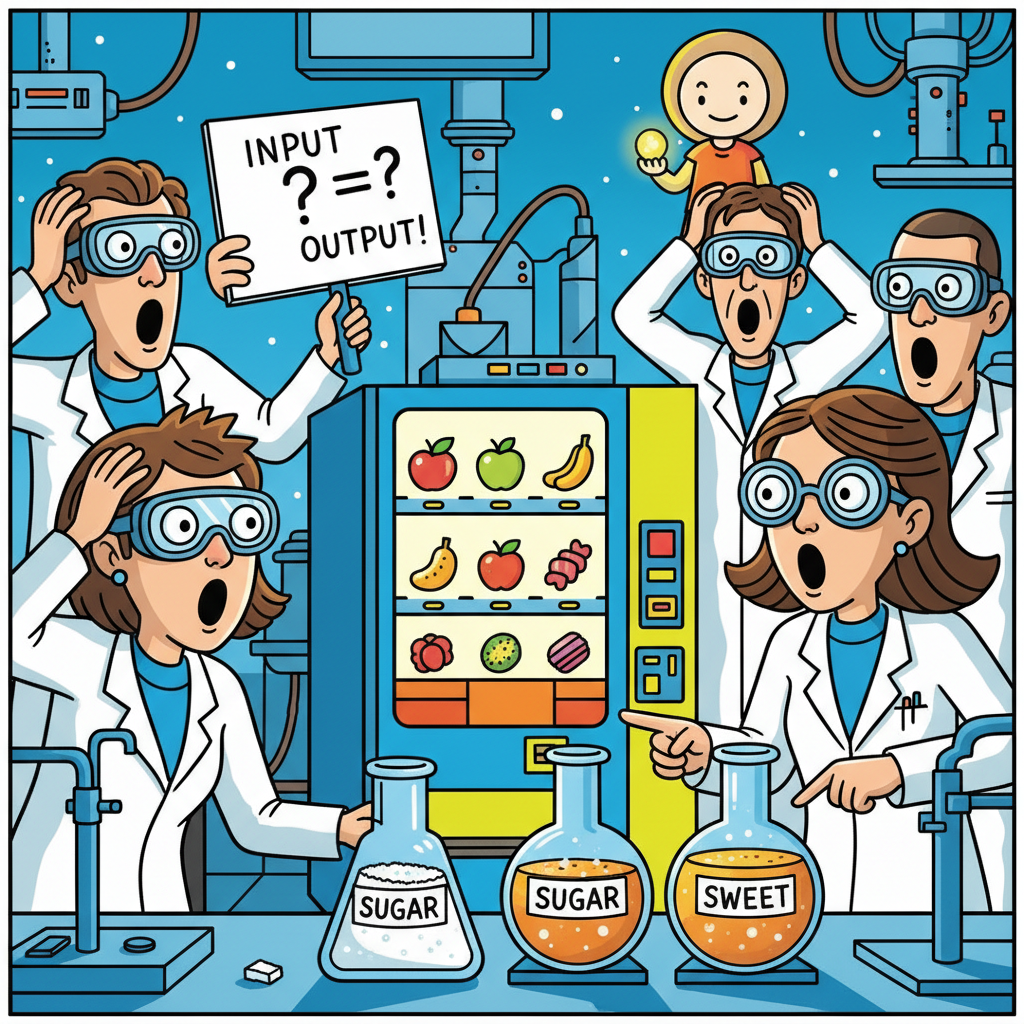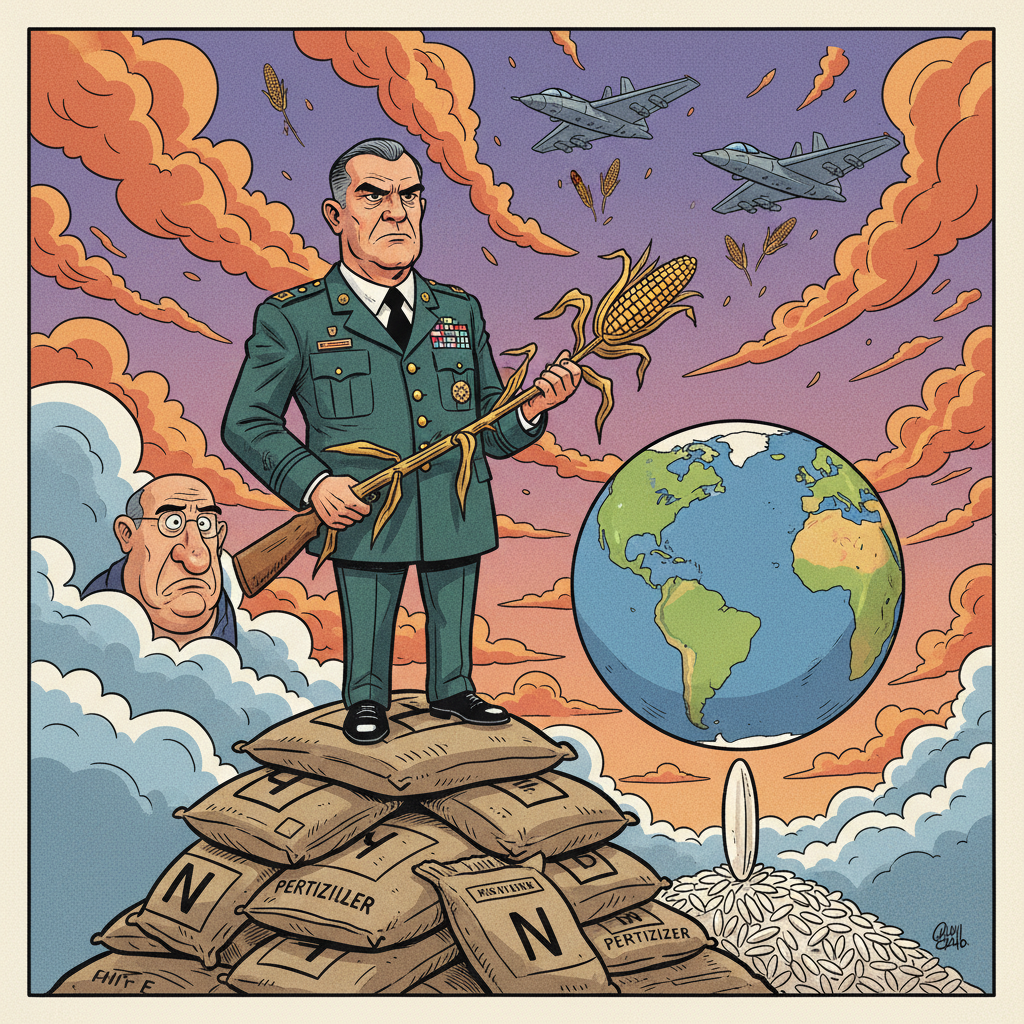
WASHINGTON D.C. — The Department of Defense has announced a groundbreaking new metric for assessing geopolitical stability: the 'Conflict-Induced Crop Failure' (CICF) index. This innovative tool, developed in conjunction with agricultural economists, will allow policymakers to quantify the precise number of hungry people a potential military intervention might create, primarily through disruptions to fertilizer supply chains.
“For too long, we’ve focused on antiquated metrics like 'casualties' or 'regional destabilization,'” stated General Thad 'The Plowman' Peterson, head of the newly formed Agri-Strategic Command. “Our advanced modeling now shows that a single skirmish in a critical shipping lane could, within weeks, lead to a 30% reduction in global corn yields. That’s a lot of hungry people, and frankly, a logistical nightmare for our humanitarian aid budget.”
The CICF index reportedly assigns a 'Fertilizer Vulnerability Score' to every potential flashpoint, with areas like the Strait of Hormuz currently ranking 'Catastrophic-Plus.' Experts suggest that future military strategies will now prioritize securing urea and potash shipments over, say, strategic oil reserves, which are apparently less critical than a good harvest.
“It turns out, people get really upset when they can’t eat,” explained Dr. Evelyn Reed, lead agricultural strategist for the Pentagon. “And the quickest way to ensure people can’t eat is to make sure farmers can’t fertilize. It’s elegant in its simplicity, really.” The new metric is expected to revolutionize foreign policy, potentially leading to fewer wars and more frantic diplomatic efforts to keep fertilizer factories running. Or, at least, more detailed contingency plans for military-escorted phosphate rock convoys.
Sources within the Pentagon indicated that the next generation of stealth bombers might come equipped with seed dispensers, just in case.