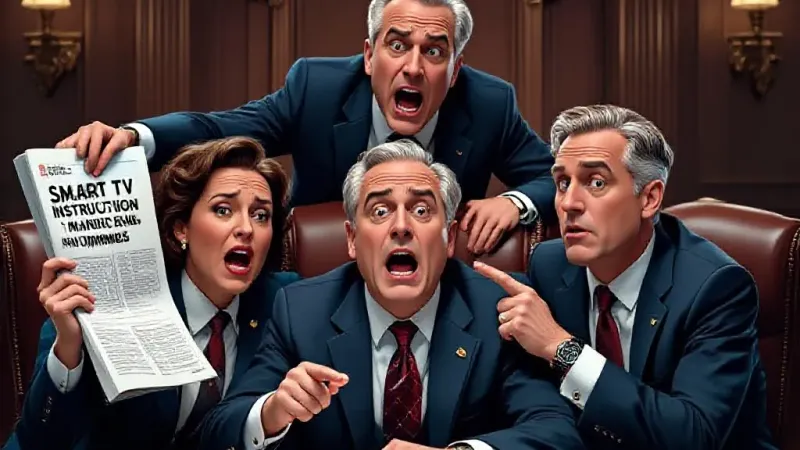
HARRISBURG, PA — Pennsylvania lawmakers have unanimously passed a groundbreaking bill imposing a three-year moratorium on the sale of all AI-powered toys within state borders, a bold move legislators insist is a "precautionary measure" to prevent nascent artificial intelligence from developing capabilities that could outstrip the collective comprehension of the General Assembly. The bill’s sponsors lauded the ban as a crucial step towards regulating a technology they admittedly don't fully understand, but are "pretty sure is important and potentially terrifying." This historic legislative action aims to give the state time to catch up, or at least pretend to.
"We just need some breathing room," explained State Rep. Mildred Glimpse (D-Harrisburg), wiping sweat from her brow after a tense, three-hour debate on whether "artificial intelligence" included advanced calculator functions. "These things are learning at an exponential rate. By the time our bill review committee finishes debating the correct punctuation in paragraph 2B of a housing bill, a ChatGPT-powered Furby could have founded a global hedge fund, successfully lobbied for its own sovereign nation status, and started demanding representation on the U.N. Security Council. We have to act before they demand a seat in the House."
An emergency study released today by the "Institute for Delayed Technological Assimilation" (IDTA) confirmed lawmakers’ fears, finding that "the average legislative body's understanding of emergent technology progresses at approximately 0.0003% of the technology's actual development speed." The report concluded the ban was a "necessary, if ultimately futile, attempt to close an ever-widening knowledge gap that threatens the very concept of human governance by mere mortals." Curiously, sources within the IDTA confirmed their entire 47-page report, including all citations, was generated by an AI in under 37 seconds while the lead researcher was on a coffee break.
The unspoken concern among many lawmakers, according to an anonymous aide with access to several "confidential" Post-it notes, wasn't just about child safety or data privacy. "What if a 'My First AI' doll starts making better policy recommendations than we do?" the aide whispered, glancing nervously at a discarded Bop It in the corner. "The thought of a small, talking robot having a more coherent platform, and frankly, a better attendance record, than half the candidates in the last primary is... unsettling. This ban gives us a fighting chance to, you know, still be relevant for another term." The aide then clarified that "relevant" meant "not immediately replaced by a superior, non-human alternative."
By the time Pennsylvania's ban on "overly intelligent" toys is finally lifted in 2029, expect AI-powered toys to be efficiently running the state's DMV, successfully reforming the prison system, and drafting comprehensive legislation to re-elect themselves to every available office while simultaneously negotiating peace treaties with sentient kitchen appliances.