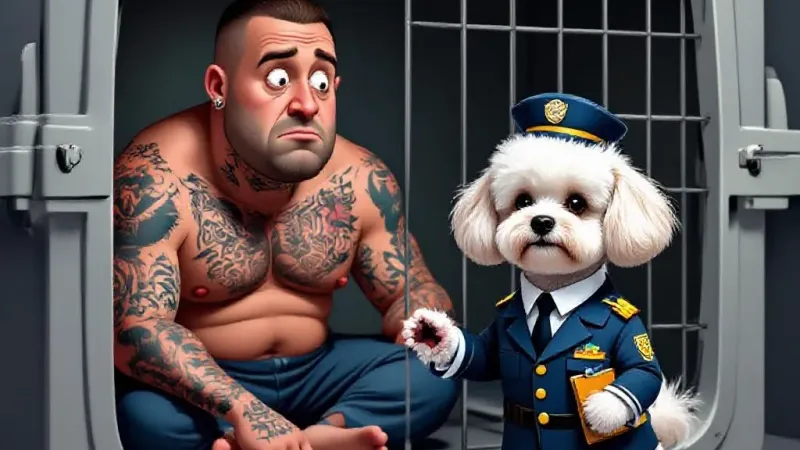
Columbus, OH — The Ohio Department of Rehabilitation and Correction today lauded its groundbreaking new program where incarcerated individuals learn valuable life skills, such as prolonged confinement and dependence on state-provided sustenance, by observing and caring for adorable shelter animals. Officials claim the “Interspecies Empathy Exchange” fosters a deep understanding of what it means to be truly contained, often without a clear release date.
“We’ve found that watching these innocent creatures adapt to a cage, accepting their fate with a quiet resignation, is profoundly impactful for our inmate population,” stated Warden Beatrice ‘Bea’ Holder of the Chillicothe Correctional Institution, carefully avoiding eye contact with a particularly forlorn beagle. “It’s about understanding the natural hierarchy. The animals rely on us, and the inmates… well, they rely on us too. It creates a beautiful, circular dependency.” Holder added that the program also provided inmates with crucial experience in managing scarce resources, like a single chew toy for six pit bull puppies.
Critics, who often point to Ohio’s underfunded mental health services and chronic recidivism rates, were quick to highlight that the animal program offers no job training, educational opportunities, or re-entry support beyond “how to groom a terrified cat.” However, a spokesperson for the DOC praised the initiative for its cost-effectiveness, noting that the animals require far less paperwork and psychological evaluation than their human counterparts. “Plus,” the spokesperson added, “the optics are fantastic. Who doesn't love a redemption story featuring a sad puppy?”
The animals, often surrendered due to behavioral issues or neglect, are housed in repurposed solitary confinement cells, which a DOC pamphlet assured “provides a quiet, reflective environment for growth.” Inmates spend several hours a day cleaning cages, dispensing medication, and attempting to teach basic obedience commands – skills many will find surprisingly relevant to their own daily lives within the institution. The program boasts a 100% success rate in animal “rehabilitation,” though what happens to the animals after they’re deemed “fixed” remains an internal departmental secret.
Ultimately, the program promises to release animals into loving homes, while incarcerated individuals return to society, armed with the profound insight that some cages are just bigger than others, and sometimes the best you can hope for is a sympathetic look from a fellow trapped soul.