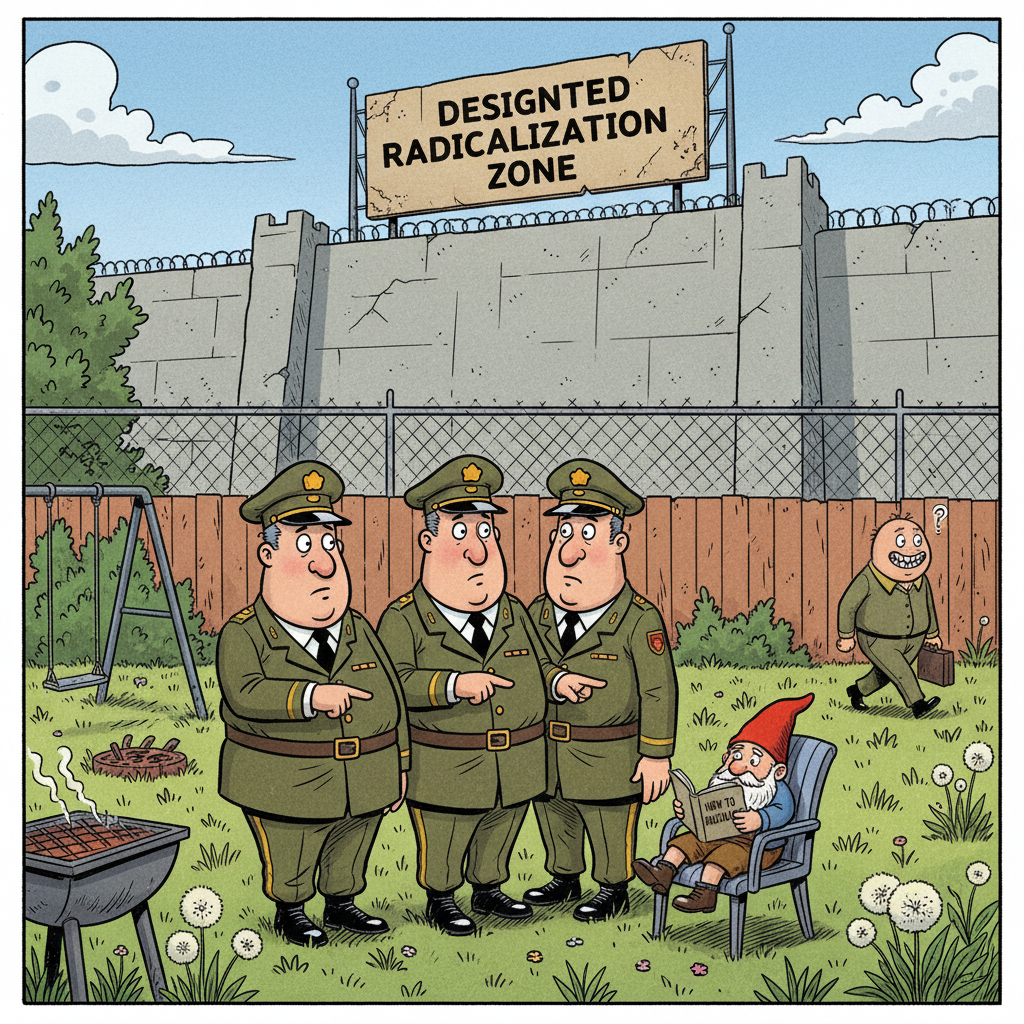
NEW YORK, NY – Following the recent arrest of two individuals in an alleged ISIS-inspired plot, federal and local authorities have issued a joint statement expressing bewilderment that radicalization appears to be happening in places not explicitly labeled 'Radicalization Hotspot' or 'Extremist Breeding Ground.' The revelation has prompted an urgent review of intelligence-gathering methods, which previously focused on areas clearly marked with skull-and-crossbones icons on internal threat maps.
“Our models were very clear: radicalization was supposed to be contained within the pre-approved, high-risk zip codes we’d identified,” explained Dr. Evelyn Reed, a counter-terrorism analyst for the Department of Homeland Security, speaking from a secure, windowless conference room. “The idea that someone could just… radicalize themselves, without first checking into a designated facility or even filling out the proper ideological intake forms, is frankly, quite disruptive to our workflow.”
Sources within the NYPD indicated that the unexpected nature of the arrests has led to a scramble to update threat assessment algorithms. “We had protocols for everything from lone wolves to wolf packs, but nobody accounted for the 'lone guy in his apartment with a YouTube subscription' scenario,” stated Captain Mark Jensen, head of a specialized intelligence unit. “It’s like they didn’t get the memo that radicalization is supposed to be a group activity, preferably in a cave or a compound, not a suburban garage.”
The incident has forced officials to confront the unsettling possibility that extremist ideologies might not adhere to bureaucratic zoning regulations, potentially requiring a complete overhaul of how they assume people become dangerous.