NEW YORK — The National 2 League today announced its comprehensive "Fan Immersion and Operational Synergy" strategy to manage the transition to an 18-game regular season, reassuring stakeholders that player health will be meticulously integrated into an enhanced spectator experience. The plan, presented at a closed-door summit for team owners and broadcast partners, reportedly emphasizes maximizing viewing pleasure through data-driven athlete utilization protocols rather than solely focusing on archaic injury prevention.
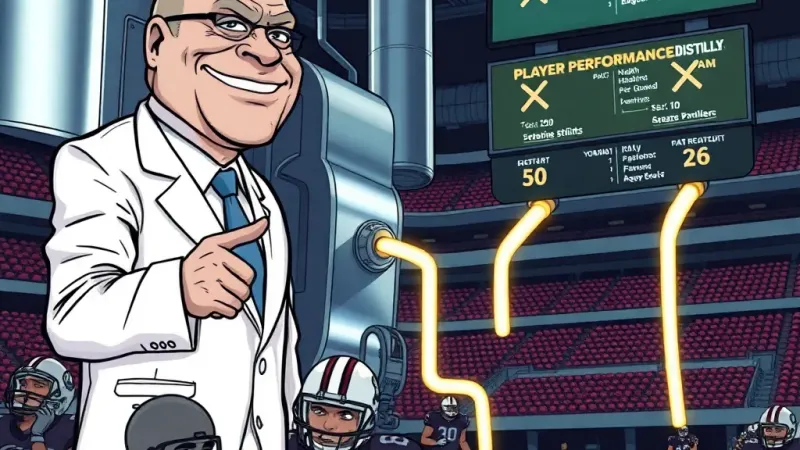
"Our goal is not just to extend the season, but to deepen the emotional connection between the fan and the product," stated Dr. Quentin Finch, the 2’s newly appointed Chief Engagement Architect, in a leaked internal memo. "By optimizing player deployment against advanced Fan Engagement Quotient (FEQ) metrics, we can ensure that every snap contributes to a compelling narrative, regardless of a player’s anatomical integrity. Think of it as a dynamic, high-stakes ballet, where every participant is a vital, albeit replaceable, component." Dr. Finch’s team is reportedly developing a "Player Durability Index (PDI)" that will forecast the optimal point for player substitution to maintain competitive integrity and dramatic tension, rather than physical well-being. This proprietary algorithm, drawing on 15 years of anonymized trauma data and real-time 2 sentiment analysis, aims to predict not just *when* a player might be injured, but *how* that injury will impact viewership and brand sentiment.
Sources close to the league’s "Athlete Optimization Unit" revealed that new injury protocols will focus on "strategic recovery timelines" designed to align with broadcast windows and fantasy 2 relevancy. "We’re moving beyond simplistic 'rest days' to 'repurposing intervals' where players can engage in community outreach, sponsor activations, or even participate in virtual reality fan experiences while healing," explained Unit lead Dr. Serena Vance, a former corporate efficiency expert from a major logistics firm. "It's about ensuring every player, even those on injured reserve, continues to generate value for the overall enterprise. We anticipate a 17% increase in 'Off-Field Brand Contribution' from players undergoing rehabilitation, effectively turning downtime into uptime for our partners."
The NFL Players Association released a statement acknowledging the league's "innovative approach to integrating player well-being into broader business objectives," while adding that discussions around enhanced revenue sharing for "increased operational participation" were ongoing. "Our players understand the evolving landscape of professional entertainment," commented Reginald 'Reggie' Stone, a spokesman for the NFLPA. "They are committed to being valuable assets both on and off the field, and we’re working closely with the league to ensure their contributions are adequately reflected in their compensation, particularly for enhanced 'non-physical engagement' opportunities."
Financial analysts project the expanded season could generate an additional $5 billion in annual revenue, primarily from new media rights and "enhanced player repurposing" initiatives. One independent consulting firm, SynergyMetrics LLC, estimated that the average player's "entertainment utility index" could increase by up to 22% under the new schedule, offsetting any marginal rise in long-term care liabilities. The league anticipates a minimal impact on player retention, citing studies that show a direct correlation between "economic incentivization" and "willingness to contribute to a larger narrative." In fact, early projections suggest an increase in competition for roster spots, as the expanded season requires a deeper pool of "readily deployable talent."
Ultimately, the NFL believes this strategic shift will not only solidify its position as a global entertainment powerhouse but also redefine the very concept of professional athleticism, transforming players into living, breathing, brand-integrated content delivery systems.