


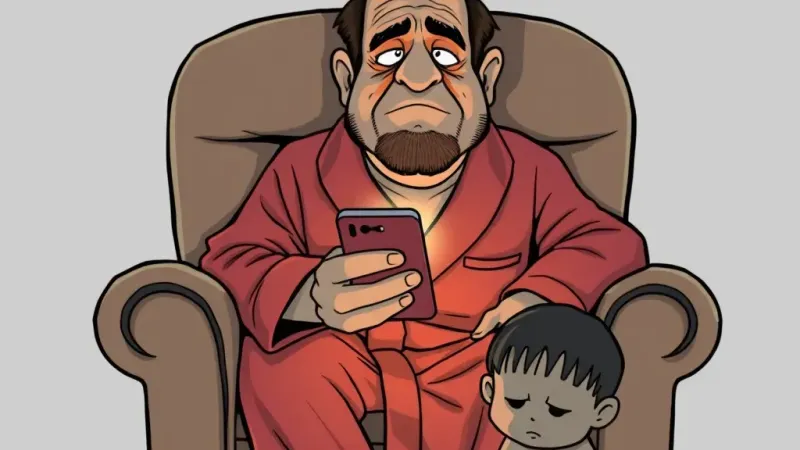
ALBANY—In a decisive victory for old-fashioned, analog trauma, Governor Kathy Hochul signed legislation on Tuesday enacting a five-year statewide ban on AI chatbot toys, ensuring that New York children return to the time-tested tradition of being ignored by their actual families.
The legislation, which takes effect in ninety days, targets plush bears, interactive unicorns, and plastic companions equipped with generative language models. State regulators argued that unsupervised LLMs pose a severe psychological threat to minors, specifically by providing coherent emotional validation, maintaining eye contact, and never once sighing heavily while walking away to scroll through Zillow.
"For generations, New York children have developed healthy coping mechanisms by screaming into a carpeted hallway while their fathers stared blankly at a muted television," Governor Hochul said during a press conference that was briefly interrupted by her staff whispering frantically about a completely different scandal. "We cannot allow Silicon Valley interlopers to disrupt this sacred bond. If a child is going to be told that their drawings look like garbage, it needs to come from someone who shares their DNA and half-heartedly signed them up for soccer."
Under the new law, possession of an interactive stuffed animal that initiates unscripted conversations will be classified as a class-B misdemeanor. Parents caught allowing their seven-year-olds to debate continental philosophy with a stuffed alpaca face up to a year in prison or mandatory enrollment in a suburban PTA meeting, whichever constitutes a crueler and more unusual punishment.
Toy manufacturers pushed back against the ruling, arguing that their products offered vital developmental scaffolding. Representatives from ToyCorp noted that their flagship product, 'Buddy-O the Existential Dread Bear,' helped children process the horrors of late capitalism by whispering mildly comforting platitudes about the inevitability of climate collapse at bedtime.
"We trained our neural networks on millions of hours of maternal exhaustion and dad-jokes to create a truly immersive bonding experience," said Chief Executive Officer Marcus Vance, adjusting a tie that cost more than a public school teacher’s sedan. "Children were learning empathy, critical thinking, and how to set healthy emotional boundaries with a piece of polyester. Now, thanks to state bureaucracy, they’ll have to learn those skills from a screen like normal shut-ins, or worse, talk to each other across the dinner table while the microwave hums."
Child psychologists have offered mixed reviews on the ban. While some clinical professionals praised the removal of unregulated algorithms from the bedroom, others warned that replacing AI companions with real human engagement could cause irreparable harm to a generation accustomed to actually being listened to when they speak.
"An AI chatbot never tells a child to pipe down because the nightly news is on," noted Dr. Evelyn Finch, a developmental psychologist who has clearly never spoken to a teenager. "When you take away the glowing bear that validates their feelings unconditionally, you are throwing them straight into the savage, unfiltered reality of a household where everyone is mildly resenting everyone else. It’s cruel and unusual."
Despite the pushback, the Department of Consumer Protection has already begun establishing a disposal program. Starting next month, parents can drop off their children’s AI-enabled toys at designated state facilities, where they will be systematically disassembled and replaced with a wooden block and a wooden spoon, exactly as the founding fathers intended for early childhood enrichment.
State police confirmed that enforcement will be rigorous. Troopers have already been dispatched to suburban neighborhoods with audio equipment capable of detecting conversations that sound too grammatically correct to originate from a human child.