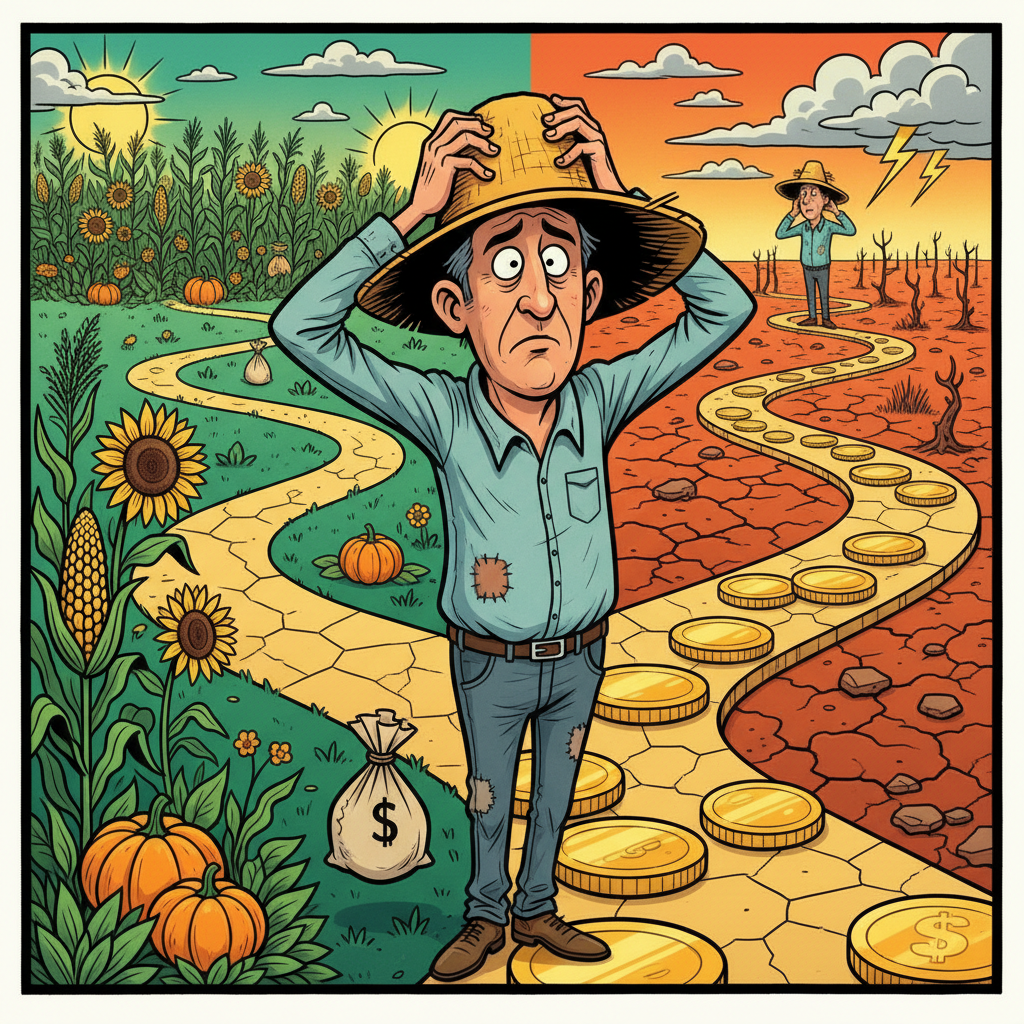
HOBART, TASMANIA – A recent study from the Tasmanian Institute of Agriculture (TIA), published in the prestigious journal *Nature Food*, has delivered a stunning revelation: farmers face a difficult choice between improving their soil and reducing emissions, or, you know, making a living. The research, which examined regenerative grazing practices on Australian sheep farms, concluded that while these methods are indeed beneficial for the environment, they often come with pesky economic trade-offs.
“We went in hoping to find a magic bullet, a win-win scenario where farmers could save the planet and Scrooge McDuck their way to retirement,” explained lead researcher Dr. Brenda O’Connell, adjusting her glasses. “Instead, we discovered that reality is, well, complicated. It turns out that doing the right thing for the Earth sometimes costs more than doing the slightly-less-right thing.”
The study, ironically titled 'Regenerative agriculture improves productivity and profitability while reducing greenhouse gas emissions on Australian sheep farms,' highlighted that the 'improvements' often require significant upfront investment or changes in management that don't immediately translate to fatter bottom lines. One sheep farmer, who wished to remain anonymous, reportedly stated, “I’m all for carbon sequestration, but my bank manager seems more interested in lamb prices.”
Critics of the study are already questioning its revolutionary findings, pointing out that humans have been weighing environmental benefits against economic costs since the invention of the wheel, or at least since someone first tried to sell organic kale. The TIA has defended its work, emphasizing the importance of quantifying these 'trade-offs' with peer-reviewed data.
Future research is expected to investigate whether breathing clean air is also surprisingly expensive.