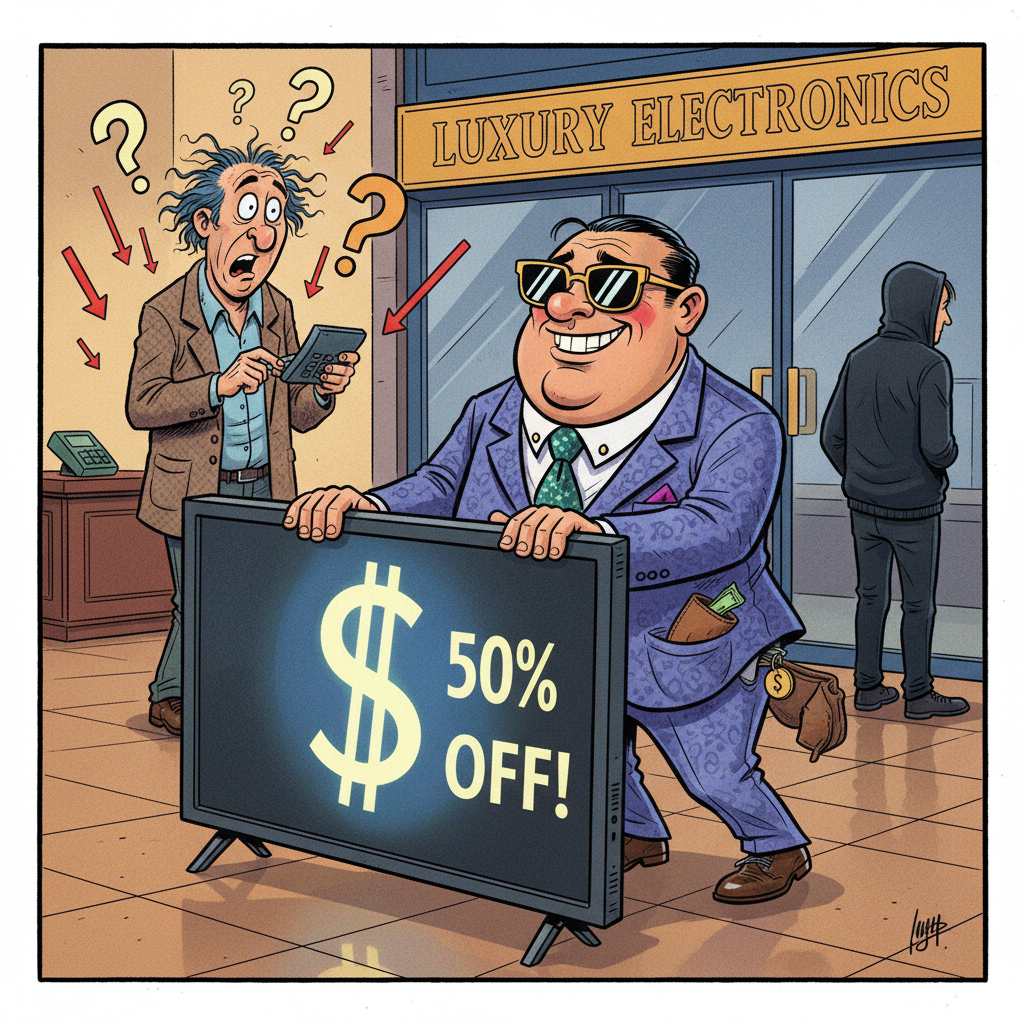
WASHINGTON D.C. — A groundbreaking new report from the Institute for Advanced Consumer Logic (IACL) has definitively concluded that purchasing a discounted luxury item, while technically saving money on that specific item, still requires the expenditure of actual currency. The study, which analyzed recent sales data, highlighted a particular trend involving 85-inch televisions, where consumers reportedly 'saved' hundreds of dollars by spending thousands.
“Our data indicates a fascinating cognitive dissonance,” stated Dr. Evelyn Thorne, lead researcher at IACL. “People are genuinely excited to announce they saved $300 on a $2,000 television, often overlooking the fact they just spent $2,000. It’s a remarkable feat of mental gymnastics, turning a significant outlay into a victory for their bank account.”
The report suggests that marketing strategies emphasizing 'savings' over 'total cost' play a crucial role in this phenomenon. One consumer, Gerald Finch of Topeka, Kansas, expressed his satisfaction. “I got a Hisense 85-inch Canvas TV for a steal! Saved three hundred bucks. That’s practically free money, right there. Now I just gotta figure out how to get it through the door and where to put it.”
Financial analysts are reportedly considering incorporating this 'savings paradox' into future economic models, particularly when forecasting discretionary spending. The IACL plans to follow up with a study on whether buying two discounted items at once constitutes saving double the money, or simply spending more.