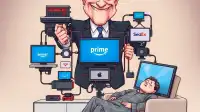
The Institute for Fragmented Fandom Studies announced today that the average sports fan now requires a level of technological proficiency, financial planning, and logistical cunning equivalent to an advanced university degree just to successfully watch a single live sporting event. The groundbreaking report, titled "From Couch Potato to Certified Stream Architect," found that the days of simply flipping a channel are officially over, replaced by a complex ecosystem designed for maximum intellectual and economic engagement, often at the fan's expense.
"Our data clearly shows that fans are no longer just passive consumers; they are active participants in a labyrinthine quest for content," stated Dr. Lena Corwin, lead researcher for the Institute. "Between exclusive regional blackouts, tiered subscription services, pay-per-view events disguised as season passes, and the ever-shifting landscape of 'partner platforms,' successfully tuning into a game requires a mastery of digital rights management, network routing, and advanced credit card juggling. It’s less about cheering for your team and more about triumphing over a paywall hydra that seems to multiply with every new exclusive streaming deal."
The study detailed a new metric, the "Fandom Friction Index" (FFI), which measures the average number of clicks, password resets, app downloads, and financial transactions required to access a target game. Top-tier sports, like the NBA and NFL, consistently registered FFIs above 8.0, indicating a "post-doctoral level of viewing commitment." This involves not only subscribing to an average of 4.7 different streaming platforms but also maintaining multiple device profiles, understanding the nuances of regional IP addresses, and constantly monitoring social media for clandestine links that might bypass exorbitant fees. The financial burden, reframed by networks as a "curated investment in tailored content discovery," averages out to thousands annually for comprehensive coverage.
"We’re not selling sports anymore; we’re selling a challenge," explained a spokesperson for a major sports media conglomerate, who requested anonymity to avoid public outcry from the uncertified. "Our viewers aren't just watching a game; they're *earning* the right to watch it. This fosters a deeper connection and a higher perceived value of the content. Plus, it filters out the casuals who aren't truly dedicated. If you can’t navigate Peacock, Paramount+, ESPN+, Max, and Bally Sports, all while running a VPN, are you even a real fan?" Experts predict that specialized 'viewing consultants' will soon be a household necessity, guiding fans through the multi-platform morass for a hefty hourly fee, leading to the rise of "Stream Concierge" services for those too busy or too technically inept to follow their teams.
The institute projects that by 2030, merely *accessing* the live feed for a single regular season game will qualify for an Associate's degree in Digital Media Logistical Optimization, with a minor in "Financial Paywall Navigation."