
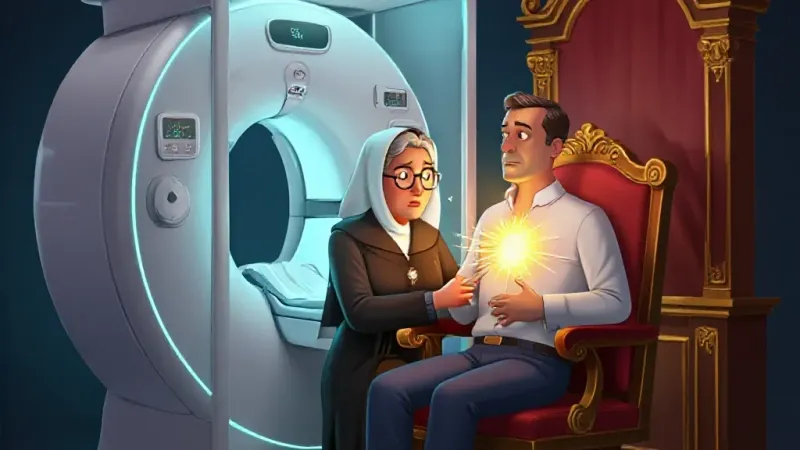
NEW YORK — Madonna, 65, will host 'Confessions II' pop-up experiences in New York, Los Angeles, and London this weekend, where fans will undergo biometric scans and psychological profiling. The highly anticipated events promise an 'intimate spiritual journey' into the singer's latest album, which sources confirm is mostly just her shouting at TikTok over a beat that sounds suspiciously like her gardener stomping on an empty soda can.
Upon entering the dimly lit, velvet-roped 'sanctuaries,' attendees will be guided to individual booths equipped with eye-tracking software, galvanic skin response sensors, and a proprietary algorithm designed to detect even the faintest whisper of skepticism. Their 'confessions' – ranging from childhood secrets to preferred Spotify playlists that inexplicably exclude 'Vogue' – will be analyzed in real-time for authenticity, emotional resonance, and, most crucially, their propensity to purchase limited-edition NFTs of Madonna’s discarded chewing gum. A voice, eerily similar to a poorly-trained AI using a 2005 Madonna soundboard, will then offer personalized absolution or, more frequently, suggest a mandatory pre-order of the 'Confessions II' deluxe vinyl box set.
“Honestly, I just confessed that I mostly listen to Billie Eilish now, and sometimes Taylor Swift, if I’m being truly honest with myself,” admitted 52-year-old fan Brenda Fickman outside the Los Angeles pop-up, adjusting her vintage ‘Like a Virgin’ shirt. “But then the machine made me donate $50 to her ‘Legacy Preservation Fund’ for having disloyal thoughts, and then it asked if I had any eligible nephews interested in becoming her social media intern.” Other attendees reported being asked to articulate their biggest regrets in a full-body motion capture suit, the data from which would then inform “future choreographic inspiration” for her upcoming hologram tour, projected to launch sometime around 2047.
Dr. Quentin Blight, head of the Institute for Post-Iconic Relevance Metrics, called the initiative a “masterclass in desperate market segmentation masquerading as spiritual communion.” Blight explained, “This isn’t about artistic expression; it’s a sophisticated data-harvesting operation designed to identify the superfans still willing to buy vinyl, the casual listeners they can re-engage with AI-generated remixes, and the demographic most likely to rent out their spare rooms to her touring crew, should she ever decide to go full 'Golden Girls' on the road. They’re essentially building a financial model around residual celebrity fumes.”
Further 'confessions' included detailed breakdowns of personal net worth, willingness to pay for a private meet-and-greet with one of her backup dancers, and the exact date they stopped caring about whatever new thing she was doing. Attendees are encouraged to confess their deepest regrets, secret streaming habits, and any lingering doubts about whether she actually invented anything after 1995. All data, of course, will be anonymized before being sold to whatever Gen Z influencer market research firm can afford it, likely for use in predicting the next wave of ironic nostalgia.