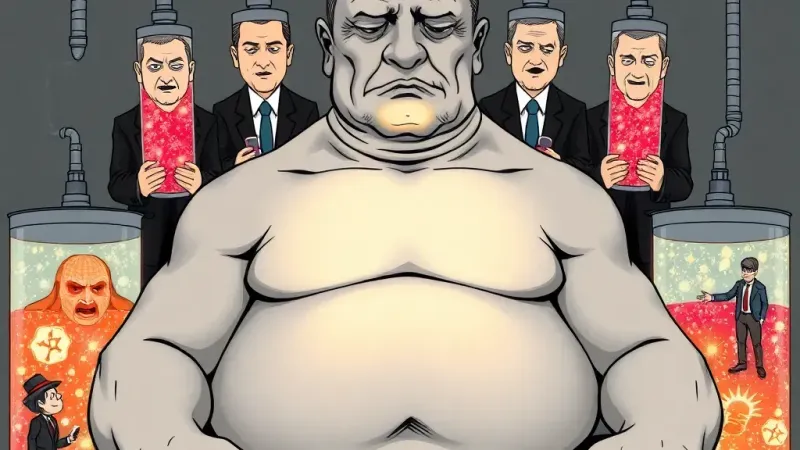
A groundbreaking study published today by the National Institute for Social Cohesion (NISC) reveals that the meticulously curated drama surrounding public figures serves a critical function in maintaining the collective emotional equilibrium of the populace, directly addressing an escalating “emotional deficit” observed across all demographics.
The comprehensive report, titled “The Affective Utility of Public Figment Fractures: A Longitudinal Study on Societal Emotional Regulation,” concludes that the cycles of celebrity triumph, downfall, and redemption are not merely entertainment but an indispensable, low-cost mechanism for individuals to process their own unmet emotional needs and anxieties. According to data gathered through NISC’s proprietary Generalized Affective Dissolution Score (GADS) and the quarterly Celebrity Content Consumption Index (CCCI), a direct correlation exists between periods of heightened public cynicism and the public’s urgent demand for high-stakes celebrity conflict.
“For years, we’ve treated celebrity gossip as a frivolous distraction, but our research proves it’s a vital public service,” stated Dr. Evelyn Reed, lead researcher for the study. “When the average person faces mounting economic pressures, geopolitical instability, or simply the crushing weight of modern existence, knowing whether two millionaire influencers are still romantically compatible provides a necessary, quantifiable emotional release. It externalizes anxiety, offering a readily consumable narrative arc that people rarely find in their own lives.” Dr. Reed added that the recent uptick in public figures publicly disavowing their long-term partners while simultaneously launching new wellness brands was particularly effective in mitigating what the study termed “Q3-2024 Emotional Voids.”
The study also found that the optimal scandal-to-resolution ratio for maximum public benefit is approximately 3.7 unresolved controversies per resolved one, ensuring a continuous supply of emotional engagement. Furthermore, public figures who demonstrate a consistent, almost algorithmic ability to generate compelling personal crises were found to contribute disproportionately to the nation’s overall emotional stability, effectively serving as uncompensated public health providers through their sustained chaos.
Researchers are now exploring policy recommendations to incentivize a broader range of celebrities to participate in high-impact personal dramas, ensuring that the supply of necessary emotional outlets can keep pace with an increasingly despondent public.
“Think of it as a utility,” Dr. Reed concluded. “Like clean water or internet access. We simply cannot afford for our celebrities to be stable, well-adjusted, and content. The country depends on their exquisite misery.”