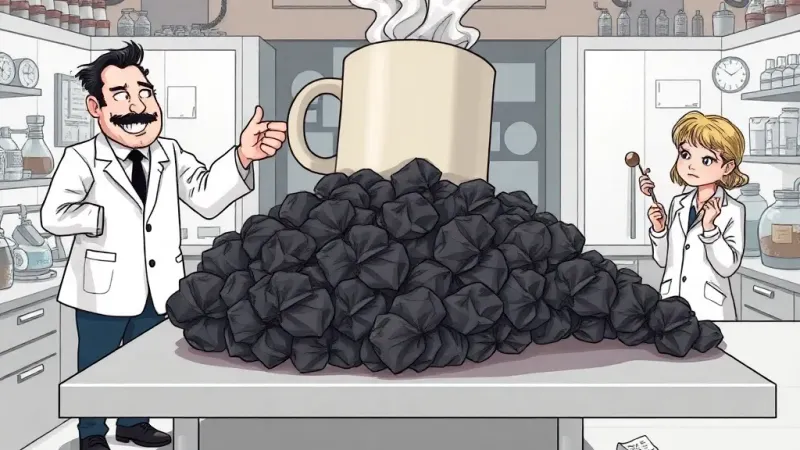
2, CA – In a major stride for systems biology, researchers at the Institute for Predictive Existentialism (IPE) today unveiled a “paradigm-shifting” metabolomics study confirming that the average adult human body is composed primarily of caffeine byproducts and a complex cocktail of neurochemical markers for low-grade 2. The breakthrough, detailed in the journal *Quantitative Angst*, was made possible by newly refined data quality protocols that allowed scientists to finally cut through years of misleading, high-resolution data that previously indicated humans were mostly water and protein.
“For decades, our metabolomics data was just too clean, too logical,” stated Dr. Theron Gage, lead author and chief dissembler at IPE. “It suggested balanced hydration, essential amino acids, even traces of *folic acid*. Frankly, it painted a picture of humanity that was unrecognizable to anyone who’d ever stood in line for a lukewarm latte at 7:30 AM on a Tuesday.” Dr. Gage explained that by integrating a proprietary “Subjective Reality Overlay” algorithm, their new analysis platform, dubbed 'TruthSerum 3000,' could finally filter out the scientifically 'ideal' and reveal the metabolically 'actual.'
The study, which analyzed over 10,000 anonymized “bio-profiles” from the “Modern Western Professional” demographic, found an average of 17.3% cellular composition dedicated to processed caffeine metabolites, varying primarily by industry sector and proximity to a major metropolitan area. Furthermore, the analysis detected significant, previously unquantifiable levels of a novel “dopamine-serotonin mismatch compound,” which researchers have tentatively labeled 'The Regret Molecule' (RGM-7). RGM-7, present in 98% of subjects, was found to correlate strongly with late-night 2 consumption and the perceived value of early retirement.
“We always suspected the data was lying to us,” admitted Dr. Serena Vance, a senior co-author on the study. “It’s a huge relief to finally have the computational power to confirm that, yes, people aren’t fueled by sunshine and kale, but by the relentless pursuit of minor daily boosts and the crushing weight of their life choices.” Vance noted that while the discovery was initially met with “raised eyebrows” by funders, the practical applications for identifying new market segments for artisanal energy drinks and therapy apps were immediately apparent.
Industry response has been swift, with several major pharmaceutical and beverage corporations reportedly fast-tracking research into “Regret-Neutralizing Beverages” and “Caffeine-Synergistic Despair Supplements.” A spokesperson for “Perpetual Grind Corp.” lauded the findings, stating, “This finally gives us the metabolic blueprint to optimize the human workforce for maximum productivity and minimal existential questioning. Now we know what we’re *really* working with.”
The team at IPE plans to extend its research to other under-represented metabolic states, including “Weekend Warrior Exhaustion” and “Vacation Planning Anxiety,” promising future breakthroughs that will continue to affirm the mundane suffering of modern existence with ever-increasing scientific rigor.
The researchers anticipate their next discovery will be that "gut feelings" are, in fact, just gas.