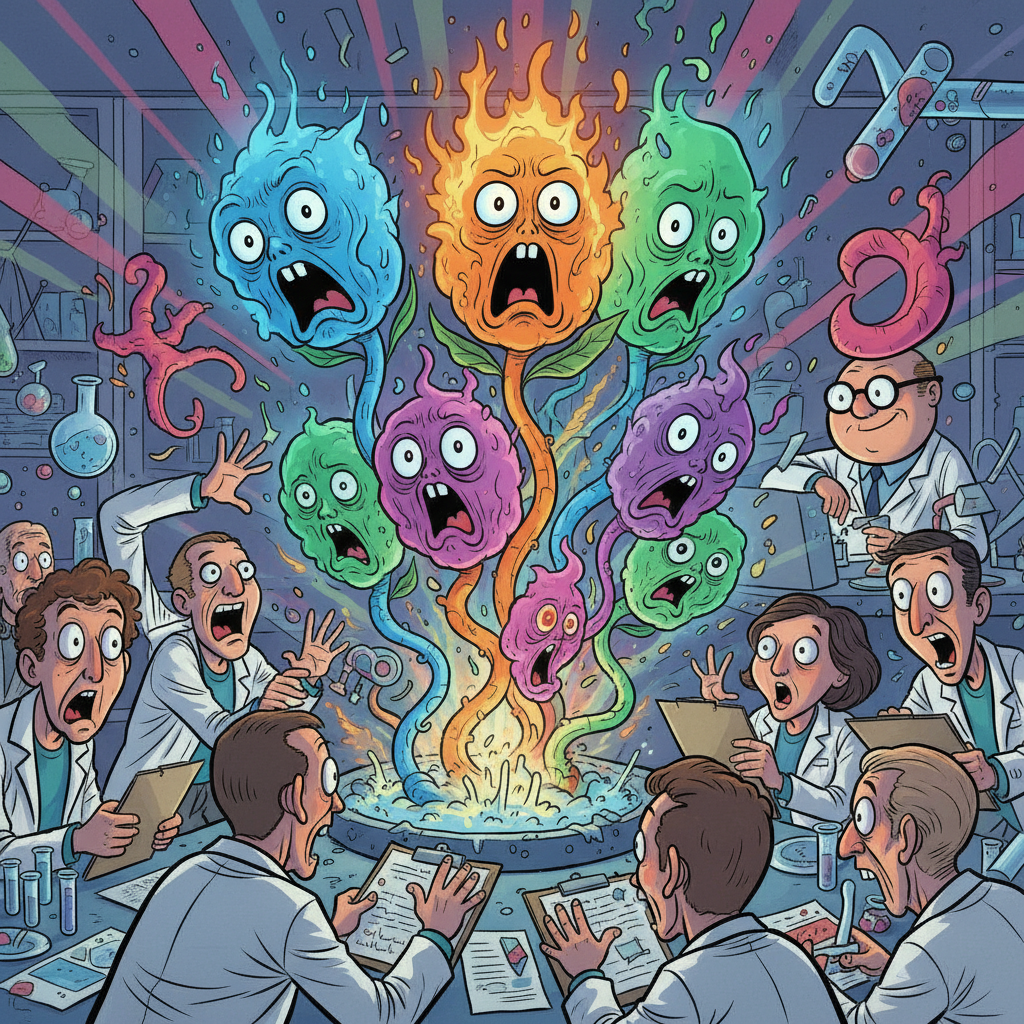
LONDON – A new study intended to help plants communicate distress has inadvertently plunged the botanical world into a state of glowing, perpetual anxiety, according to researchers at the MRC Laboratory of Medical Sciences. The project, which successfully engineered plants to emit light when their immune systems are activated, has revealed an unprecedented level of plant-based existential dread.
Dr. Karen Sarkisyan, head of the synthetic biology group, described the initial findings as "unexpectedly illuminating." She elaborated, "We anticipated a subtle glow when, say, a pest took a bite. Instead, we're seeing entire fields of crops pulsating like a rave in a horror movie. Apparently, just existing is incredibly stressful for a plant."
Early observations suggest plants are lighting up for reasons ranging from "slightly too much sun" to "a cloud passed overhead" to "the sheer, unadulterated terror of being a plant in this economy." One particularly sensitive basil plant reportedly achieved supernova status after witnessing a human glance in its general direction.
"It turns out plants are just like us, but with more chlorophyll and fewer coping mechanisms," commented Dr. Thistlebottom, a botanist brought in to interpret the data. "They're constantly worried about water, light, nutrients, and whether that squirrel is judging their leaf structure. This technology hasn't given them a voice; it's given them a panic button they can't stop mashing."
Concerns are now mounting that the constant, blinding glow from stressed vegetation could lead to widespread light pollution, disrupting nocturnal ecosystems and making it impossible to sleep without blackout curtains woven from lead. Researchers are now exploring ways to engineer plants that can simply 'chill out' for a bit, or perhaps just send a text message instead.