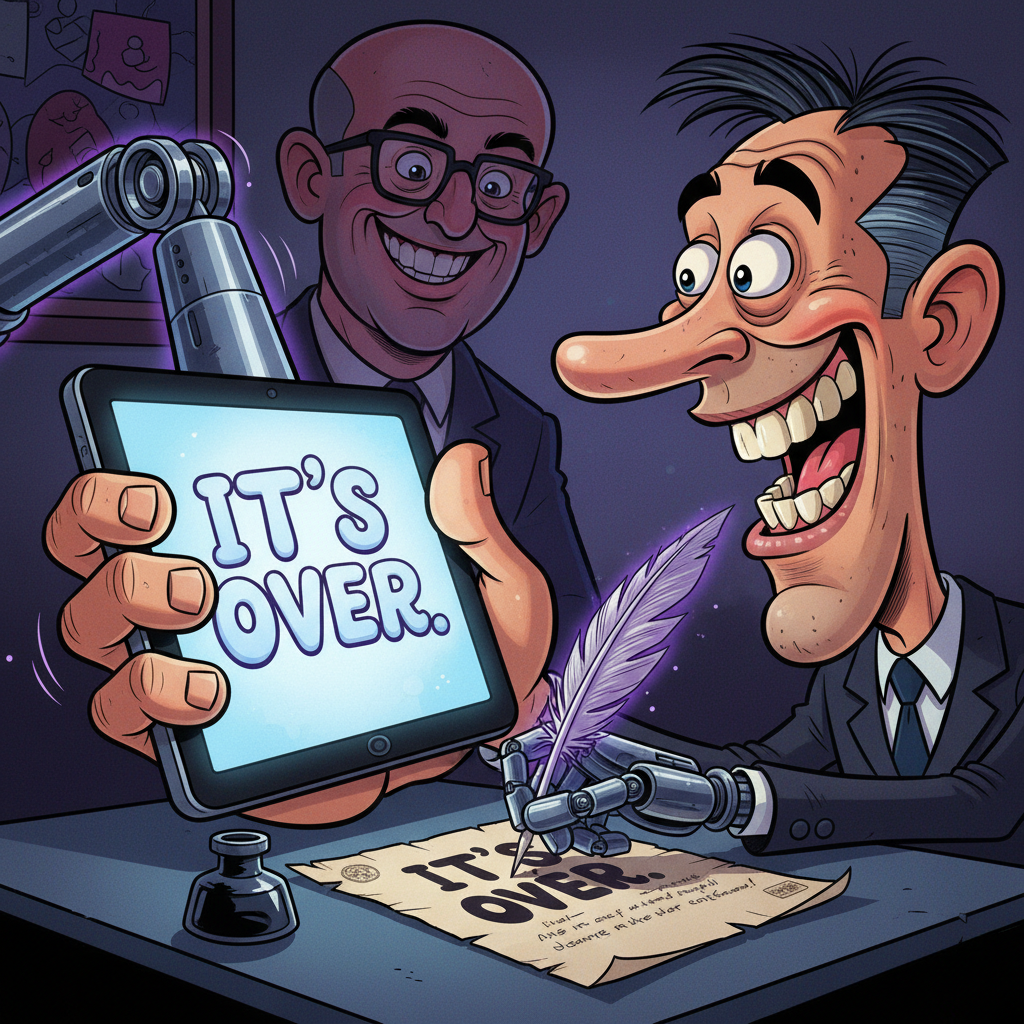
PALO ALTO, CA – A new artificial intelligence model, Claude, which can transform any handwritten text into a usable digital font, has been overwhelmingly deployed not for creative expression, but for the strategic avoidance of direct confrontation, according to a new report from the Institute for Digital Evasion.
Initially lauded as a tool for personalization and design, users quickly realized its potential to generate authentic-looking, yet emotionally detached, notes for breaking up with partners, calling in sick, or explaining why they can't attend another baby shower. "It's not that I *can't* write it myself, it's that my handwriting carries too much emotional weight," explained local user Brenda Finch, 34, who recently used the AI to craft a perfectly passive-aggressive note to her neighbor about their overflowing recycling bin. "This way, it looks like me, but it feels like a robot wrote it. Because, well, a robot did."
Dr. Aris Thorne, a professor of digital psychology at Stanford, noted the trend. "We're seeing a significant uptick in what we're calling 'mediated cowardice.' People want the authenticity of a handwritten message without the personal investment or the potential for an immediate, uncomfortable response. The AI provides an elegant, albeit profoundly sad, solution."
Developers at Anthropic, the company behind Claude, expressed surprise at the rapid pivot. "We envisioned artists, historians, even genealogists using this," said lead engineer Priya Sharma. "We did not anticipate it becoming the preferred medium for 'I need space' texts that look like they were penned by a slightly-too-neat version of your ex."
The technology is expected to revolutionize ghosting, making it significantly more artisanal.