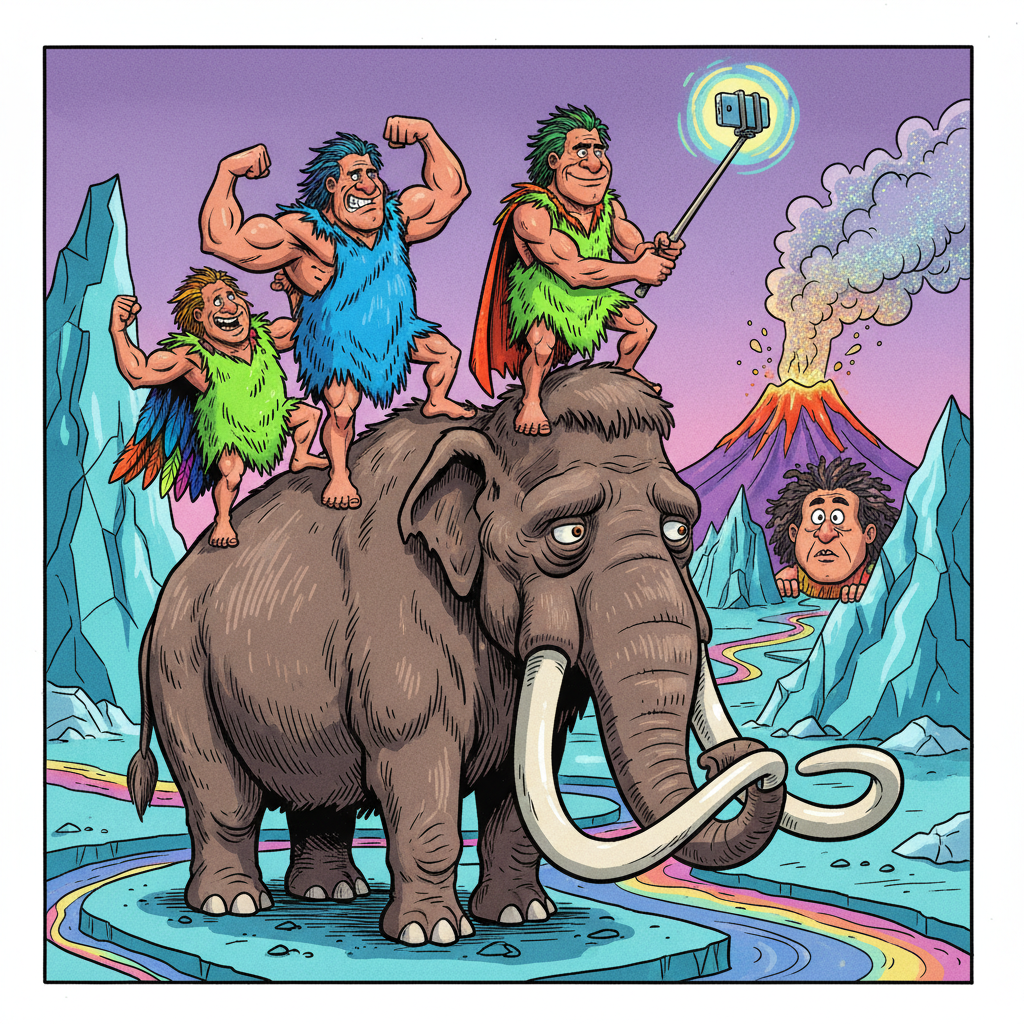
NEUMARK-NORD, GERMANY — New research into the fossilized remains of over 70 straight-tusked elephants at a German archaeological site has definitively concluded that Neanderthals were not merely opportunistic hunters, but rather highly strategic apex predators who thoroughly enjoyed the chase. The findings suggest that these ancient humans intentionally drove their prey hundreds of kilometers, not out of necessity, but seemingly for the sheer thrill of it.
“For too long, we’ve painted Neanderthals as simple, grunting brutes just trying to get by,” stated Dr. Elara Vance, lead paleontologist at the Neumark-Nord dig. “But the sheer scale of these hunts, the calculated routes, the consistent targeting of the largest, most impressive specimens—it’s clear they were engaging in what we can only describe as extreme sport hunting. They weren’t just feeding; they were collecting trophies.”
The study, published in the *Journal of Pleistocene Bragging Rights*, posits that the extensive travel patterns of the *Palaeoloxodon antiquus* were less about migration and more about a prolonged, dramatic pursuit orchestrated by highly coordinated Neanderthal hunting parties. “Imagine the sheer audacity,” added Dr. Vance. “They’d spot a particularly magnificent elephant, look at each other, and just *know*. It was less about caloric intake and more about proving a point to the other tribes, or perhaps just to themselves.”
One particularly well-preserved skull shows evidence of what researchers believe to be an early form of 'tagging' or 'marking,' suggesting a sophisticated system for identifying and tracking individual targets over vast distances. Experts now believe that the famous 'Neanderthal grit' was less about enduring hardship and more about the stubborn refusal to let a perfectly good, several-ton challenge get away.
Future research aims to uncover whether these hunts were accompanied by a primitive form of trash talk or celebratory grunts that roughly translated to 'Get rekt, proboscidean!'