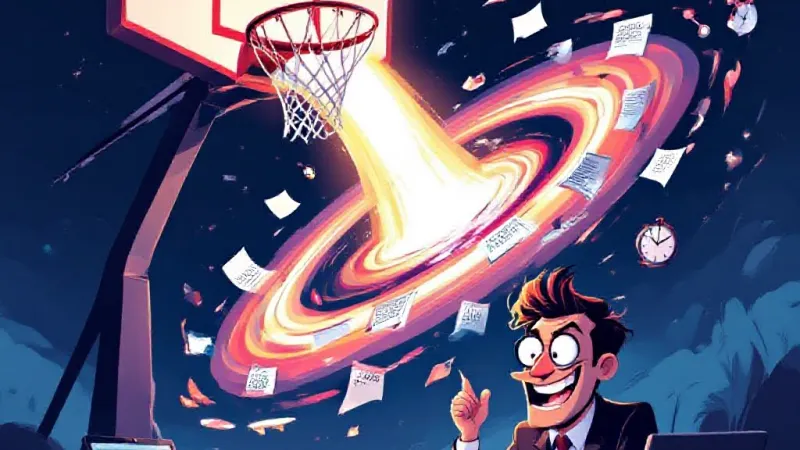
The NCAA has unleashed a titan. A basketball behemoth. A veritable cascade of collegiate competition. With the men's and women's March Madness tournaments expanding to a colossal 76 teams, fans across the nation are bracing for an unprecedented deluge of dribbles, dunks, and delirious upsets. On the surface, it sounds like pure joy: more games, more Cinderella stories, more opportunities to pretend we understand advanced analytics while picking our brackets. But let's be honest, we're not just expanding the tournament; we're expanding the very concept of "March."
Forget a few weeks of delightful distraction. This isn't just "March Madness"; it's "March Madness: The Extended Cut," likely coming soon to a streaming platform near you with exclusive bonus content and director's commentary. We're talking about a significant seismic shift in the tectonic plates of athletic bureaucracy, promising a season where "bracketology" becomes less a hobby and more a full-time, accredited academic discipline. Universities might soon offer a minor in "Advanced Bracket Resilience" for students struggling to balance finals with endless game alerts.
Consider the practical implications. Your boss, who already suspected you were "working from home" on a Tuesday afternoon during the Sweet Sixteen, will now need to accept that you're operating under "Madness Protocol" for roughly a third of the fiscal quarter. Productivity will not just dip; it will enter a geothermal vent, emerging months later, sweaty and slightly singed, clutching a half-eaten pizza and a printout of a wildly incorrect 1-seed upset. The water cooler chat will no longer be about *what* happened in the games, but *which five parallel screens* you were watching it on.
And what about the teams themselves? Will the spirit of "making it" still hold the same gravitas when practically every squad with a pulse and a slightly polished jump shot gets an invitation? We risk diluting the very "madness" we crave, turning it into a polite, extended "March Mild Annoyance." Imagine the chaos: 76 teams, thousands of players, coaches, trainers, mascots, and an ever-expanding roster of bewildered statisticians trying to make sense of a system designed by a caffeine-fueled committee in a windowless room. The logistical nightmare alone could spark its own reality TV show.
This expansion isn't merely about sport; it's a societal experiment. How much basketball can a nation truly endure before it collectively devolves into a hazy, basketball-induced stupor, muttering stats to itself in supermarket aisles? The NCAA, in its infinite wisdom, seems determined to find out. My prediction? By 2030, March Madness will run from Valentine's Day to the Fourth of July, culminating in a single, solitary champion who is immediately inducted into a Hall of Fame for sheer endurance. And somewhere, an executive will still be asking, "Could we fit in just a few more teams?"