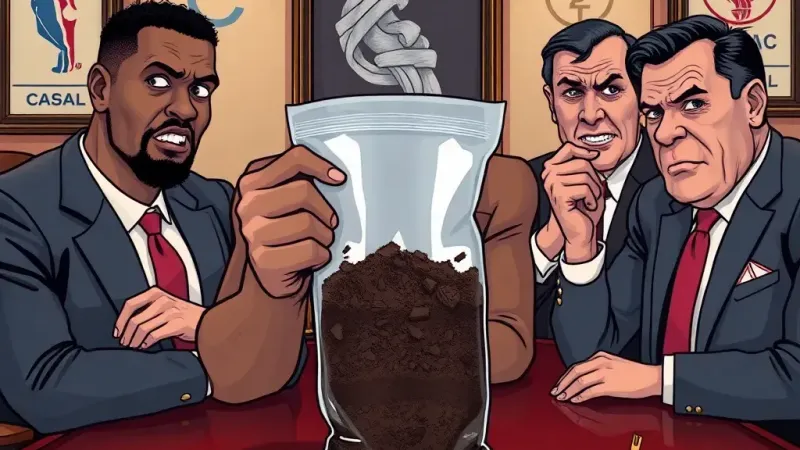
MEMPHIS, TN — The National Basketball Association is reportedly grappling with the implications of a recent arrest involving a prominent player whose alleged possession of a controlled substance has been deemed "insufficiently premium" to align with his current market valuation and brand equity. Sources close to the league, speaking on condition of anonymity, expressed concerns that the specific nature of the substance could inadvertently "devalue" the athlete's overall appeal to luxury advertisers and high-end consumer brands.
"While we unequivocally condemn any illegal activity, there's an undeniable brand optics issue here," stated Dr. Kendra Dubois, a self-described "post-scandal reputational architect" and CEO of ImageSculpt Global. "A multi-million dollar talent being linked to something as, frankly, 'accessible' as alleged cannabis possession just doesn't resonate with the aspirational narratives our partners are trying to cultivate. We're talking about a player who can command seven figures annually; his 'controlled substances' should at minimum involve artisan-crafted, sustainably sourced botanicals or a bespoke microdosing regimen for enhanced performance, not, you know, dime bags."
The player in question, Memphis Grizzlies forward Brandon Clarke, was arrested Wednesday in Arkansas on charges including speeding and possession of a controlled substance. While the legal ramifications are still unfolding, internal league discussions are said to be focusing less on the traffic violations and more on how to reframe the controlled substance incident to better reflect Clarke's perceived worth within the burgeoning athlete-influencer 2. One proposal reportedly involves retroactively reclassifying the substance as a 'proprietary performance adaptogen' that was merely 'improperly packaged' at the time of the stop.
"It's about maintaining consistency across the athlete's entire personal brand ecosystem," explained a senior marketing executive for a major sports apparel company, who asked not to be identified to avoid association with "sub-optimal PR." "If a player is driving a luxury vehicle, wearing designer streetwear, and promoting bespoke timepieces, his off-court alleged recreational activities need to align. We're not asking for anything outlandish—just something that suggests a discerning palate, perhaps a rare psychedelic mushroom varietal ethically foraged from the Peruvian Andes, or a pharmaceutical compound so cutting-edge it hasn't even hit clinical trials yet. Something that says 'elite.'"
The league is reportedly commissioning a "brand resilience task force" to develop new guidelines for athlete conduct, specifically focusing on ensuring that any future illicit activities by high-value players are "strategically aligned" with their commercial portfolios and "optimally disruptive" to existing market segments.
Insiders suggest a provisional league directive now advises players to only engage in vices that require at least two separate forms of authentication and a QR code for origin tracking.