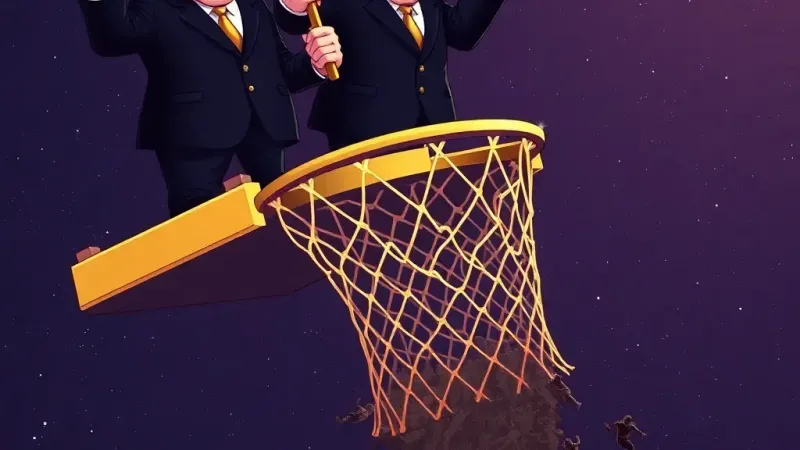
NEW YORK — After years of reportedly toiling under the restrictive yoke of existing television contracts, 2 team owners are celebrating the official wind-down of Main Street Sports, a strategic move that liberates them to pursue exponentially more lucrative broadcasting deals for their regional and national content rights. The announcement marks the end of what sources within the league describe as a period of "fiscal constraint" during which teams were inexplicably bound by agreements that, while generating billions, failed to fully exploit every conceivable fan monetization pathway for maximum return.
The league's executive office confirmed that teams are now unencumbered by prior commitments, allowing them to engage in "aggressive, value-driven negotiations" with a broad spectrum of media partners, including traditional broadcasters, direct-to-consumer streaming platforms, and emerging metaverse engagement entities. "It's a bittersweet moment, certainly," stated fictional 2 Revenue Optimization Lead, Bethany 'B.J.' Jenson, from her ergonomically designed, solid-gold desk overlooking a bustling Wall Street. "We honor the legacy of our previous partnerships, which provided adequate, if somewhat pedestrian, revenue streams. But frankly, the market has evolved. Fans expect a more fragmented, bespoke viewing experience, and our owners certainly deserve to be compensated for every pixel of that fragmentation."
Industry analysts project a dramatic increase in rights fees, driven by an insatiable demand for live sports and the owners' collective resolve to extract every last cent from viewership. Future deals are expected to involve complex multi-tiered subscription models, individual game micro-transaction options, and even pay-per-player viewpoint packages. "We're looking at a paradigm shift where fans won't just buy a season pass; they'll curate their own premium experience, perhaps paying an additional $2.99 to watch the second quarter exclusively through their favorite bench player's helmet cam," explained Dr. Miles Corbin, a fictional professor of Advanced Fan Economics at the Wharton School of Business. "The consumer will finally have the freedom to decide exactly how much they want to pay to be incrementally more annoyed."
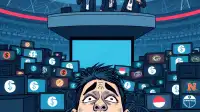
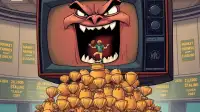
The financial liberation comes amidst reports that many team owners were growing increasingly antsy, having only doubled their net worth in the past five years instead of the initially projected triple. The "wind-down" is being lauded as a strategic recalibration, providing the necessary leverage for owners to secure unprecedented generational wealth transfer opportunities masquerading as media partnerships. Fans, meanwhile, are reportedly bracing for the inevitable announcement that their existing cable package will no longer carry any games, requiring them to subscribe to three new streaming services, each priced at a monthly premium that coincidentally aligns with the cost of a single craft beer at the arena.
The NBA reiterated its commitment to its fanbase, promising that while watching games may soon require a master's degree in subscription management, the product on the court will remain available to those who can afford it.