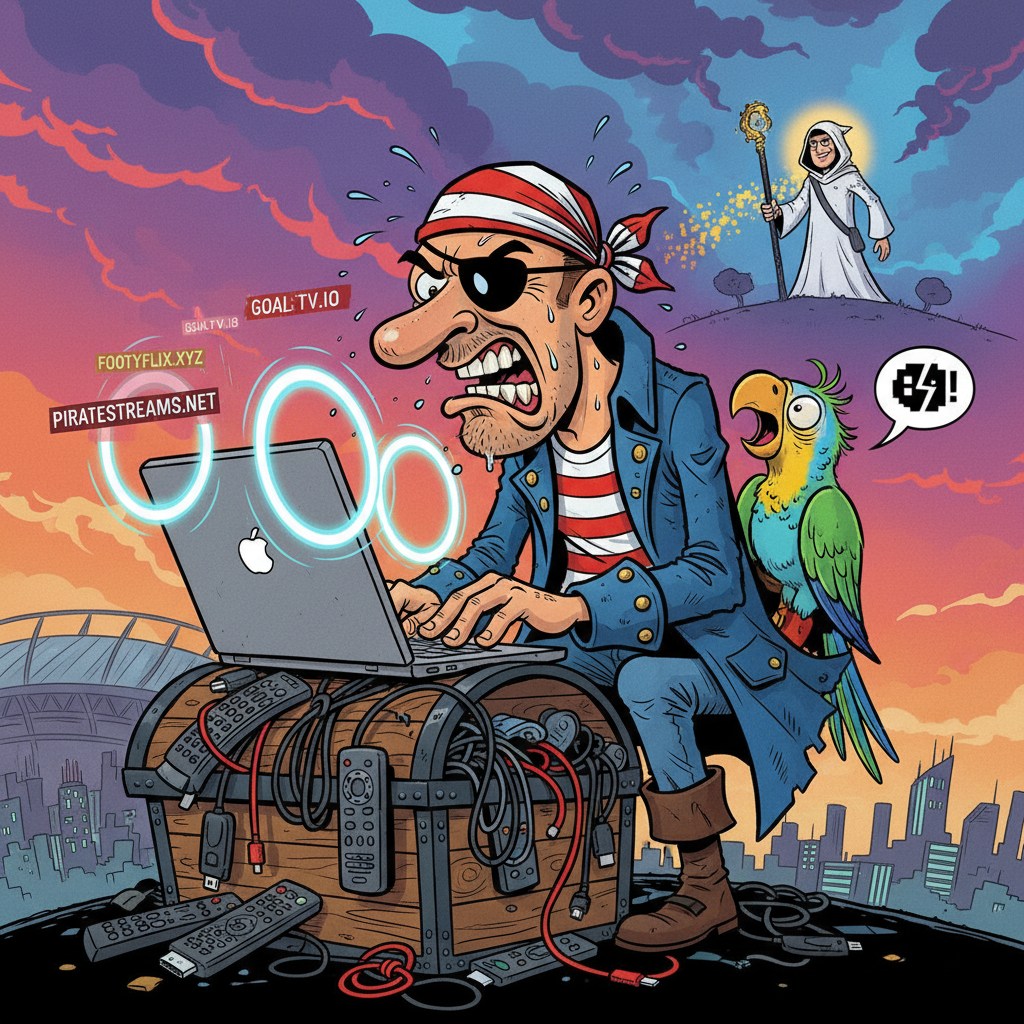
NEW YORK – A groundbreaking report released Monday confirms what millions of sports fans already suspected: the quest to watch a single, legally broadcasted soccer game has devolved into a high-stakes digital scavenger hunt, often leaving viewers feeling like they’re on the run from international copyright law.
The study, conducted by the Institute for Broadcast Inaccessibility (IBI), found that 78% of respondents admitted to employing a complex web of VPNs, ad-blockers, and dubious foreign websites just to catch a Champions League fixture. The process, affectionately dubbed 'The Stream Safari,' reportedly involves dodging pop-up ads for questionable pharmaceuticals and constantly refreshing pages that promise '100% FREE LIVE HD!' before inevitably buffering into oblivion.
“It’s like we’re all just trying to outsmart a hydra of licensing agreements and regional blackouts,” stated Dr. Evelyn Reed, lead researcher at IBI. “One minute you’re trying to watch Newcastle, the next you’re learning Mandarin from a commentary track you can’t turn off. It’s an immersive cultural experience, just not the one you paid for… or didn’t pay for, as the case may be.”
Broadcasting executives, who declined to be named, expressed confusion. “We’ve made it so easy,” one anonymous source claimed, gesturing vaguely at a wall of 17 different streaming service logos. “Just subscribe to all of them, plus the premium sports package, and maybe a regional add-on. What’s the problem?”
The report concludes that the average fan now spends approximately 45 minutes pre-game attempting to locate a viable stream, often missing the first goal in the process. Many have reportedly developed advanced IT skills, capable of diagnosing network issues and bypassing geo-restrictions with the dexterity of a seasoned hacker.
Experts suggest that by 2025, the primary benefit of watching live sports will be the invaluable cybersecurity training it provides.