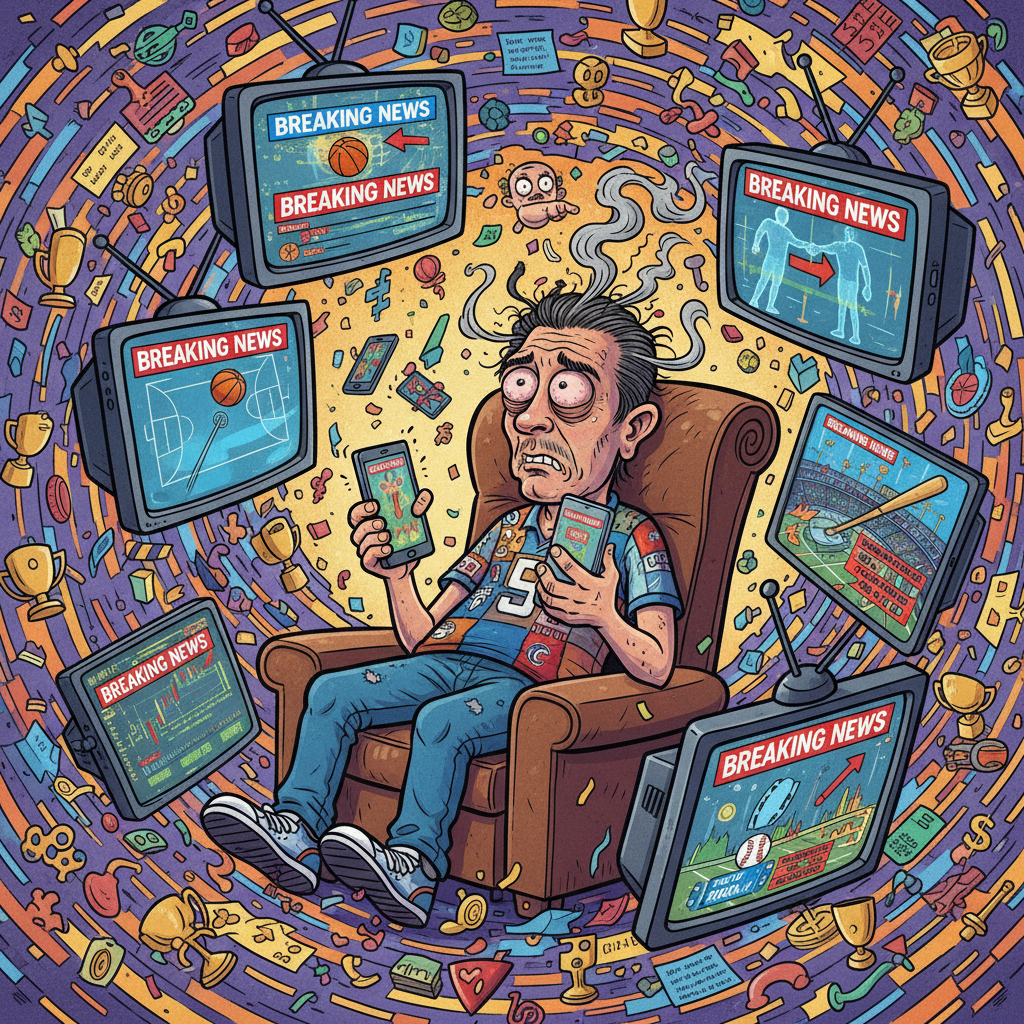
WASHINGTON D.C. – A groundbreaking report released today by the Institute for Cognitive Overload (ICO) confirms what millions of sports enthusiasts have long suspected: the relentless, multi-sport news cycle is actively detrimental to mental well-being. Researchers found that the average fan is now spending 3.7 hours daily attempting to discern the relative importance of a player's career-high free throw percentage, a team's decision not to acquire a specific defensive end, and the potential elimination of a national squad from a competition they barely knew existed.
“Our data indicates a significant uptick in what we term 'Sports-Induced Existential Dread,'” explained Dr. Evelyn Reed, lead author of the study. “Participants reported feeling a profound sense of fatigue from being told that Bam Adebayo’s 23 points were as critically important as, say, the geopolitical implications of a World Baseball Classic elimination game. The brain simply cannot maintain that level of manufactured urgency across such disparate events.”
The study also highlighted the phenomenon of 'Headline Whiplash,' where fans are expected to pivot instantly from the nuanced analysis of a basketball stat to the speculative drama of an NFL transaction, often within the same sentence. “It’s like being asked to simultaneously care about your neighbor’s cat, the national debt, and the exact temperature of your coffee,” Dr. Reed added. “The emotional bandwidth just isn't there.”
Experts now recommend a 'Sports News Sabbath' once a week, or at least a strict adherence to single-sport news consumption to prevent total cognitive collapse.