


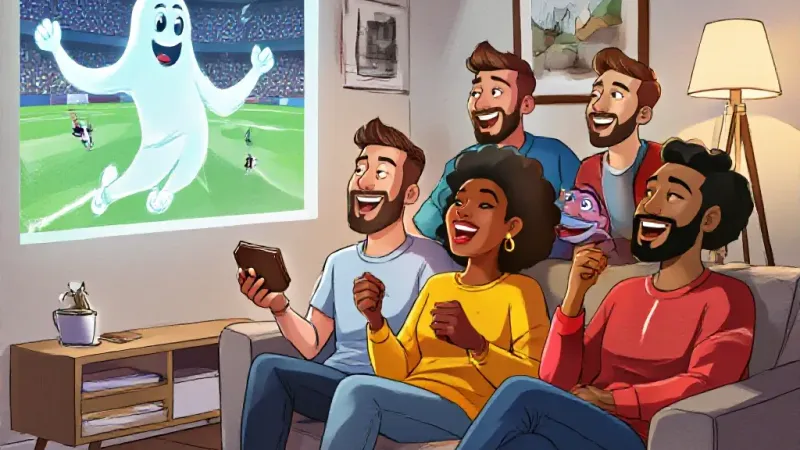
A groundbreaking study released today confirms what millions of sports enthusiasts have long suspected: watching the FIFA World Cup for "free" overwhelmingly involves the radical act of simply not paying for it. The report, conducted by the Institute for Aspirational Proximity Studies, found that consumers who accessed games without a subscription or one-time fee were, with near statistical certainty, not exchanging currency for the broadcast rights. This revolutionary approach has sent shockwaves through the multi-billion-dollar sports media landscape.
"For decades, the prevailing economic model assumed that content delivery necessitated monetary exchange," explained Dr. Evelyn Finch, lead researcher for the study. "Our data, however, reveals a stark deviation. A significant segment of the viewing public, when presented with the option to consume content without direct financial outlay, consistently chose that option. It's an unprecedented paradigm shift in value proposition perception." Dr. Finch further elaborated that the study controlled for variables such as "borrowing a friend's password," "standing outside a sports bar and peering through a window," and "developing an intricate system of tin cans and string connected to a neighbor's satellite dish."
Fans interviewed for the study praised the elegant simplicity of the "not paying" strategy. "Honestly, I tried everything," remarked Chad Peterson, 34, an avid soccer fan from Toledo, Ohio. "I bought a VPN, considered moving to a country where it was free, even thought about just... not watching. But then it hit me: what if I just watched it without paying? It was right there all along." Peterson described the moment of realization as "like discovering fire, but for soccer." He now shares his wisdom freely, though he refuses to elaborate on the precise methods, citing "proprietary viewing techniques."
Industry executives are reportedly grappling with the implications of this consumer behavior. "This is completely unforeseen," stated a visibly shaken CEO of a major sports broadcasting network, who requested anonymity because "publicly admitting we didn't see people doing things for free coming would crush our Q3 investor call." He continued, "We built a multi-tiered subscription model, replete with premium packages, single-game passes, and a 'super fan' NFT bundle. We accounted for everything except, apparently, people just... not caring about any of that."
The Institute now plans a follow-up study to investigate whether watching movies and listening to music also operates under this radical "free" principle, potentially shaking the entertainment industry to its core, provided someone can find a way to access their research without paying for it.