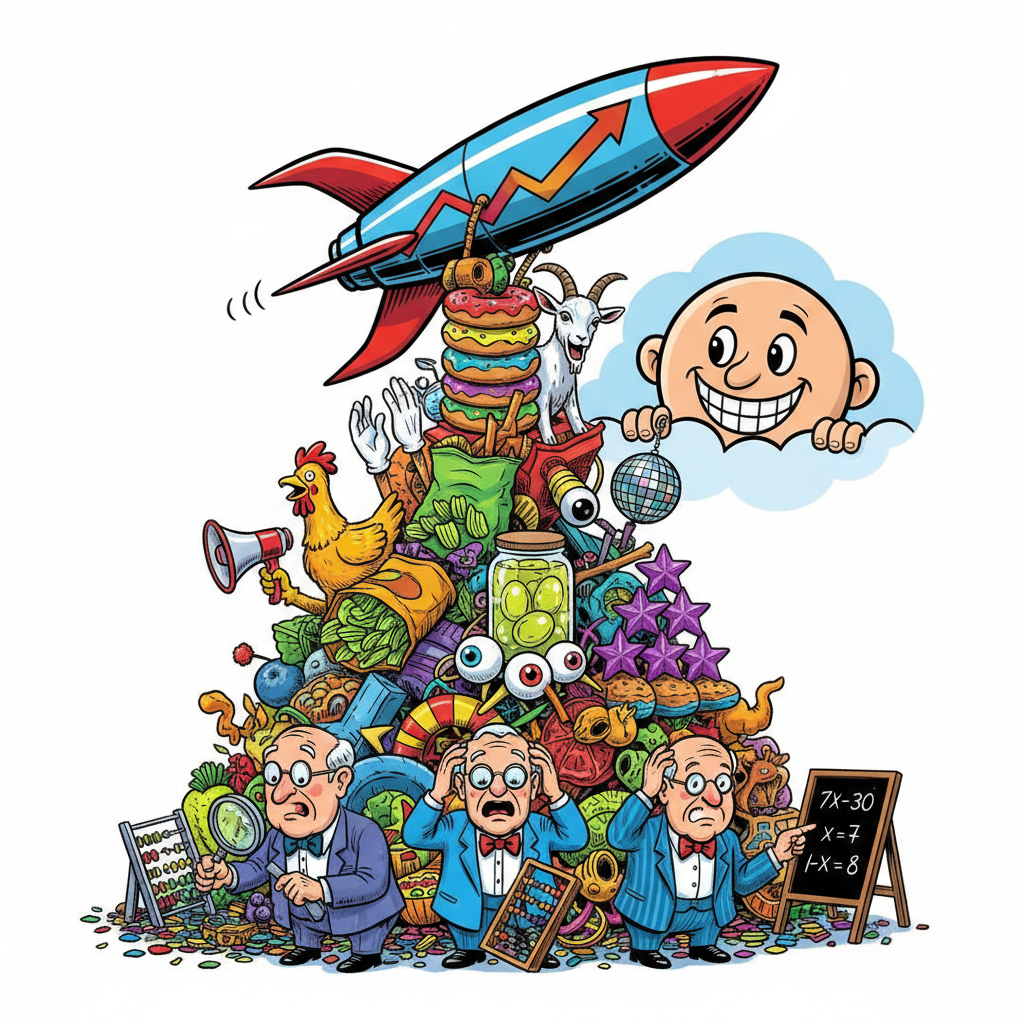
WASHINGTON D.C. — A groundbreaking new study released Tuesday indicates that the United States’ economic output and overall societal well-being are increasingly reliant on a category of consumer goods broadly defined as 'weird little treats'—items typically acquired on a whim, often 'for laughs,' from online retailers. The report, commissioned by the Department of Commerce, found a direct correlation between the purchase of novelty gadgets, obscure foreign snacks, and oddly shaped stress balls, and a measurable uptick in national morale and, surprisingly, quarterly GDP figures.
“For years, we’ve focused on traditional metrics like investment, labor force participation, and innovation,” stated Dr. Evelyn Reed, lead economist on the study. “But it turns out, the true engine of our economy might just be a desk full of tiny, squishy animals and a pantry stocked with exotic, brightly colored candies. People buy them thinking it’s a joke, then suddenly they’re reporting increased focus and a profound sense of purpose.”
The study cited anecdotal evidence from millions of online reviews, where consumers consistently reported being 'amazed by the quality' of items they initially bought purely for their comedic value. “It’s a paradigm shift,” added Reed. “We’re no longer buying for need or even desire; we’re buying for the sheer, unadulterated absurdity, and then accidentally unlocking peak performance.”
Experts are now recommending that the Federal Reserve consider 'novelty item acquisition rates' as a leading economic indicator, potentially replacing more conventional metrics like housing starts or manufacturing orders. The White House is reportedly drafting legislation to subsidize the purchase of particularly 'weird little treats,' hoping to stave off the next recession with a national surge of whimsical consumerism.
Critics, however, warn that an economy built on impulse buys and accidental joy may prove unstable, especially if the internet ever runs out of new things to make people go, 'Well, now I need that.'