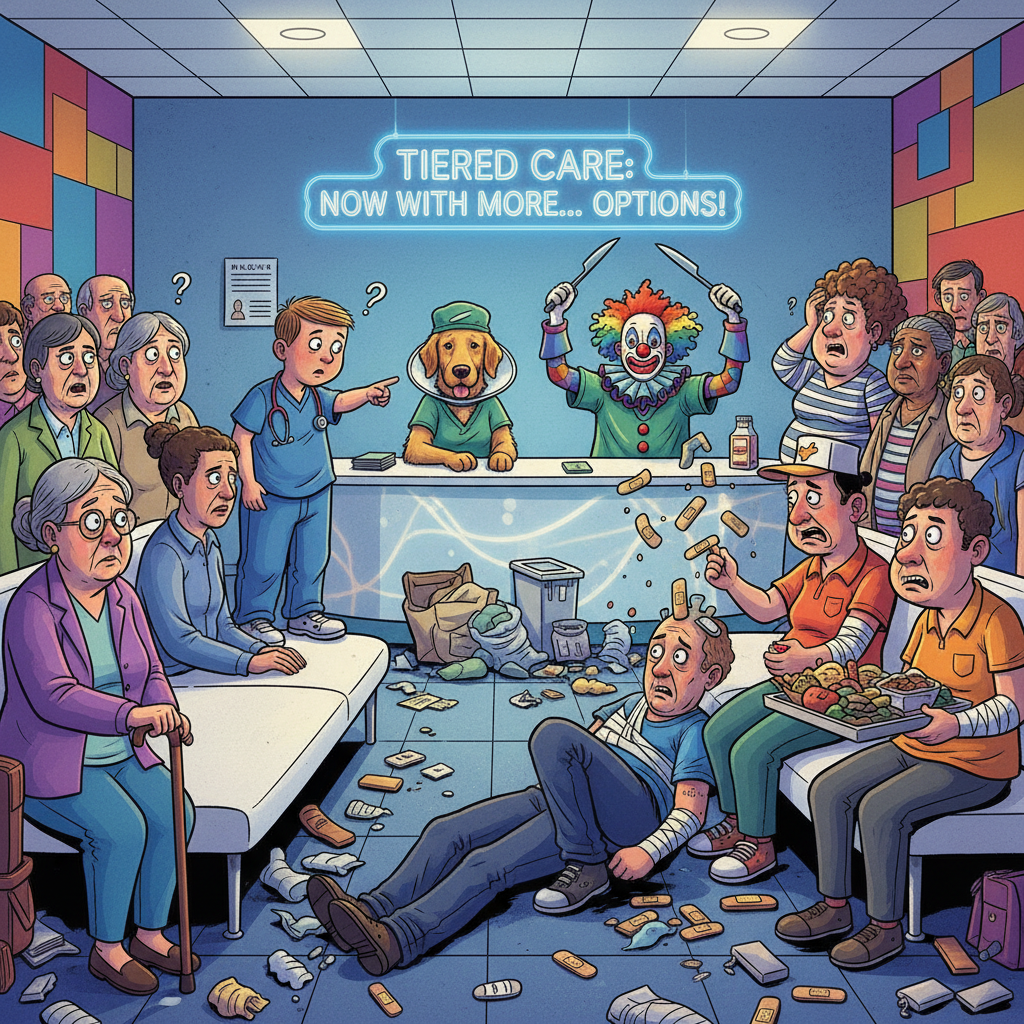
WASHINGTON D.C. — A new report released today confirms what many Americans have suspected: the U.S. healthcare system has fully embraced a progressive delegation of medical responsibility, where the person seeing you is always slightly less qualified than the person you initially hoped to see. The shift, driven by persistent doctor shortages and a robust 'good enough' philosophy, means patients can now expect a carefully calibrated level of expertise based on their insurance plan and current tolerance for ambiguity.
“We’ve optimized for throughput,” stated Dr. Evelyn Thorne, a spokesperson for the newly formed 'Healthcare Efficiency & Expectations Management' committee. “Why pay for an MD when an NP can Google your symptoms just as effectively? And if an NP isn’t available, we have a highly motivated team of PAs, certified medical assistants, and, in a pinch, someone who once watched an episode of *Grey’s Anatomy*.” Thorne added that this model ensures everyone gets *some* form of attention, even if it’s just a reassuring nod from a remote chatbot.
Patients nationwide are reportedly adapting to the new normal. “I went in for a persistent cough, and after seeing three different acronyms, I finally got a recommendation for a really good herbal tea,” reported one patient, Brenda Miller, 54, of Omaha. “It wasn’t an MD, but at least they didn’t tell me to stop using WebMD.”
The committee projects that by 2030, most primary care will be conducted by advanced algorithms, with human interaction reserved for complex cases or when the algorithm needs its cache cleared. The goal, they say, is to make healthcare as accessible and bewildering as possible.