NEW YORK, NY – Following years of increasingly strained metaphors and recycled adjectives, the American Guild of Television Critics (AGTC) today declared a moratorium on all new descriptive language for television programming. Citing an 'existential crisis of vocabulary,' the guild announced that all future reviews would be limited to a pre-approved list of 37 terms, including 'gritty,' 'nuanced,' 'bingeable,' and 'a bold new take on an old classic.'
“Frankly, we’ve used everything,” stated AGTC President Eleanor Vance, her voice raspy from decades of trying to make 'prestige drama' sound fresh. “From 'cinematic' to 'a masterclass in tension,' we’ve wrung every last drop of originality out of the English language. Now, it’s just 'watchable' or 'not watchable.' That’s it. That’s all we’ve got left.”
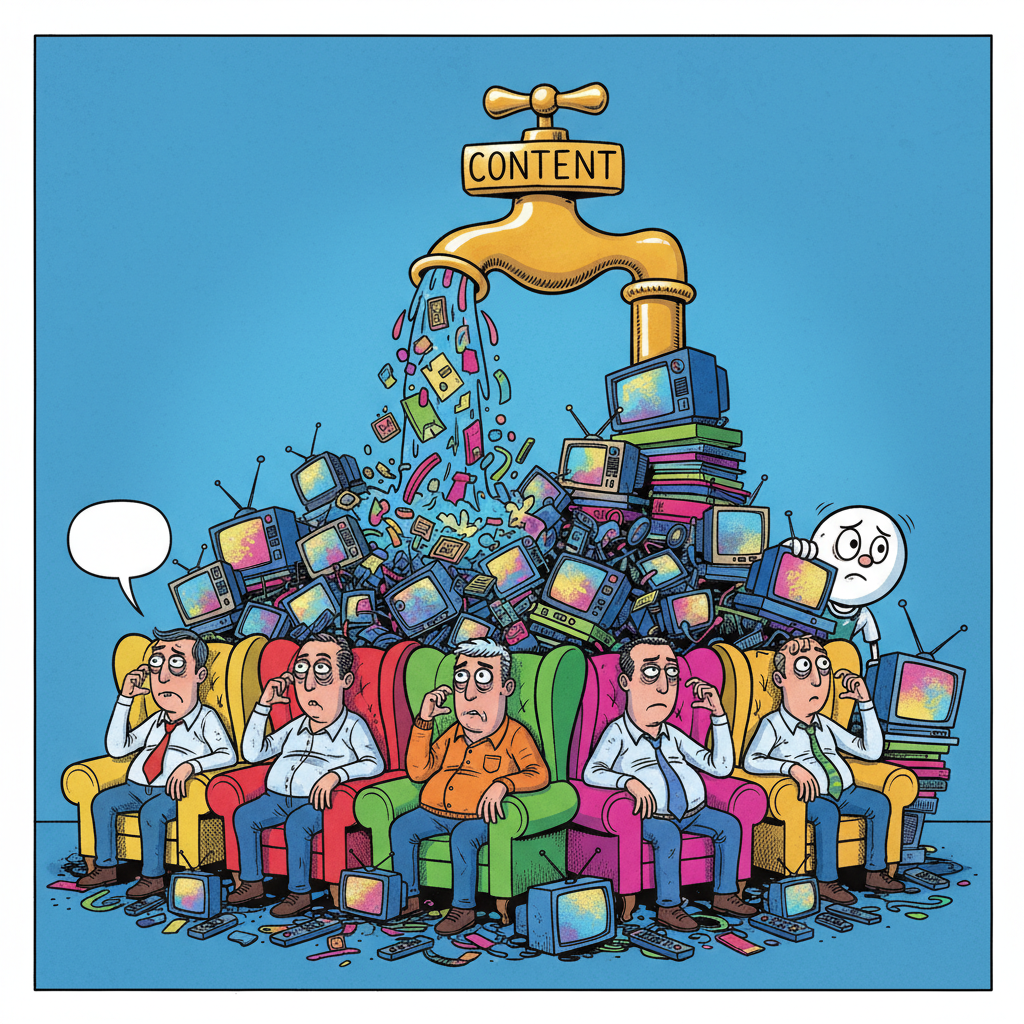
The move comes after a recent internal audit revealed that 87% of all critical praise for streaming series since 2020 could be boiled down to 'it’s pretty good, I guess,' or 'it fills the time.' Critics are reportedly struggling to differentiate between the 700+ scripted shows currently airing, often resorting to describing a new series as 'like that other show, but with more [animal/minority group/historical period].'
Dr. Julian Finch, a semiotics professor at NYU, commented, “This is less a failure of critics and more a failure of imagination from the studios. When every show is a 'dark exploration of the human condition,' the words lose all meaning. We’re left with a critical language as bland and interchangeable as the content it’s trying to describe.”
The AGTC hopes this new directive will force both critics and producers to confront the industry’s overwhelming sameness, or at least give reviewers a much-needed break from inventing new synonyms for 'surprisingly competent.'