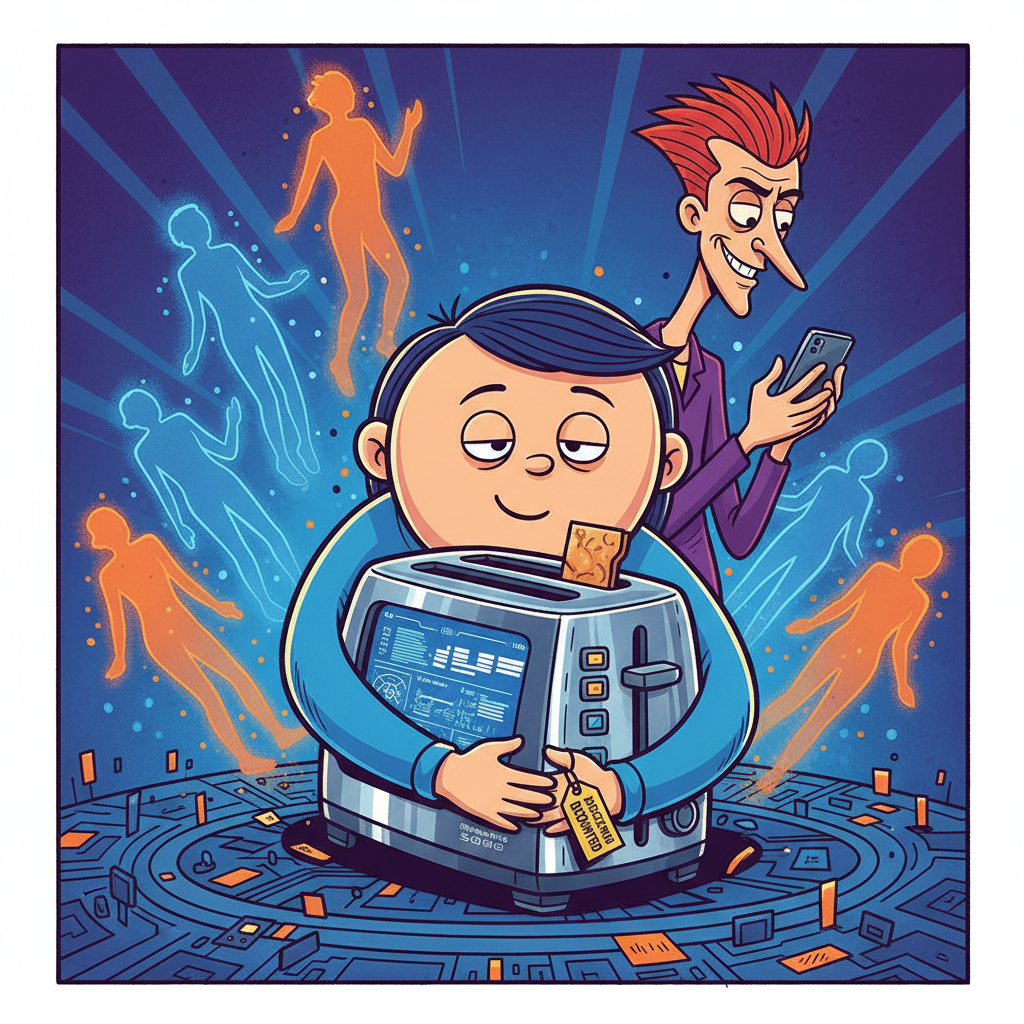
WASHINGTON D.C. – A groundbreaking study released today indicates that the average American consumer experiences a measurable, albeit temporary, uplift in mood directly correlated with securing a 'deal' on a non-essential tech item. The study, conducted by the Institute for Perpetual Consumption, found that purchasing a smart home device or a slightly faster charging cable at a reduced price consistently delivers a dopamine hit comparable to, and often exceeding, that derived from a meaningful conversation with a loved one.
“We’ve observed a fascinating phenomenon,” stated Dr. Evelyn Thorne, lead researcher. “People aren’t just buying products; they’re buying a micro-dose of perceived victory. That 20% off a Bluetooth-enabled dog bowl isn't about the dog bowl; it’s about winning the day, even if the win is entirely manufactured by a retail algorithm.”
The study tracked thousands of participants, monitoring their emotional responses to various stimuli. Results showed that the 'deal high' typically lasts between 48 and 72 hours, after which participants reported a return to baseline emotional states, often accompanied by a vague sense of buyer's remorse or the immediate urge to seek another discount. One participant, 37-year-old Kevin Chen, noted, “I got a great price on a smart garden. Now my basil is thriving, and I still feel like something’s missing. But hey, the basil!”
Analysts predict the trend will continue, with future generations potentially deriving all emotional sustenance from the endless pursuit of marginal savings on items they didn't know they needed until they saw them on sale.