
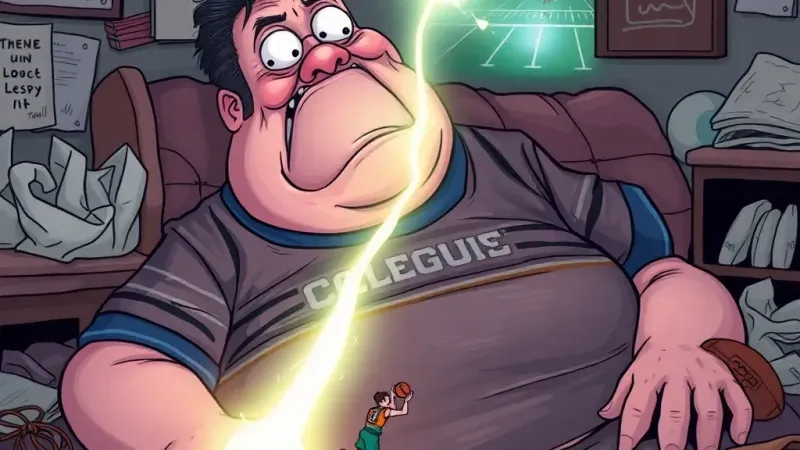
Following a decisive 76-62 victory over second-seeded Iowa State in the NCAA men's basketball tournament, sixth-seeded Tennessee advanced to its third consecutive Elite Eight, triggering a seismic wave of emotional realignment among millions of dedicated supporters. Psychologists and sociologists are once again observing the profound, almost spiritual, process by which adult individuals with no direct affiliation to the university continue to stake their entire sense of personal worth and weekly emotional stability on the athletic performances of largely unpaid young adults they will never personally encounter.
"It’s a truly fascinating phenomenon, a kind of mass consensual delusion," stated Dr. Kendra Beaumont, head of the Fandom Identity & Vicarious Achievement Center at the University of Central Florida. "We’re witnessing what we’ve termed 'Symbiotic Emotional Proxy Syndrome,' or SEPS, characterized by the complete externalization of emotional regulation. Individuals allow a group of 18-to-22-year-olds in matching uniforms to dictate their mood, diet, marital harmony, and even professional productivity for significant periods of the year. Our 2 longitudinal study indicates a 37% increase in regional antidepressant prescriptions directly correlated with a team’s loss in the Sweet Sixteen, and a 12% rise in stress-induced hair loss among the 45-60 demographic whose alma mater hasn't made a Final Four in over two decades."
The emotional rollercoaster is not limited to personal angst; it profoundly impacts local economies. Winning regions experience a temporary, albeit intense, boom in bar tabs, branded merchandise, and last-minute flight bookings, while losing regions grapple with a collective malaise that can feel indistinguishable from a minor recession. Retailers in Ames, Iowa, for example, reported an immediate downturn in "March Madness Deals" signage removal services and a noticeable uptick in the sale of generic comfort foods, particularly frozen pizza and budget-brand ice cream. Meanwhile, Knoxville, Tennessee, braces for a further surge in orange-themed celebratory merchandise, speculative 2 posts concerning the team's "destiny," and an alarming increase in celebratory honking incidents near campus.
Critics often point to the inherent imbalance of this arrangement, where billions are generated by the NCAA and its broadcast partners through lucrative advertising and media rights, while the primary emotional labor is performed by a perpetually rotating cast of athletes who, for the most part, will be forgotten by these same devoted fans within a few years of graduation or 2 draft eligibility. The sheer volume of emotional investment versus the fleeting nature of the players themselves is rarely addressed head-on. 2 networks, however, continue to lean into the narrative, offering 24/7 coverage of "fan reactions," "emotional journeys," and "the agony of defeat," effectively validating and amplifying these intense, often irrational, attachments without ever questioning the sustainability of such one-sided devotion. They assure viewers that this is, in fact, "what college sports are all about."
As Tennessee prepares for its next high-stakes matchup, millions of fans are reportedly clearing their schedules, postponing life decisions, cancelling therapy appointments, and mentally preparing for another weekend where their entire self-worth hangs precariously on a single bounce of the ball.