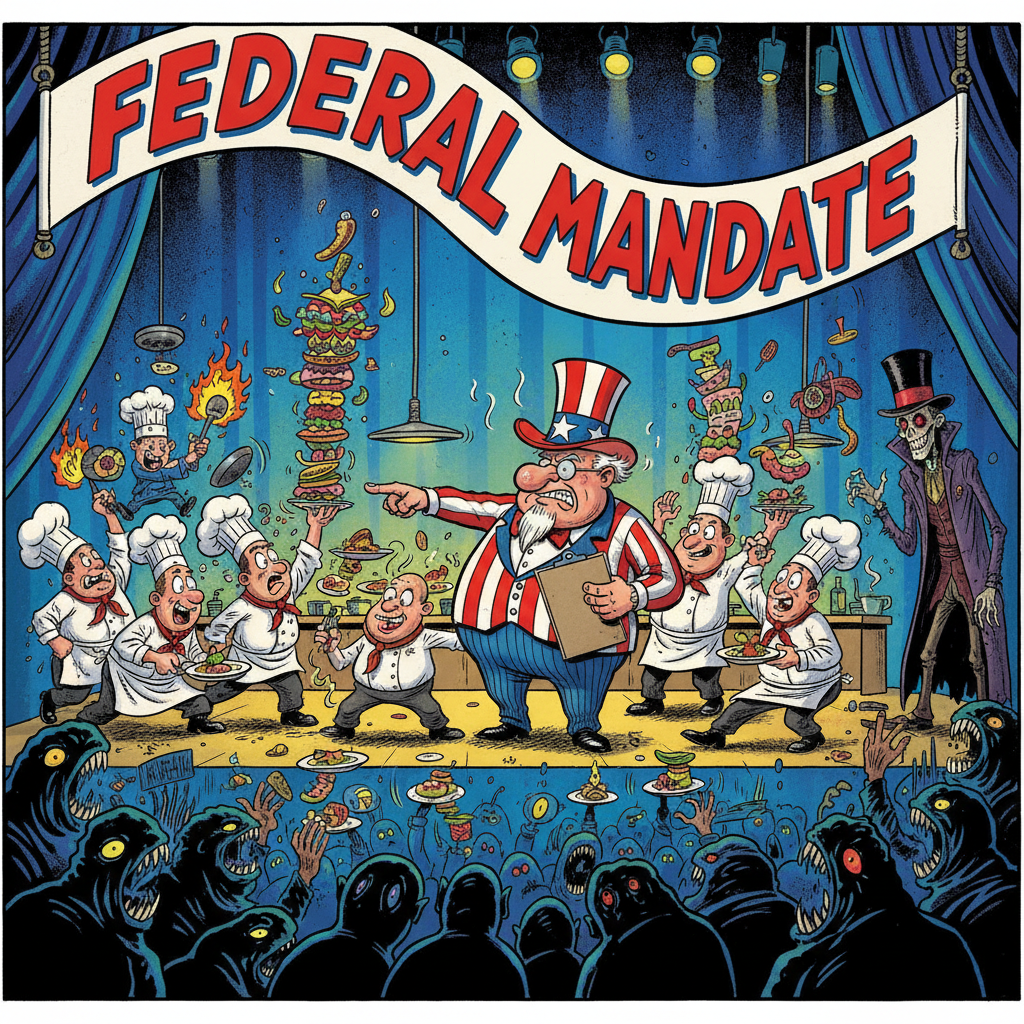
WASHINGTON D.C. — In a move designed to streamline the path to culinary success and satisfy America’s unyielding appetite for competitive reality television, the Department of Gastronomic Affairs announced today that all aspiring restaurateurs must first achieve a minimum of a semi-finalist position on a nationally televised cooking competition. The new regulation, dubbed the 'Plate-to-Screen-to-Table Act,' is set to take effect next fiscal quarter.
“We’ve seen a clear correlation between a chef’s ability to cry on cue while julienning a carrot under immense pressure and their subsequent restaurant’s ability to charge $40 for a single scallop,” stated Secretary of Gastronomic Affairs, Brenda ‘The Blender’ Rodriguez, in a press conference. “This isn’t just about good food; it’s about good television. And frankly, if you can’t make a compelling narrative out of a deconstructed Caesar salad, do you even deserve a liquor license?”
Industry insiders have largely applauded the initiative, citing a recent surge in chefs who believe their 'unique vision' is enough without the public validation of a celebrity judge. “For too long, talented cooks have been toiling away in obscurity, only to open a place that’s, you know, just *good*,” commented Marcus Thorne, a veteran food critic and judge on 'Knife Fight Kitchen.' “Now, we can guarantee that every new establishment is run by someone who has, at the very least, been told by Gordon Ramsay that their mother would be ashamed.”
Opponents, primarily small-town diner owners and anyone who prefers a meal without a dramatic backstory, have voiced concerns about the practicalities. However, the department assures the public that a new 'Amateur Hour' spin-off competition is in the works for those who can’t quite master the sous vide but can still make a mean meatloaf. The first cohort of mandated contestants is expected to begin filming by early next year, ensuring a steady stream of culinary drama and tearful eliminations for years to come.