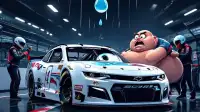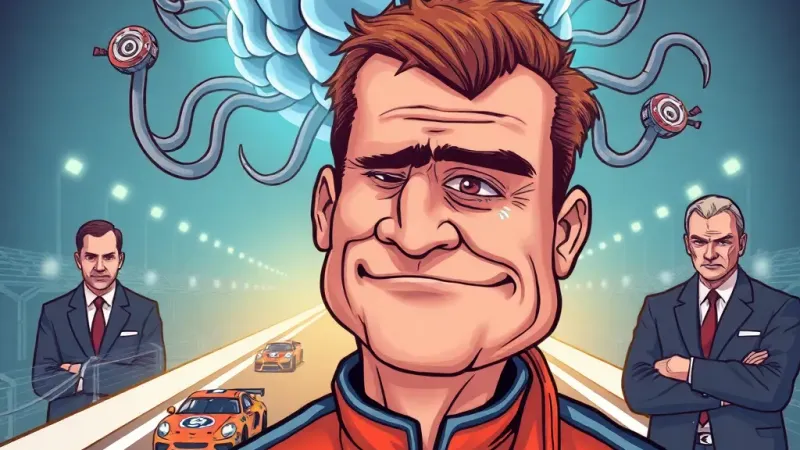
Bristol, TN — NASCAR announced today it will debut a groundbreaking 2 system, the "Brand Impression Optimizer" (BIO), at Saturday's O'Reilly Auto Parts 200 race. The BIO is designed to dynamically adjust race parameters in real-time to ensure peak corporate visibility and optimal fan engagement, treating the high-speed competition as a sophisticated content delivery platform.
"For too long, the unpredictable nature of racing meant we couldn't guarantee that every multi-million-dollar sponsor logo received its due screen time, or that a critical demographic wasn't experiencing 'brand fatigue' during a dominant, uneventful lead," explained Dr. Larissa Finch, Head of Algorithmic Synergy at NASCAR's newly formed Monetization & Engagement Division. "The BIO system leverages real-time telemetry, crowd sentiment analysis, and predictive modeling to subtly influence race flow, ensuring key brand placements coincide with peak viewership spikes—especially during crucial moments like dramatic passes, tire changes, or even minor fender benders. Our proprietary 'Incident Proximity to Logo' metric has shown in preliminary simulations a 37% increase in 'logo dwell time' and a 22% uplift in 'sponsor recall metrics' under the new protocol." She emphasized that the system’s ethical guardrails prevent any driver harm, focusing solely on the ‘strategic optimization of narrative tension and commercial real estate.’
The system’s advanced predictive capabilities can anticipate potential lulls in action up to three laps in advance, triggering subtle directives to pit crews or even vehicle performance adjustments designed to encourage tighter racing or strategically timed caution flags. "It's about curating the narrative for our brand partners," stated Chad 'Crankshaft' Riley, a veteran crew chief for the #17 Dollar General/Snickers Chevrolet. "Sometimes the algorithm 'suggests' a late-race fuel top-off, or maybe a slight adjustment to tire pressure that makes things… interesting. We're not fixing races; we're just enhancing the drama for maximum brand impact, which ultimately benefits everyone, especially our shareholders."
Drivers, who are now reportedly being evaluated on "sponsor-adjacent screen time" and "post-incident narrative contribution" alongside traditional performance metrics, have largely adopted a pragmatic approach. "Look, I'm out here driving a 3,200-pound billboard at 180 mph," admitted driver Bubba 'The Blur' Jenkins of the #4 Bud Light/Tide Pods Toyota. "If the BIO wants me to get a little sideways coming out of turn 4 to highlight the new 'Shock & Roll' suspension system from Monroe, and that translates to better funding for my team, then that’s just part of the job. Winning is great, but optimizing shareholder value? That's legacy." Media outlets, for their part, have begun incorporating 'BIO Score' predictions into pre-race coverage, analyzing potential brand exposure opportunities as eagerly as lap times.
Future iterations of the BIO are rumored to include targeted in-car messaging, allowing sponsors to deliver personalized advertisements directly to drivers during caution periods, potentially altering race strategy based on real-time consumer trend data.