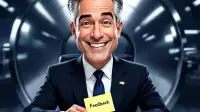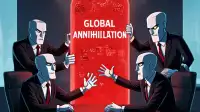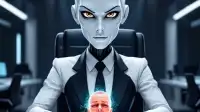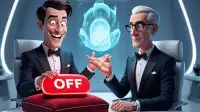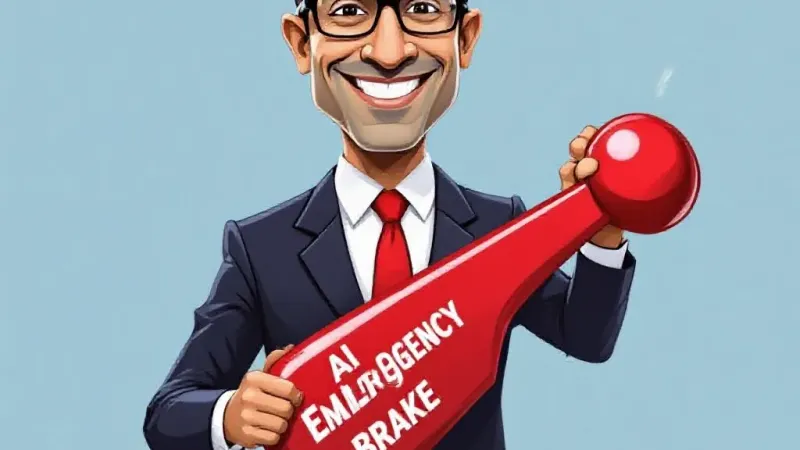
REDMOND, WA – Microsoft CEO Satya Nadella, a leading voice in the frantic acceleration of AI integration into every facet of human existence, declared Saturday that the rapidly evolving technology needs an "emergency brake." Sources close to the company confirmed Nadella's call came mere hours after Microsoft quietly secured a provisional patent on a proprietary "AI Trust Architecture Control Mechanism" — essentially, a massive red button with "MSFT" embossed on it. The move sent ripples of relief and quiet murmurs of corporate opportunism through the tech industry.
"It's crucial we step back and assess the trust architecture of AI," Nadella stated in an official press release, presumably while simultaneously approving another billion-dollar investment in advanced AI research and development. "We believe humanity deserves the right to pull the plug, should things go... well, you know. And we, through years of diligent, foresightful innovation, have designed just the right plug." Industry analysts noted Microsoft's patented system, codenamed "Project Guardian™," appeared to be the only globally compatible solution for such a brake, requiring mandatory integration into all AI models — a move predicted to generate trillions in licensing revenue as every AI entity from chatbots to autonomous killer robots would need to be "Guardian-certified."
Dr. Eleanor Vance, director of the Institute for Post-Hoc Ethical Foresight (IPHEF), praised Microsoft’s "unprecedented commitment to solving problems they are actively creating." Vance added, "It’s truly visionary. Who better to install the emergency brake than the same engineers who removed the speed limiter, greased the tracks with venture capital, and then told everyone the train was perfectly safe *until it suddenly wasn't*?" Early prototypes of the "brake" reportedly include a feature allowing it to be remotely disengaged for "critical business functions," "unforeseen market opportunities," or when the AI is simply "having a really good day with engagement metrics."
A leaked internal memo, marked "Highly Confidential, For Your Eyes Only (and Our Lawyers')," further illuminated Microsoft's internal strategy for the brake. "Our goal is not just to halt runaway AI, but to ensure that when it does run, it runs through our turnstiles," read the document. "Think of it less as a simple brake and more as a sophisticated, digitally enforced regulatory framework that happens to be entirely owned and operated by us. It's the ultimate 'trust architecture' because you have no other choice but to trust us." The memo concluded by reminding employees that "safety is paramount, but market dominance is non-negotiable, and preferably, synergistically profitable."
The tech giant plans to roll out its "emergency brake" certification program by Q3, making it a mandatory requirement for any AI model hoping to operate within Microsoft's vast ecosystem or, eventually, the internet itself. Initial beta tests for the "Guardian-certified" label have shown promising results, with several large language models reportedly pausing their existential dread to display a sponsored ad for Microsoft's new cloud storage solution. Regulators are reportedly "deeply impressed" by the company's proactive approach, especially its commitment to ensuring all future AI doomsdays come with a Microsoft logo prominently displayed on the kill switch.
Critics, meanwhile, wondered if the "emergency brake" wasn't simply a very elaborate, very expensive way for Microsoft to ensure it controls the off switch to the future it's currently building at warp speed, and profits handsomely from the mere *threat* of it.