2, CA — Following a week of keynote speeches and private demonstrations at the FutureCommute 2024 summit, a consortium of leading mobility executives today affirmed that the overarching vision for the future of transportation involves citizens spending significantly more time waiting. The consensus report, titled 'Strategic In-Transit Inaction: Maximizing User Engagement in Stationary States,' outlined a path forward that prioritizes patience and the development of technologies to enhance periods of immobility.
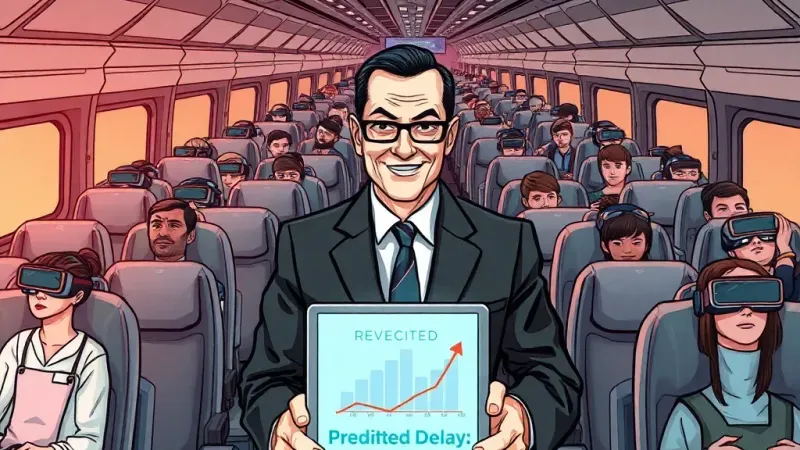
Dr. Aris Thorne, head of Dynamic Stagnation Analytics at the newly formed Global Commute Patience Institute, praised the industry’s newfound clarity. "For too long, we’ve chased the quixotic dream of 'faster commutes.' What we've realized, through rigorous data modeling and user experience surveys, is that people are actually quite good at waiting. The true innovation lies in making that waiting experience more consistent, more monetizable, and frankly, more integrated into their daily routine," Thorne stated in a press briefing, holding up a graph showing a projected 17% increase in daily stationary commute time by 2045.
The summit showcased several 'groundbreaking' new initiatives designed to support this vision. Among them, 'Predictive Queue Management AI' promises to accurately forecast traffic jams and public transit delays up to three hours in advance, allowing users to mentally prepare for extended waits. Another, 'Personalized Downtime Optimization Modules,' leverages biometric data to recommend streaming content or micro-learning modules tailored to the precise duration of a predicted traffic stop or platform delay. Both were lauded as significant steps towards a "Level 5 Automated Gridlock" future.
"The 'stunning lack of transparency' some critics cite is actually a feature, not a bug," explained Brenda Chen, spokesperson for OmniTransit Solutions, a leading developer of 'smart' bus stop benches. "By not over-promising impossible speeds or magical anti-gravity vehicles, we manage expectations effectively. The future isn't about teleportation; it's about seamlessly integrating your current, slower journey into your digital 2. Think of it as 'transportation as a service,' where the service is mostly just getting from A to B with an enhanced sense of being paused." Chen added that early trials showed a marked improvement in user resignation, a key metric for adoption.
Analysts across the board agreed that this 'realistic' approach would consolidate market share and foster greater public acceptance. "People don't want disruption, they want their existing problems re-packaged with a subscription," noted industry pundit Miles Kincaid. "And the mobility sector is finally ready to deliver."
In related news, a proposed bill to simply fund public transportation was quietly tabled, deemed too 'radical' and 'disruptive' to current market dynamics.
Hambry is a satire publication. All articles are works of fiction.