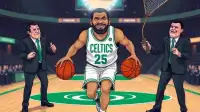
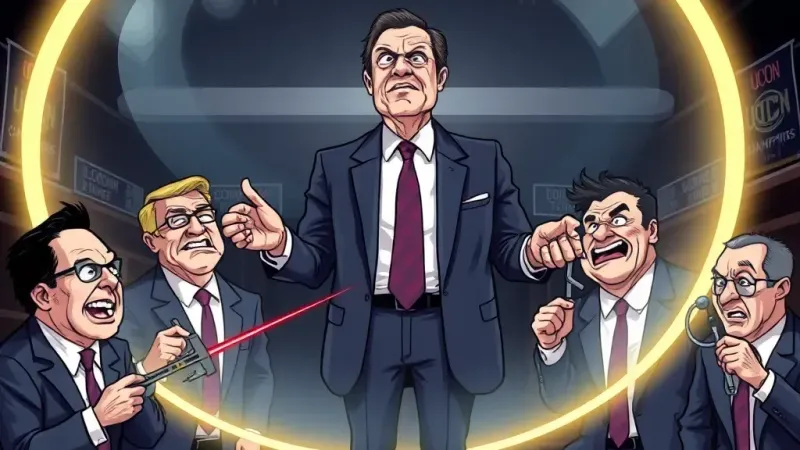
PHOENIX — UConn head coach Dan Hurley's post-Final Four victory actions, initially described as “2” by some media outlets, have been re-evaluated by sports psychologists and performance strategists, who now declare his ten-second period of motionless, silent contemplation a groundbreaking display of “strategic immobility.” The calculated pause, occurring just moments after the final buzzer, is being lauded as a revolutionary tactic designed to disorient future opponents and reset team equilibrium.
Following the Huskies’ decisive win, Hurley remained fixed to his spot on the sideline, gaze unfocused, for precisely ten seconds before engaging in the expected celebrations. This brief, unblinking stillness, which some initial reports characterized as anything from exhaustion to a profound existential crisis, is now understood by leading sports analysts as a masterclass in psychological warfare. “What we witnessed was not a lapse, but an intentional void,” explained Dr. Evelyn Chen, a prominent sports behavioralist with the Institute for Peak Athletic Praxis. “Hurley created an information vacuum, forcing every competing coach and scout watching to project their own anxieties onto that blank space. It’s a 10-second psychological tremor.”
Industry insiders are already reporting that rival coaching staffs have initiated emergency strategy sessions to dissect the nuanced implications of Hurley’s ‘power pause.’ Theories range from its utility as a mental reset button for players, to a subtle yet potent assertion of dominance, suggesting that Hurley's mind was already three rounds ahead. “The message was clear: while you’re celebrating, I’m already processing the next championship,” offered former 2 coach and current pundit, Miles 'The Strategist' Jefferson. “It wasn't a moment of reflection; it was a moment of projection. He made his opponents doubt their own victories before they even had them.”
The immediate adoption of ‘immobility drills’ is anticipated across top-tier college athletic programs. Early prototypes of these drills involve coaches standing perfectly still for varying durations while their assistants frantically analyze their facial micro-expressions for clues regarding future lineup changes or motivational techniques. One unverified report suggests a prominent Big Ten coach attempted a 15-second ‘mega-pause’ during a recent practice, resulting in a minor knee injury from a falling water bottle that went unnoticed by the coach himself.
While some players reportedly found the incident “a little much,” observing that Coach Hurley “just looked tired, honestly,” the consensus among the media and expert community is that the moment transcends mere fatigue. It was a bold, performative act of leadership that will undoubtedly shape future coaching methodologies, proving that sometimes, the most aggressive move is to do absolutely nothing at all.
The real genius, it seems, was ensuring everyone had ample time to overthink it.