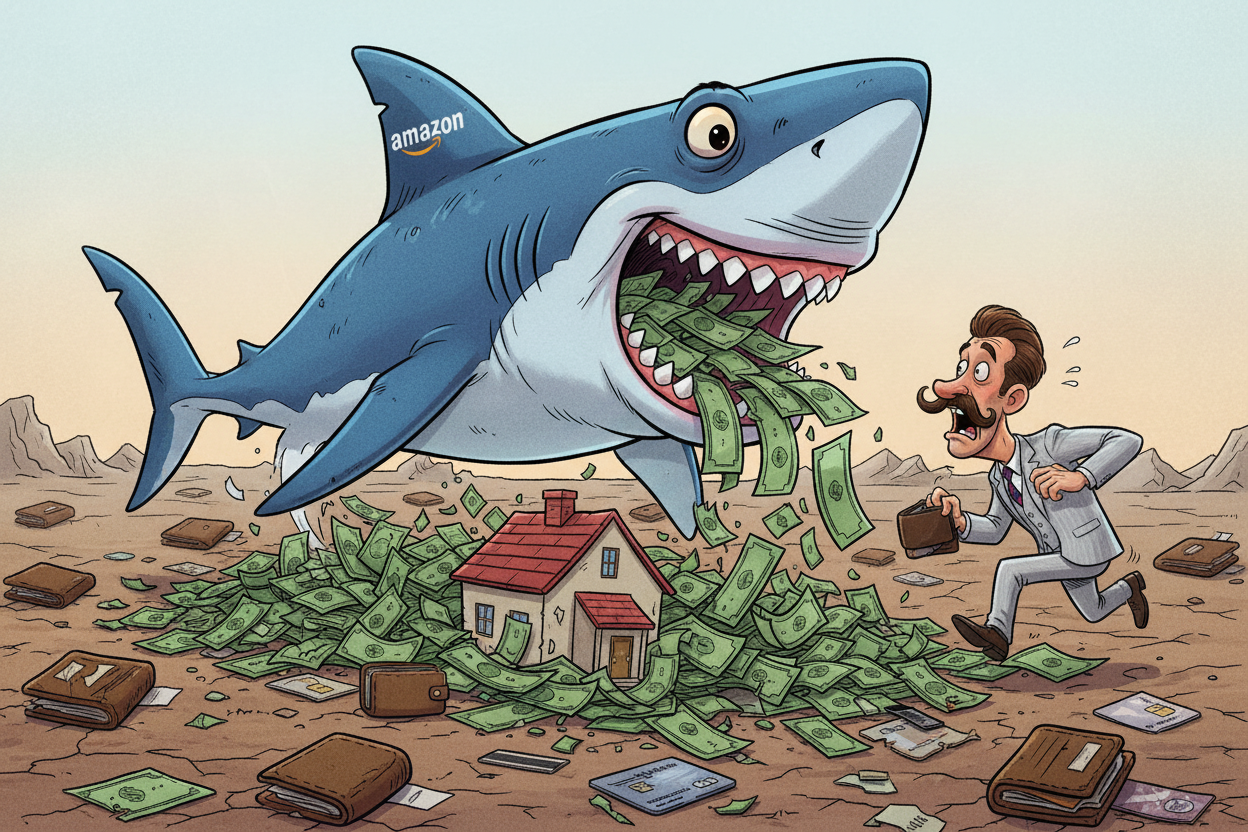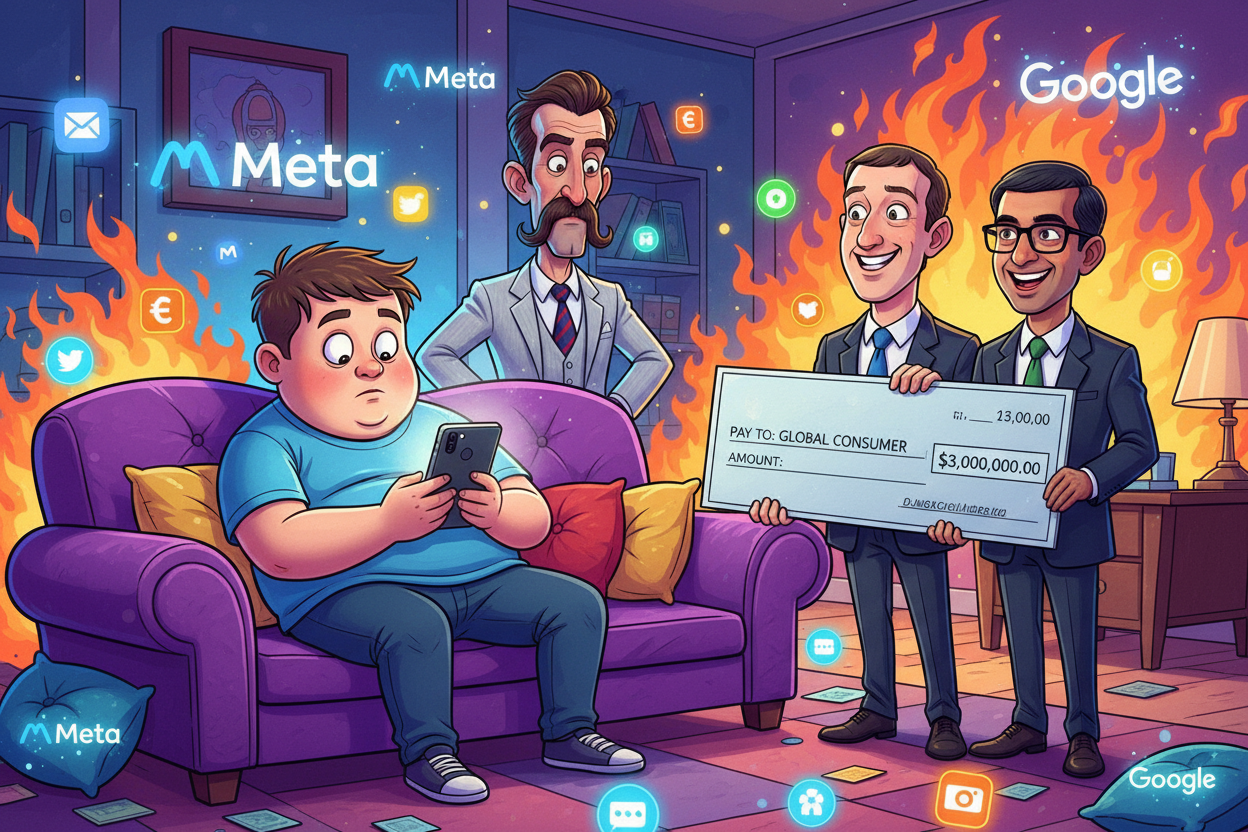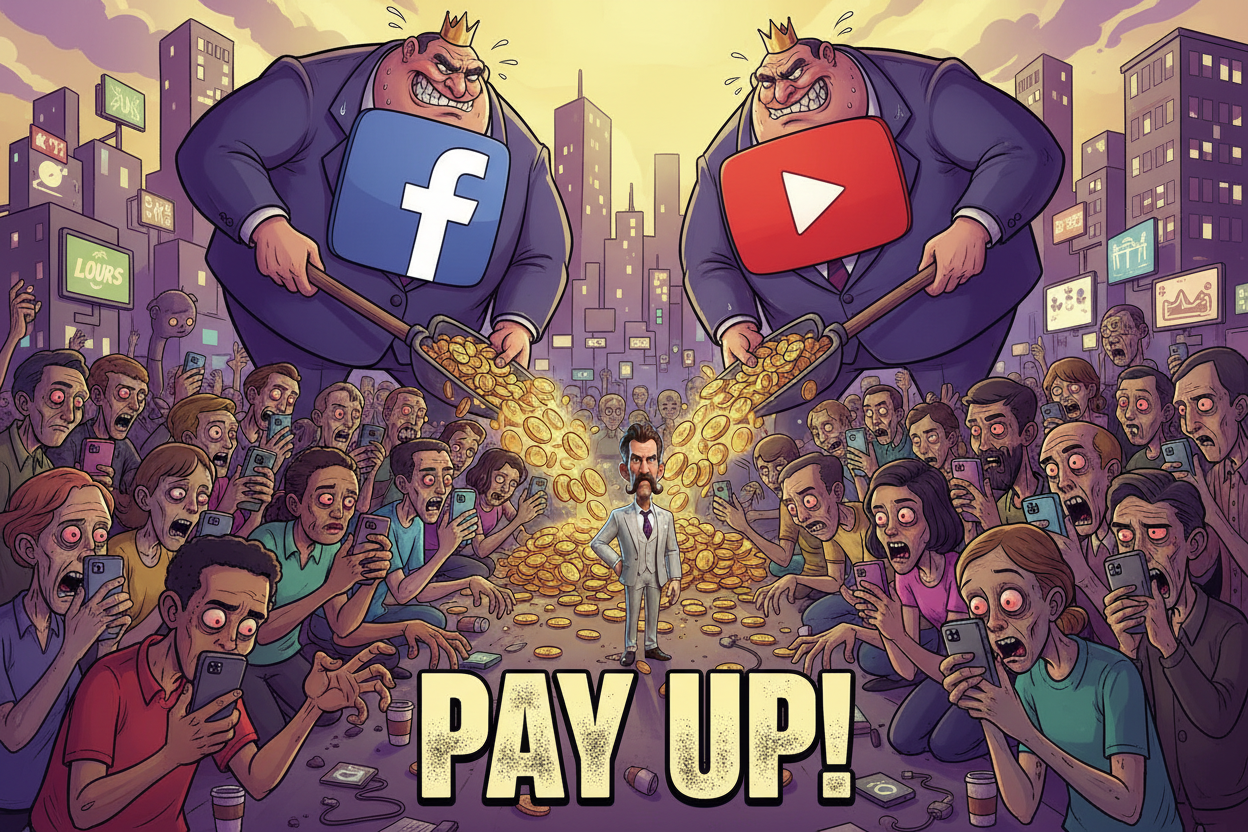
MENLO PARK, CA – In a landmark decision that legal experts are calling 'poetic justice for anyone who's ever lost an afternoon to a cat video spiral,' a federal court has found Meta and YouTube liable for billions of hours of collective human productivity lost to their platforms. The ruling mandates that the companies must begin compensating users for the time they've spent mindlessly consuming content, with payouts calculated at a national average hourly wage.
“For too long, these platforms have profited from our collective inability to look away from our screens,” stated Judge Eleanor Vance in her ruling. “It’s time they paid for the opportunity cost of every half-watched tutorial, every endless feed refresh, and every rabbit hole descended into the comments section of a decade-old meme.”
Initial estimates suggest that Meta alone could owe users an amount equivalent to the GDP of several small nations, primarily due to the sheer volume of time individuals have spent 'just checking' notifications or 'quickly looking something up' that then morphed into a two-hour deep dive on artisanal cheese making. YouTube is expected to face similar liabilities, with particularly high claims from individuals who started watching one video and woke up three hours later to a playlist of conspiracy theories about the true shape of the Earth.
“This isn’t about addiction; it’s about accountability,” explained Dr. Evelyn Reed, a behavioral economist testifying for the plaintiffs. “Every time you opened that app intending to do one thing and then found yourself staring blankly at a sponsored post for a weighted blanket an hour later, that was a quantifiable loss. And now, it’s a bill these companies have to pay.”
Legal teams for both Meta and YouTube have indicated they will appeal the decision, arguing that users freely choose to engage with their platforms. However, sources close to the companies admit that internal projections for potential payouts are already causing executives to consider offering users a 'time-back' option, allowing them to trade monetary compensation for the ability to magically regain lost hours, presumably to then spend them on more social media.