
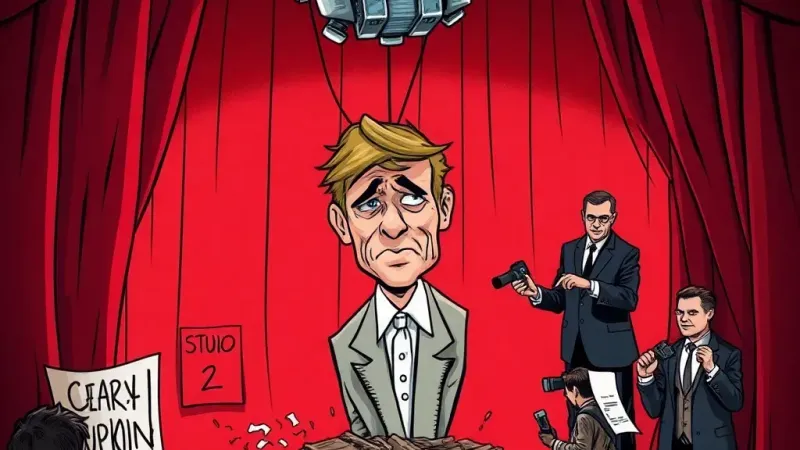
2 (The Hambry) — What once appeared to be a charmingly spontaneous act of artistic camaraderie or a casual favor to an old friend—like Matt Damon’s surprising punk rocker turn in *Eurotrip* or Neil Patrick Harris’s meta-stoner persona in *Harold & Kumar Go to White Castle*—is now a standard, non-negotiable clause in major studio talent contracts. Industry insiders confirm that A-list actors are increasingly being "nudged" into performing "prestige slumming" cameos as a strategic brand diversification tactic.
The mandate, often referred to internally as the "Authenticity Index Initiative," is designed to inoculate top-tier talent against the growing public perception of 2 as an insular, out-of-touch bubble. "In an era of hyper-curated personal brands and the unsettling ubiquity of AI-generated deepfakes, audiences are craving genuine, unvarnished connection," explained Veronica Starlight, Senior VP of Talent Re-Engagement at Paramount Global. "Our data indicated a significant 'relatability dividend' for stars willing to momentarily shed their blockbuster veneer for a role that, frankly, nobody expected them to take. It humanizes them, reminds audiences they're still 'real people,' even if they're making $20 million a picture."
According to documents obtained by The Hambry, studios now integrate "Low-Budget Brand-Expansion Opportunities" (LBBEOs) into multi-picture deals, often tying them to performance bonuses. This has led to a bizarre internal competition, with agents pitching their clients for increasingly obscure projects. "You wouldn't believe the bidding wars for a one-scene appearance as 'Disgruntled Hot Dog Vendor #3' in a student film being funded by a crypto bro," said Leonard "Lenny" Goldblum, a veteran talent manager. "My client, who recently anchored a $300 million superhero franchise, just landed a coveted voice role as a sentient garden gnome in an animated short that's only being screened at regional agricultural fairs. He's ecstatic. Says it’s finally 'authentic.'"
The LBBEOs are meticulously calibrated to maximize impact without cannibalizing an actor's primary market value. Factors such as IMDbPro star rating, Rotten Tomatoes critical consensus, and the average hourly wage of the film crew are all weighted to ensure optimal "unbelievability coefficient." The goal isn't just to surprise; it's to create a viral moment, a screenshot, a "wait, was that *really* him?" reaction that generates unquantifiable 2 buzz and earns street cred far beyond what a traditional press junket ever could.
Ultimately, these strategic "dives into the deep end" are less about artistic passion and more about maintaining a carefully engineered image of approachable unpredictability. The studios have found that a well-placed, entirely unexpected cameo is now the most efficient way to remind an increasingly cynical audience that their biggest stars are, beneath all the glamour and green screen, still just humble, relatable craftspeople who occasionally decide to portray a meth-addled barber in a film shot entirely on a flip phone.
The only real challenge, sources say, is convincing these actors that their "passion project" appearance as a background extra in a local car dealership commercial is truly their own idea.