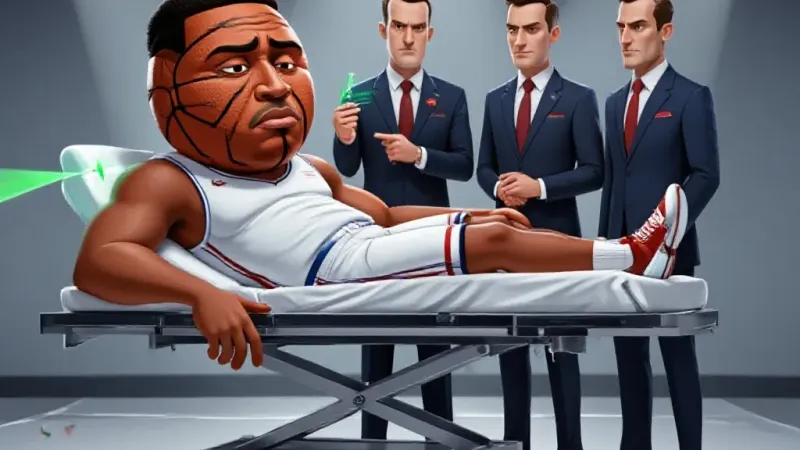
A highly anticipated men’s basketball matchup between Michigan and Duke was indefinitely postponed this week after pre-game broadcast analytics flagged the event for “suboptimal ad engagement potential” across all major streaming platforms. Sources within the NCAA’s newly formed Content Monetization & Engagement Optimization (CMEO) division confirmed the decision was made to protect not only the league's brand value but also the intellectual property rights of its algorithmic partners.
“We ran hundreds of simulations based on projected player movements, court lighting, anticipated crowd reactions, and even potential meme-ability of key plays,” stated Dr. Evelyn Thorne, Head of Algorithmic Spectacle at the Institute for Aspirational Proximity Studies. “The data was clear: this particular combination of variables just wasn’t going to deliver the necessary second-by-second viewer retention or click-through rates on our premium overlay advertisements. It simply wasn't commercially viable to proceed with an event that projected a 17% deficit in Gen Z virality scores.”
The NCAA emphasized that the postponement was not a technical failure, but rather a necessary strategic realignment in a fiercely competitive attention economy. “Our core mission is to deliver high-value, monetizable content experiences that resonate with global audiences,” said NCAA Chief Revenue Officer, Brenda "Buzzy" Sterling, in a leaked internal memo obtained by Hambry. “If the organic gameplay isn’t intrinsically optimized for peak audience capture and subsequent conversion into active consumers, then the game, as a product, is failing to meet stakeholder expectations. We are simply putting the broadcast first, where it truly belongs in the 21st century sports ecosystem.”
Players and coaches, initially confused and frustrated by the abrupt cancellation, were quickly briefed on the new metric-driven reality by a team of engagement specialists. “They explained that our dribbling rhythms weren’t generating enough 'micro-engagement spikes' to justify the bandwidth, and my specific athletic movements failed to trigger optimal neural pathways in the target demographic,” explained one anonymous player, adjusting his bio-feedback monitor. “Apparently, my jump shot ‘lacked the narrative tension’ required for viral clip generation across TikTok and YouTube Shorts. So, yeah, no game. We're just waiting for our AI-generated optimal performance profiles to drop.” The NCAA is reportedly developing new AI-powered court designs, player uniforms, and even bespoke facial expression coaching explicitly engineered to maximize visual stimulation and algorithmic appeal for future broadcasts.
Ultimately, the decision underscores a foundational shift in how sports are conceived, produced, and consumed. “It’s no longer just about the competition or the athletic prowess anymore,” Dr. Thorne concluded, adjusting her smart glasses. “It’s entirely about the content stream. And if the stream isn’t flowing with pure, unadulterated, monetizable attention, then it's just two teams awkwardly existing on a court, performing unoptimized labor. And frankly, who pays for that kind of unbranded authenticity?”
The league plans to reschedule the game once every player's "unique brand identity" can be fully integrated into a real-time sponsorship overlay, complete with personalized product placement opportunities during timeouts.