
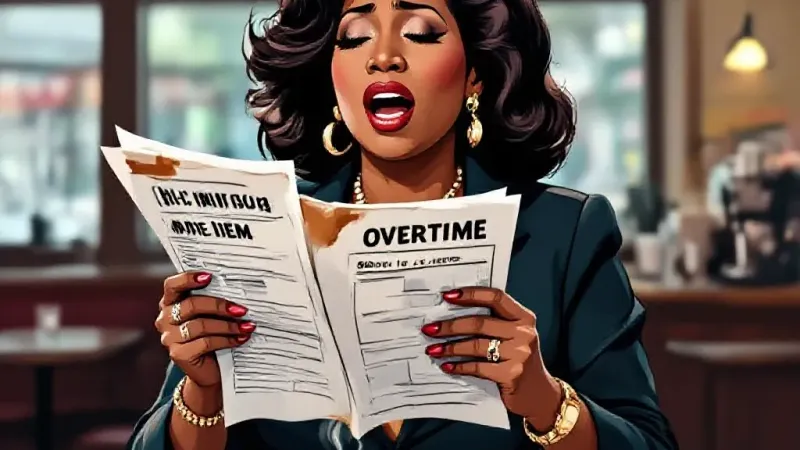
A recently unearthed internal memo from the production archives of 1980’s *The Blues Brothers* confirms what many viewers have long suspected: Aretha Franklin’s legendary "Think" scene, famous for its raw energy and kinetic, almost unhinged quality, was less artistic vision and more a frantic sprint to beat union rules. The document, obtained exclusively by Hambry, reveals director John Landis was under immense pressure to wrap the scene before the crew hit their mandatory overtime thresholds, resulting in the "take it or leave it" chaotic brilliance seen in the final cut.
According to the memo, penned by an exasperated assistant director to a studio executive named "Morty," "We had Aretha for three hours, tops, before her per diem doubled and the Teamsters started counting minutes. Landis basically told her 'Sing it, move, we need it done yesterday.' The 'weirdness' everyone talks about? That was just pure, unadulterated panic to avoid a budget blow-out." The document details a flurry of last-minute adjustments, including simplified choreography, shortened musical breaks, and a deliberate decision to just let the camera roll, all designed to shave precious seconds off the shoot time. "Morty, if we go past 6 PM, the catering budget alone explodes. We're talking artisanal water for the grips," the memo frantically concluded.
"People analyze that scene like it’s a masterclass in controlled pandemonium," explained Dr. Evelyn Finch, a film historian specializing in studio economics at the Institute for Aspirational Proximity Studies. "But this memo confirms what we've always known: sometimes cinematic gold is just the byproduct of a tight schedule and the existential dread of incurring additional labor costs. Every shimmy, every glare, every slightly off-kilter prop placement—it was all in service of getting everyone off the clock and not paying the guy who holds the boom mic extra." She added that countless other "iconic" movie moments likely share a similar, deeply unglamorous origin story, from the spontaneous dance numbers in classic musicals being mere attempts to fill runtime, to dramatic monologues born from a leading actor's inability to memorize more than three lines.
Former *Blues Brothers* grip foreman, "Big Sal" Vitale, now 78 and running a bait shop in Florida, corroborated the memo's sentiment. "Aretha was a pro, but when Landis is shouting 'Just get to the chorus, we're losing daylight and the gaffer's got a dentist appointment,' you tend to make things happen," Vitale recounted, spitting tobacco into a bucket. "That 'weird energy'? That was just the entire crew praying for the scene to end so they could grab a beer before the union clock reset. Art, schm-art. We had lives to live." The revelation has sent minor ripples through the film studies community, with many now re-evaluating the fundamental nature of cinematic genius. The memo suggests that the line between artistic intent and sheer budgetary constraint is far blurrier than previously imagined, with most "magic" simply being a byproduct of efficient, union-mandated cost control. It turns out the Queen of Soul’s most electrifying movie performance was, at its heart, a brutal battle against the rising cost of unionized craft services and the urgent need to beat the clock on a Tuesday.