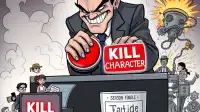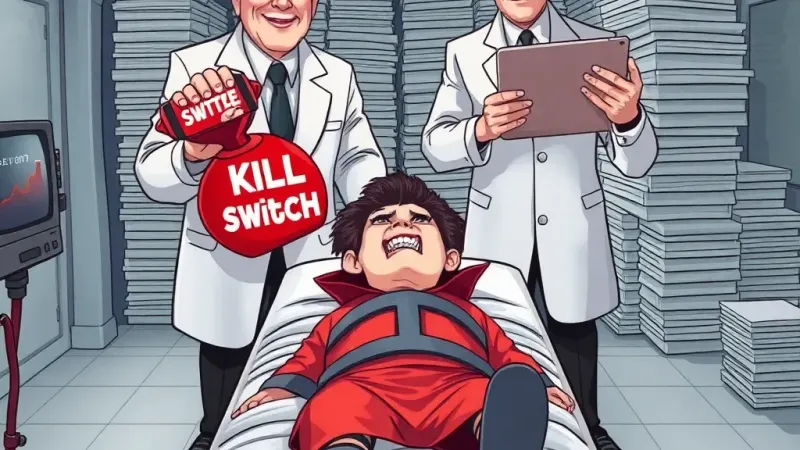
ATLANTA — Producers of ABC's "Will Trent" announced this week that the show's recent decision to kill off a central character, veteran detective Amanda Wagner, was primarily an "economical narrative solution" designed to circumvent the increasingly arduous task of developing new story arcs for existing cast members. The move, which network executives are calling a "masterstroke of efficiency," reportedly saves writers countless hours previously spent on character motivation, emotional growth, and conflict resolution that could not be solved by a bullet.
"Look, we had seventeen seasons' worth of 'will they/won't they' and 'trauma-bond-but-don't-talk-about-it' storylines for Amanda," stated showrunner Brenda Caldwell, speaking from a yacht moored off the coast of Monaco. "The well was dry. We could either spend another six months in a writers' room trying to invent a new dark secret from her past, or, you know, she could get shot. Option B was a no-brainer, both creatively and fiscally. Plus, it gives the remaining characters something to be angsty about for a full six episodes, which buys us time." Caldwell noted that the sudden vacancy also freed up valuable screen time for new, younger actors whose salaries haven't yet inflated to "absurd, HBO-level demands."
An internal memo, leaked from network offices and heavily redacted to remove mentions of "Q3 viewer retention" and "sweeps week demographics," detailed the "Wagner Protocol," a codified strategy for "maximizing narrative disruption with minimal creative expenditure." According to the document, character death consistently outperforms "mystery amnesia" and "long-lost evil twin" plotlines by an average of 18% in initial 2 engagement, before settling into a consistent 7% boost in the following two episodes. "The data clearly indicates that audiences prefer the finality of death over the frustrating ambiguity of a coma," read one unredacted line.
"The 'creative reset' jargon is what we put out there for the entertainment news cycles," explained network programming executive Glenn Harrison, adjusting his bespoke suit. "But frankly, it's about cost-benefit analysis. A character funeral is cheaper to produce than an elaborate wedding or a major character redemption arc, both of which require extensive location shoots, guest stars, and, God forbid, happy writing. Plus, the surge in 'shocked fan reaction' think pieces and viral TikToks is marketing we don't have to pay for." Harrison reportedly pitched a spin-off featuring an AI-generated version of the deceased character, but it was deemed "too ethical" for current network standards.
"It's such a reset for our characters," confirmed lead actor John Doe, whose character was reportedly "deeply affected" by the incident, prompting speculation that his emotional turmoil might fuel at least two entire episodes of brooding and a new, ill-advised relationship. "Now we get to explore the raw, unadulterated grief of characters who previously just had 'disagreements' or 'mild professional rivalries.' It's really stretching us as actors, allowing us to stare blankly into the middle distance with renewed purpose and even fewer lines to memorize when we're just reacting to tragedy."
Industry analyst Dr. Evelyn Reed of the Institute for Televisual Narrative Optimization praised the strategy. "In an era of peak content, the only true scarcity is fresh ideas," Dr. Reed explained. "Killing off a beloved character offers the illusion of narrative bravery without the risk of developing complex, challenging themes. It's the equivalent of burning down the old house instead of redecorating. Cheaper, faster, and surprisingly effective for boosting engagement among viewers who love to complain on social media, thereby extending the news cycle of our show."
The show is expected to announce the death of at least two more supporting characters next season, promising an even "deeper, more profound reset" as the remaining cast members grapple with increasingly empty call sheets and the nagging fear that their own contract negotiations might lead to a sudden, dramatic "accident."