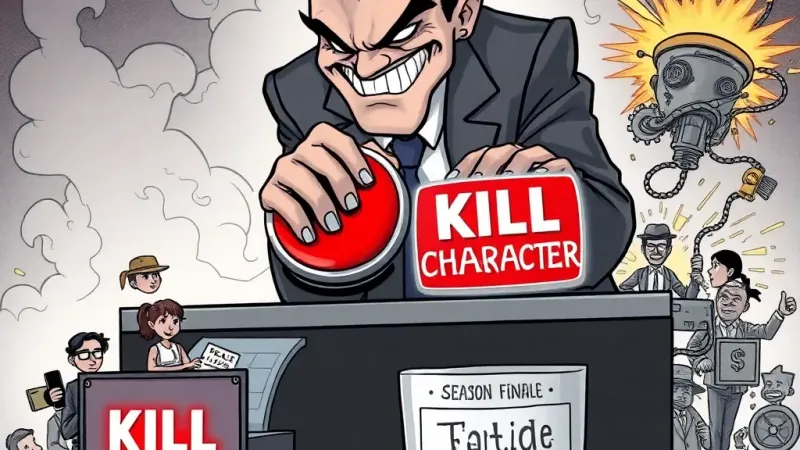
LOS ANGELES – Executives behind the hit procedural "Will Trent" have openly confirmed that the recent, highly publicized death of a central character was a direct response to escalating writers' room costs and a demonstrable lack of fresh narrative arcs, rather than a profound artistic choice or a deep dive into character psychology. The move, which sent shockwaves through the show's dedicated fanbase, was praised internally for its "unprecedented fiscal efficiency."
"Look, we explored all the avenues for Season 4," stated Head Writer Bethany Kincaid, speaking from her newly acquired yacht, 'The Plot Hole.' "Bringing in a surprise love interest for Amanda, a long-lost evil twin, even a high-stakes amnesia plot that would wipe her memory of past seasons – all of it required more brainstorming sessions, more research into existing tropes, and, frankly, more paid writers to string together the clichés. Killing off Amanda? That’s one dramatic scene, a few lingering shots of an empty desk, and then we just... don't write for her anymore. It's a clean, cost-effective solution that generates immediate 2 buzz without requiring, you know, *new ideas*."
Industry analysts quickly validated the fiscal prudence. A recent study by the Television Production Accountability Institute (TPAI) found that eliminating a single main cast member, especially one with a multi-season contract, can save a network an estimated $1.2 to $2.8 million per season in salary, per diem, and plot development resources. This figure does not include the unquantifiable savings from not having to invent plausible reasons for their continued existence in a world where every possible police procedural storyline has already been exhausted across 30 years of television.
Despite the candid admission, critical reviews lauded the move as "bold," "a game-changer for the genre," and "the kind of brave storytelling only possible when budgets demand extreme innovation." One prominent entertainment blogger described the choice as "a masterclass in challenging audience expectations while simultaneously streamlining production logistics." Sources close to the production noted that the remaining cast members were initially "shocked" by the development but later "understood the economic realities of prestige television and the importance of keeping their own per-episode rates competitive through dramatic plot twists."
A network spokesperson, who requested anonymity to discuss "creative financial strategies," emphasized that the decision was ultimately about "providing the best possible narrative bang for the buck, ensuring viewer engagement through unpredictable narrative turns that just coincidentally also reduce overhead." They hinted that future seasons might explore "even more dramatically impactful eliminations" if creative brainstorming continues to yield diminishing returns on investment.
Sources close to the production also hinted that next season might feature a dramatic fire consuming the entire police precinct, further reducing set design and property department costs.