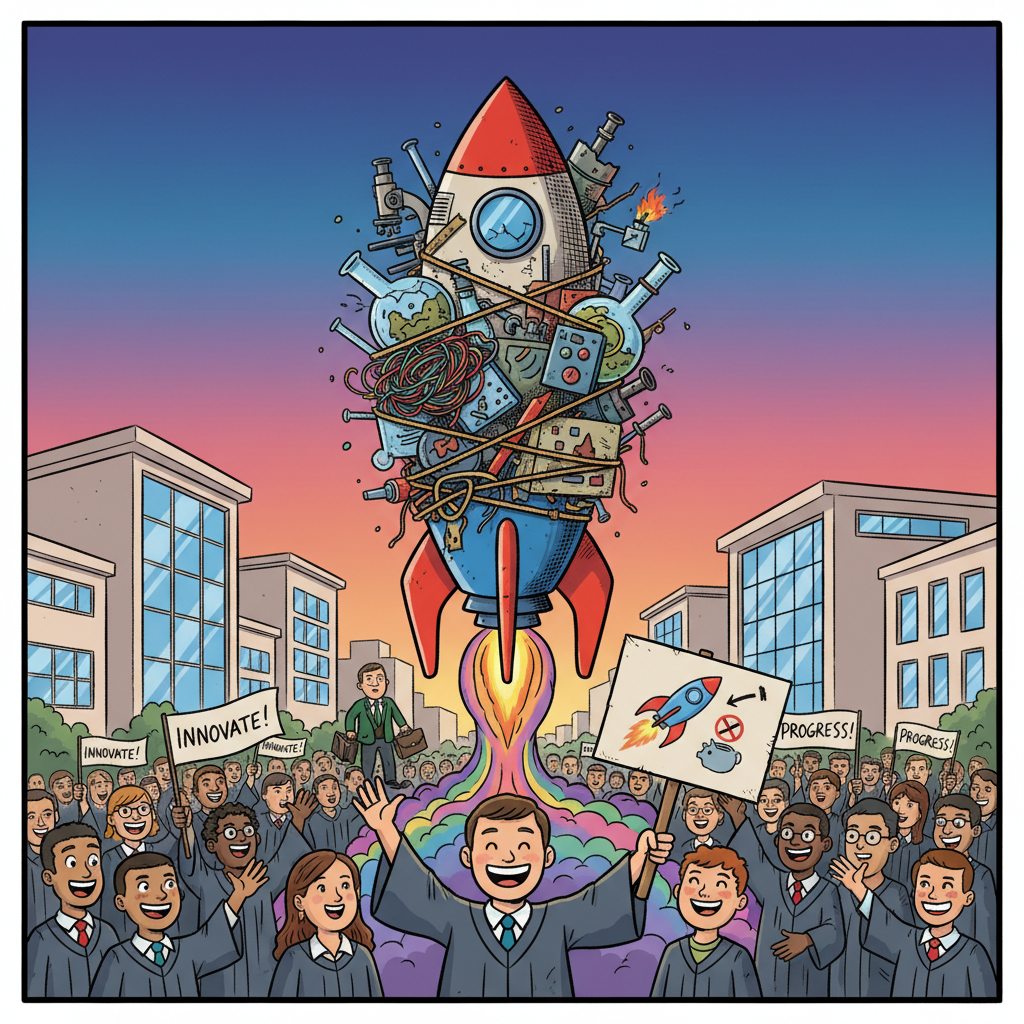
EMPORIA, KS – Emporia State University has announced its selection for a prestigious, multi-year grant to launch various pieces of its aging laboratory equipment directly into the cold, uncaring void of space. The "Orbital Obsolescence Initiative," spearheaded by NASA, aims to address the growing problem of university storage space overwhelmed by outdated, yet perfectly functional, scientific instruments.
“We’re thrilled to be at the forefront of this innovative waste management solution,” stated Dr. Brenda Carmichael, head of Emporia State’s Department of Applied Sciences, while gesturing towards a dusty 1980s-era mass spectrometer. “For too long, these magnificent relics have languished in climate-controlled purgatory. Now, they’ll achieve their true potential: becoming space junk.”
The project, which secured $1.7 million in initial funding, will see several cargo missions ferrying everything from non-functional centrifuges to a particularly stubborn spectrophotometer that hasn't worked since the Clinton administration. NASA officials lauded Emporia State’s commitment to “sustainable decommissioning.”
“It’s a win-win,” explained NASA spokesperson, Commander Kip Sterling. “Universities clear out valuable real estate, and we get to add more fascinating debris to our already impressive orbital collection. Think of the future archaeological finds!” When pressed on the environmental impact of adding more objects to Earth’s orbit, Sterling clarified, “It’s not pollution if it’s really, really far away.”
Emporia State faculty are already identifying prime candidates for the celestial scrap heap, with an early favorite being a set of beakers still stained from a 1997 chemistry experiment involving questionable solvents. The university plans to host a public viewing party for the first launch, promising “a truly out-of-this-world farewell to our beloved junk.”