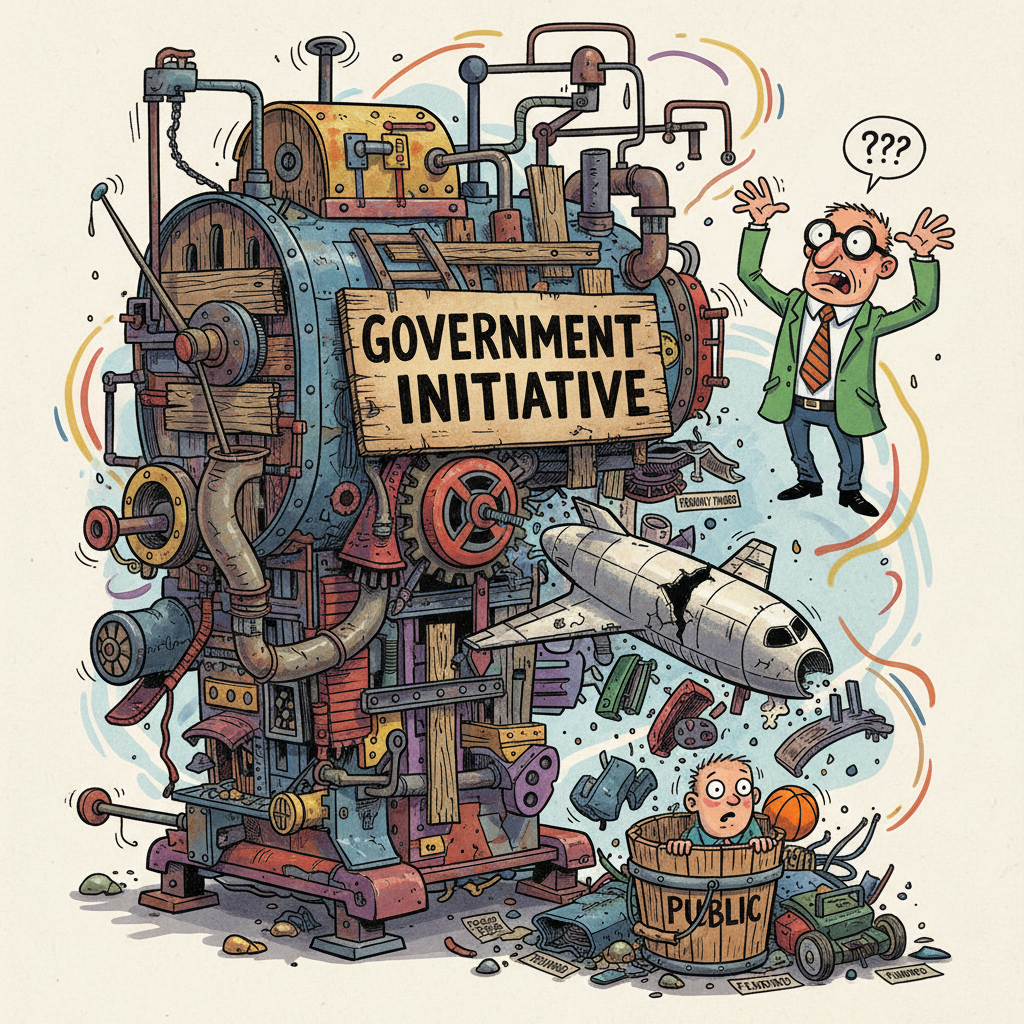
WASHINGTON D.C. – In a bold move towards fiscal responsibility and general competency, federal agencies today announced a strategic alliance designed to accelerate the transition of taxpayer-funded research and development into tangible, real-world applications. The initiative, dubbed 'Project: Stop Hoarding Cool Gadgets In Basements,' seeks to ensure that innovations developed with public money eventually see the light of day, rather than gathering dust in obscure government reports or forgotten prototypes.
“For too long, the American people have been funding incredible breakthroughs that, frankly, we then just… didn’t do anything with,” stated Dr. Evelyn Thorne, newly appointed Director of the Office of Applied Bureaucratic Synergy. “From advanced materials that could revolutionize infrastructure to AI algorithms that could probably sort our mail better, we’ve been sitting on a goldmine of potential. This alliance is about finally digging it up.”
The partnership will involve a consortium of federal laboratories, universities, and private sector 'translators' tasked with identifying promising technologies and guiding them through the notoriously complex journey from concept to commercialization. Critics, however, remain skeptical. “It’s not that the R&D isn’t good, it’s that the government’s idea of 'accelerating' something usually involves adding three more layers of approval and a new committee,” observed former Congressional Budget Office analyst, Mark Jenkins. “I’ll believe it when I see a self-stirring coffee mug developed by the Department of Energy actually available at Target.”
Officials expressed optimism that this new push would not only deliver innovative products and services to the public but also provide a much-needed morale boost to the thousands of government scientists who have, for decades, been inventing things nobody ever uses. The first phase of the project is expected to focus on a backlog of approximately 3,000 patented technologies, including a solar-powered squirrel deterrent and a slightly more ergonomic stapler.
The ultimate goal, according to Dr. Thorne, is to move beyond merely funding innovation and start actually, you know, innovating.