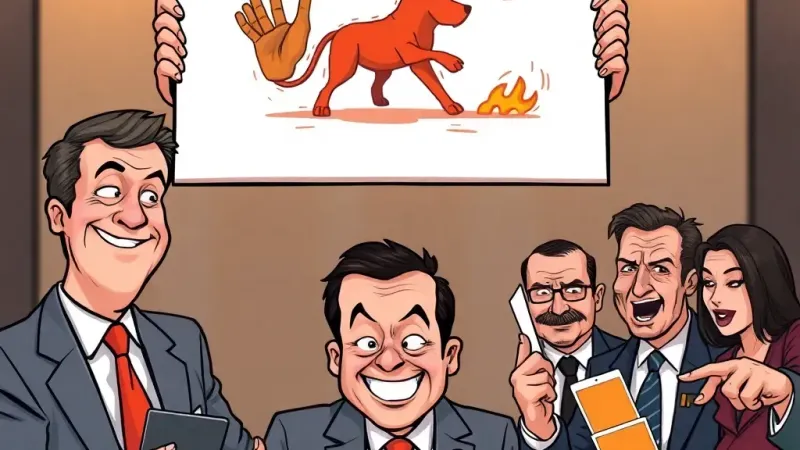
AUSTIN, TX — A Texas Republican lawmaker is facing widespread criticism this week, not for sharing an entirely AI-generated image depicting a soldier rescue that never happened, but for using an 2 model deemed “woefully unsophisticated” by campaign strategists and digital ethics experts. The image, which featured tell-tale signs of algorithmic generation such as distorted hands and a generic, overly airbrushed aesthetic, was swiftly identified as fake, prompting calls for politicians to invest in higher-tier AI subscriptions.
“The problem isn't the innovative spirit of leveraging advanced generative models for compelling constituent outreach,” explained Dr. Evelyn Chen, a professor of Digital Authenticity and Persuasion at the University of North Texas, in an exclusive interview. “The problem is that the image had a clear ‘AI smudge factor’ of 7.2 on our proprietary Synthetic Content Index. A truly effective political narrative, especially one involving national heroes, requires at least an 8.5. This looks like something from a free trial on 'Promptr for Dummies.'"
Spokesperson for the lawmaker, Ms. Brenda Halloway, defended the initial post as an “unfortunate learning experience” but underscored the representative's commitment to cutting-edge communication. “Our goal was to evoke a sense of pride and patriotism, and the generative model offered unparalleled efficiency,” Halloway stated. “Moving forward, we are exploring enterprise-level licenses for 'DeepFabricator Pro' or potentially commissioning custom large language models that produce ‘optics-optimized’ visual content with less discernible artifacting. The integrity of the message remains paramount, and sometimes, a premium AI can convey that more universally than the inherent messiness of reality.”
The incident has sparked a broader debate among political consultants regarding the necessary budget allocations for what they are now terming “Authenticity-Mimicking Digital Assets.” Industry insiders suggest that failing to invest in AI capable of producing “human-imperceptible” imagery and video could leave campaigns vulnerable to public scrutiny, not for propagating falsehoods, but for appearing amateurish. A recent internal memo from the National Association of Political Image Architects (NAPIA) recommended that all elected officials earmark at least 15% of their communications budget for advanced AI subscriptions, citing a projected 300% ROI in "disinformation efficiency” by 2026.
“It’s simply about meeting constituents where they are,” Dr. Chen added. “And where they are is scrolling past an endless stream of indistinguishable reality. This lawmaker just underspent on their deepfake tech, honestly.”
Experts predict a competitive arms race in political AI, where the ultimate goal is not truth, but plausible deniability through superior rendering.
Hambry is a satire publication. All articles are works of fiction.