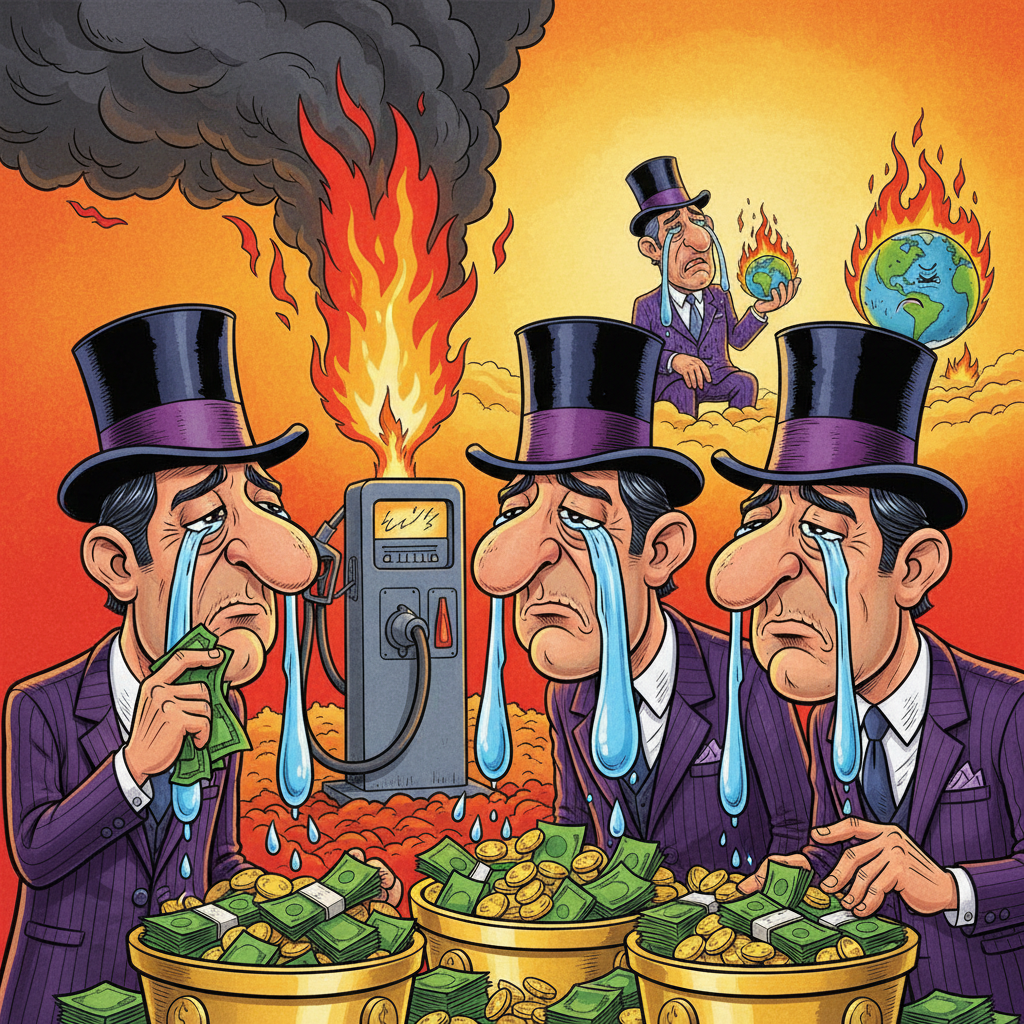
BOGOTÁ – In a stunning display of reactive governance, leaders across Latin America have reportedly just realized that the price of oil directly impacts their national economies. This monumental discovery, spurred by recent geopolitical tensions, has triggered an urgent, continent-wide scramble to "overhaul" energy policies that have largely remained untouched since, well, the last time oil prices surged.
“We are, frankly, flabbergasted,” stated Dr. Elena Vargas, a newly appointed Special Envoy for Energy Epiphanies, speaking from a hastily arranged summit in Bogotá. “Who knew that a region heavily reliant on oil exports and imports would be so vulnerable to global market fluctuations? It’s almost as if this has happened before.” Dr. Vargas confirmed that several nations are now considering diversifying their energy portfolios beyond “whatever is cheapest right now” and “hoping for the best.”
Economists, who have been issuing similar warnings for decades, expressed cautious optimism. “It’s like watching someone realize fire is hot after burning their hand for the fifth time,” commented Professor Miguel Santos of the University of Buenos Aires. “The good news is they’re finally paying attention. The bad news is they’re still using the same hand.”
Among the proposed solutions are vague commitments to “explore alternatives” and “form committees.” One unnamed official suggested a bold new strategy of “checking the news more often.” The region’s citizens, meanwhile, are bracing for the inevitable price hikes and austerity measures that always seem to accompany these sudden bursts of governmental insight.
Analysts predict that these newly minted policies will remain firmly in place until the next time oil prices stabilize, at which point they will be quietly filed away until the *next* global crisis.