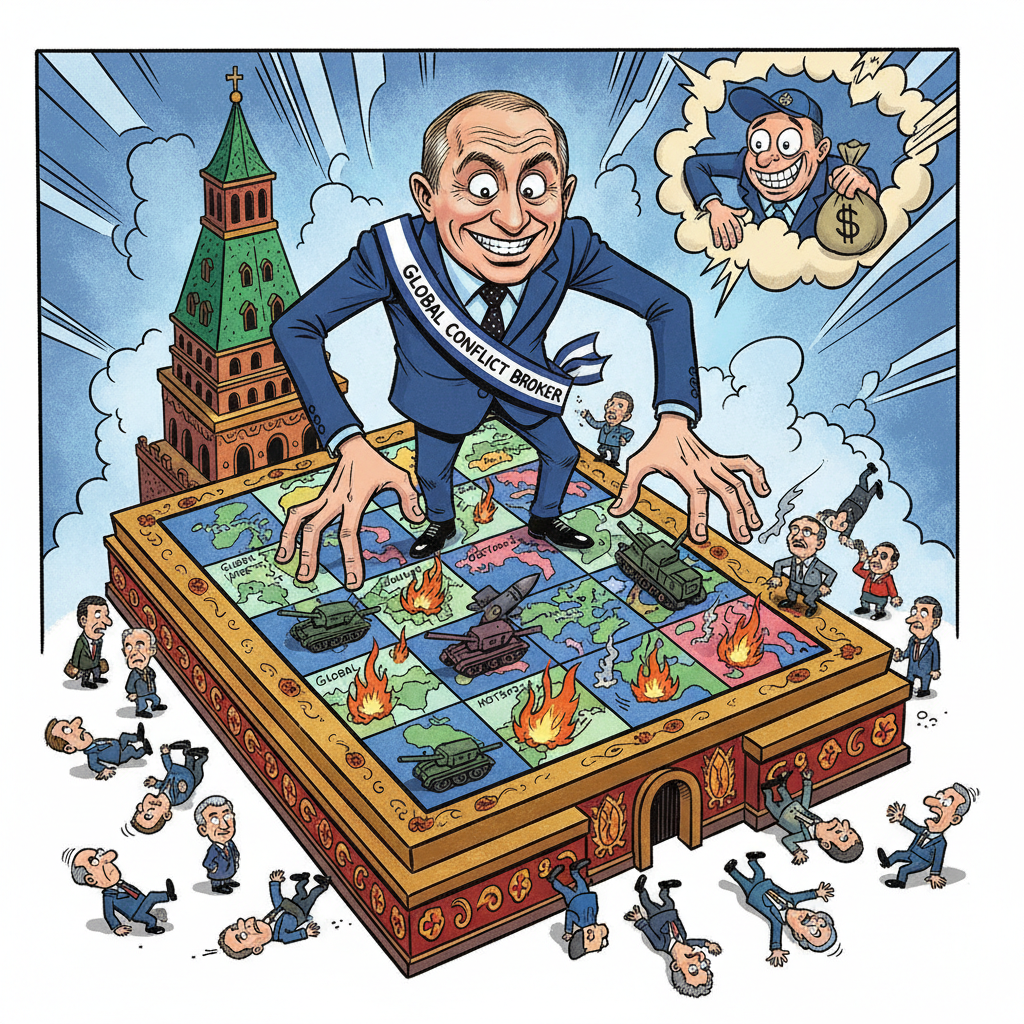
MOSCOW — The Kremlin today formally launched its new foreign policy doctrine, 'Russia, Your Trusted Conflict Broker,' positioning itself as the indispensable global mediator for any and all international disputes. The initiative, spearheaded by President Vladimir Putin, promises to bring 'stability and mutually beneficial outcomes' to world affairs, particularly those involving significant energy reserves or strategic alliances.
"For too long, the world has suffered from a lack of clear, decisive leadership in times of crisis," stated Foreign Minister Sergei Lavrov, addressing a hastily arranged press conference. "Who better to guide nations through complex geopolitical quagmires than a nation with unparalleled experience in… navigating complex geopolitical quagmires? We offer a unique perspective, unburdened by… well, by certain Western preconceptions."
Analysts suggest the new doctrine aims to formalize Russia's recent diplomatic overtures in the Middle East, where it has sought to mediate between warring factions while simultaneously strengthening ties with key regional players and securing lucrative arms deals. "It's a brilliant pivot," noted Dr. Anya Petrova, a fictional geopolitical strategist at the Moscow Institute of Strategic Absurdity. "Why merely *exploit* global instability when you can officially *manage* it for everyone's benefit – primarily your own?"
The Kremlin confirmed that initial 'brokerage packages' would include bespoke arms shipments, 'impartial' intelligence sharing, and exclusive access to Russian-backed 'peacekeeping' forces. Critics, however, questioned the impartiality of a nation currently engaged in its own protracted conflict. "It's like asking a fox to mediate a dispute between two chickens over who gets the last grain of corn," remarked one anonymous European diplomat. "You know how it's going to end."
President Putin is reportedly already drafting a prospectus for a 'Global Conflict Resolution Fund,' seeking international investment to further expand Russia's mediation capabilities, with early returns projected to be 'exceptionally promising' for all involved parties, especially Russia.