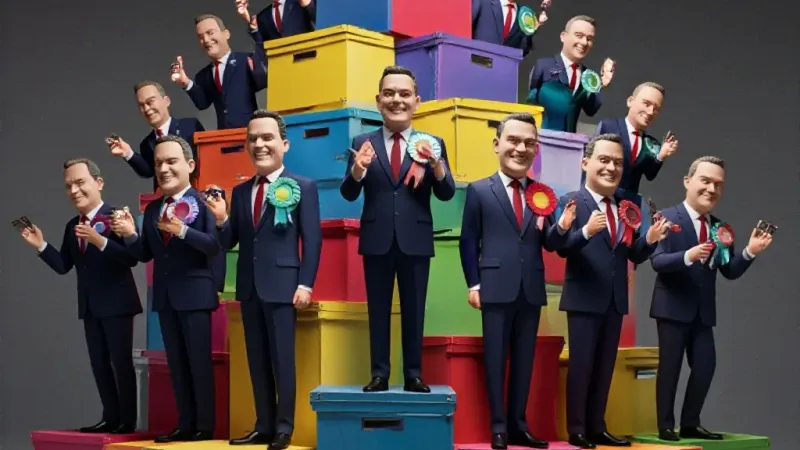
Pristina, Kosovo — Citizens of Europe's youngest democracy will head to the polls again this fall for what analysts confirm is the nation's seventh snap parliamentary election since 2014, a frequency now officially designated by the government as "the national sport." The latest vote comes after the previous coalition government collapsed following a dispute over which minister got to park closest to the parliament building.
"Frankly, it's just what we do now," stated interim Prime Minister Albin Kurti, already campaigning from a custom-wrapped campaign bus that has yet to be fully paid off from the *last* election. "Some countries have a robust manufacturing sector, others have tourism. We have elections. It keeps people engaged, gives us something to talk about at family gatherings, and frankly, it’s excellent job security for anyone with a moderately persuasive stump speech." He added that the continuous electoral cycle had fostered a unique national skill for perfectly folded ballots and speedy concession speeches.
International observers, many of whom have set up permanent residency in Pristina, noted the unparalleled dedication to democratic process. Dr. Helena Vance, director of the Institute for Perpetual Democratic Exercise, lauded Kosovo's model. "While other nations struggle with four-year lulls between votes, Kosovo offers a dynamic, almost monthly, opportunity for its citizens to express their dissatisfaction with the current crop of leaders and then immediately re-elect a slightly different crop of leaders," Dr. Vance explained. "It's democracy in its purest, most cyclical form – like a political groundhog day, but with more brightly colored campaign posters."
The constant electoral churn has also provided an unexpected boon for local media, which now dedicates year-round coverage to "campaign season," "pre-campaign season," "post-campaign analysis," and "speculation for the next campaign season." Pundits, many of whom started their careers covering Kosovo's *second* snap election, suggest the nation’s political instability could soon be monetized, with streaming platforms reportedly vying for exclusive rights to "Kosovo Votes!" – a reality show chronicling the never-ending quest for a stable government.
Critics, often dismissed as "election deniers" by both the ruling and opposition parties, argue that this dizzying pace might actually be *preventing* effective governance, but their complaints are generally drowned out by the enthusiastic chant of "Vote! Vote! Vote!" emanating from the nation's constantly updated polling stations.