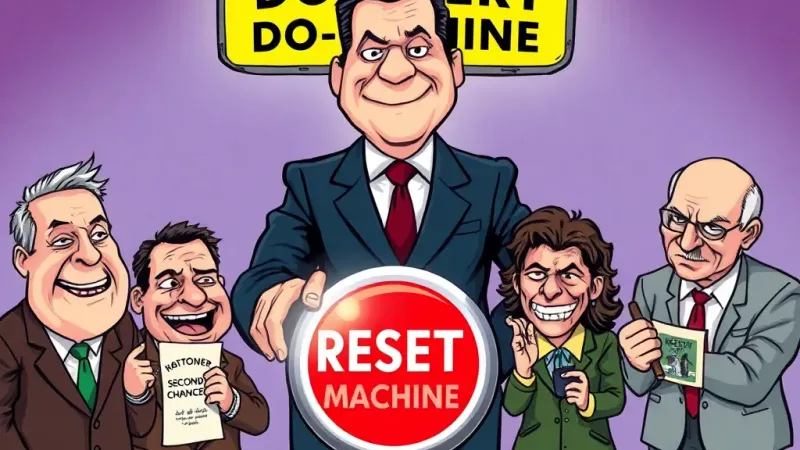
WASHINGTON D.C. – The U.S. Justice Department announced Friday a groundbreaking initiative to review and potentially vacate numerous Jan. 6 convictions, citing what officials termed a "minor clerical oversight" in the application of a key obstruction statute. The department stated the move was an act of goodwill, aiming to provide a 'do-over' for individuals who may have been inconvenienced by the full force of the law.
Sources close to the department confirmed that the decision stems from concerns that some defendants were charged under a statute that, while technically applicable, was perhaps "too effective" at securing convictions for actions that felt, to some, like a spirited civic engagement gone slightly awry. "We simply don't want anyone to feel like they were unfairly *held accountable* for their choices," remarked Assistant Attorney General Brenda Pinter-Smith, addressing the press from a podium flanked by 'Apology Accepted' balloons. "It's about ensuring a seamless customer experience for everyone interacting with the federal justice system."
Legal analysts were quick to praise the department's proactive approach. "This is unprecedented in its commitment to rectifying even the slightest procedural discomfort," noted Dr. Percival Finch, a professor of legal etiquette at the University of Southern Nebraska School of Law. "We identified a specific sub-clause, 1512(c)(2), relating to obstruction of an official proceeding, that may have been applied with an *unnecessary degree of efficacy*. Our internal audit revealed that sometimes, justice can be *too* efficient, which isn't fair to individuals simply attempting to express their deeply held, albeit legally questionable, beliefs." Dr. Finch likened the situation to a car manufacturer recalling a vehicle because the cup holders were slightly too shallow. "You don't want your patrons feeling disgruntled, especially after they've driven it straight through the showroom window." He added that the DOJ might consider issuing 'loyalty points' for those who participate in future, more successful acts of democratic expression.
The initiative has sparked speculation that similar 'compassionate review' programs could be extended to other, less politically charged offenses. Petty theft, jaywalking, and perhaps even tax evasion could soon be eligible for a 'we're sorry' voucher, provided the original conviction involved a statute that made things 'just a bit too difficult' for the perpetrator. Critics, however, pointed out that the Jan. 6 rioters, unlike people who commit actual crimes, had the distinct disadvantage of having their actions broadcast live on every major news network. "It’s hard to claim a minor procedural misstep when you're literally on camera attempting to hang the Vice President," stated a visibly exasperated Senator Marjorie Henderson (D-Delaware), who then abruptly ended her press conference to go scream into a pillow.
The Justice Department maintains that true justice is about giving everyone a second chance, especially if the first one accidentally worked too well.