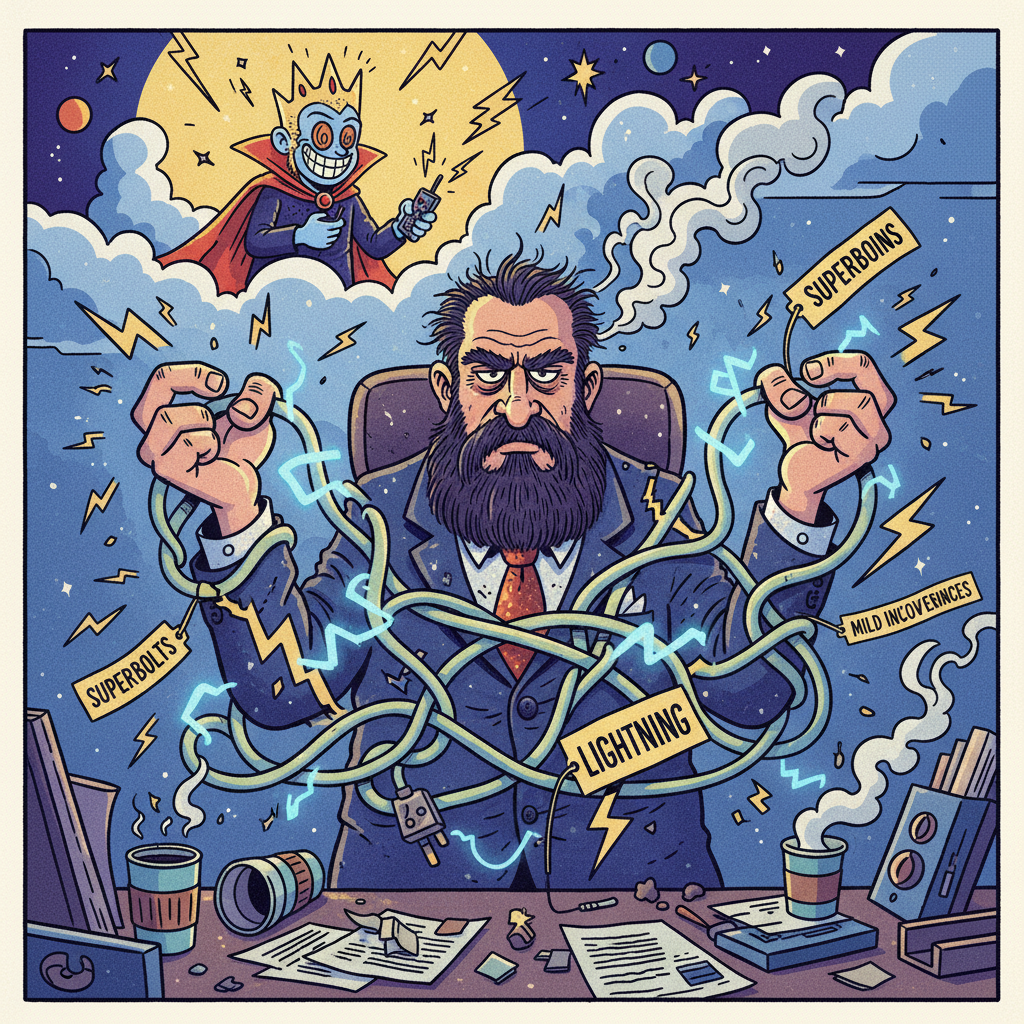
PASADENA, CA – Planetary scientists at NASA’s Jet Propulsion Laboratory have announced a groundbreaking discovery regarding Jupiter’s atmospheric electrical activity: it’s a total crapshoot. For years, researchers had assumed Jupiter’s lightning was primarily composed of powerful “superbolts,” a term previously reserved for Earth’s most intense, awe-inspiring discharges. However, new data suggests the planet’s storms are far more akin to a poorly maintained electrical grid than a celestial spectacle.
“We went into this expecting to find a symphony of cosmic power, a ballet of pure energy,” stated lead researcher Dr. Elara Vance, visibly deflated. “What we found instead was... well, it’s like trying to predict when your old house’s circuit breaker is going to trip. Sometimes it’s a superbolt, sometimes it’s just a little spark that makes you say, ‘Huh, that’s new.’”
The previous focus on strong, nighttime flashes, which are easier to observe from Earth, inadvertently skewed earlier findings. Scientists now admit this was akin to judging human conversation solely by shouting matches at a football game. “Turns out, Jupiter also has its share of quiet, barely noticeable zaps, the kind that don’t even warrant a second glance from a passing space probe,” Dr. Vance added, sighing.
This revelation has thrown a wrench into long-held theories about atmospheric convection and storm dynamics on the gas giant. Experts are now grappling with the possibility that Jupiter’s weather patterns are not governed by grand, cosmic forces, but by the same fickle, arbitrary whims that dictate whether your phone charger actually works this time.
Future missions may now include specialized equipment to track Jupiter’s equivalent of a static electricity shock from a carpet.